What is marketing performance measurement?
Marketing performance measurement is the process of planning, collecting, structuring, and interpreting data to show how well marketing activities deliver business goals. In the context of event marketing, trade shows, and face-to-face communication, it means measuring what happens in the physical space where the brand meets its audience: from interest in the booth and the quality of conversations, to the number and value of sales opportunities generated and the impact on brand perception.
Performance measurement is not limited to simple counts (for example, the number of visits). It also includes interaction quality, fit with buyer personas, the effectiveness of visual communication, and whether the booth layout supports smooth visitor flow and makes it easier to present products or services. This makes it easier to make decisions about budget, exhibition design, and how to develop the brand experience at future events.
What are the main goals of marketing performance measurement?
In offline activities, measurement should connect marketing and sales objectives and reflect the realities of events, where both scale and contact quality matter.
- determining whether attending a trade show or event generates valuable leads and sales meetings,
- assessing the effectiveness of visual communication and messaging (do visitors understand the offer in the first seconds of contact?),
- analyzing how the space and booth layout affect visitor flow, conversation length, and the use of functional zones,
- comparing results across events, locations, and activation formats (trade shows, showrooms, roadshows),
- identifying what to optimize: conversation scripts, collateral, product demos, calls to action,
- tracking costs against KPIs, such as cost per lead, cost per meeting, and cost per qualified contact.
What are the benefits of marketing performance measurement?
The biggest value is the ability to make decisions based on data rather than intuition. In event marketing, this translates into better team resource planning, clearer priorities, and a more consistent brand presence across channels.
- more predictable outcomes thanks to stable KPIs and comparable data collection methods,
- better message-to-audience fit based on questions and objections captured by the team,
- booth design optimization by measuring behavior: entries, stop points, queues, and zones with the highest interest,
- easier integration of offline activity with CRM and marketing automation, strengthening pipeline and ROI reporting,
- cost savings from removing low-performing elements and reinforcing those that truly support sales,
- the ability to iterate creatively without rebuilding from scratch, for example by swapping graphic panels and aligning messages with seasonal campaigns.
What are the challenges and limitations of marketing performance measurement?
Measuring performance in a physical environment can be more difficult than in digital channels, because some outcomes are qualitative and appear with a delay. In addition, event data often comes from multiple sources that must be standardized.
- attributing the impact of trade shows on sales with long buying cycles and many touchpoints,
- data comparability across events with different profiles, attendance levels, and traffic quality,
- the risk of overstating results when measuring only visits without assessing conversation quality,
- consistent KPI definitions across the team (for example, what counts as a lead, MQL, SQL, or a sales meeting),
- privacy and GDPR compliance when collecting contact data and running surveys,
- the cost and time required to integrate data from badge scans, forms, sales notes, and CRM.
How is marketing performance measurement used at trade shows and events?
At events, measurement starts before the show begins by defining goals, KPIs, and the method for capturing data. During the event, the key is combining observation of the space with data about conversations and conversions.
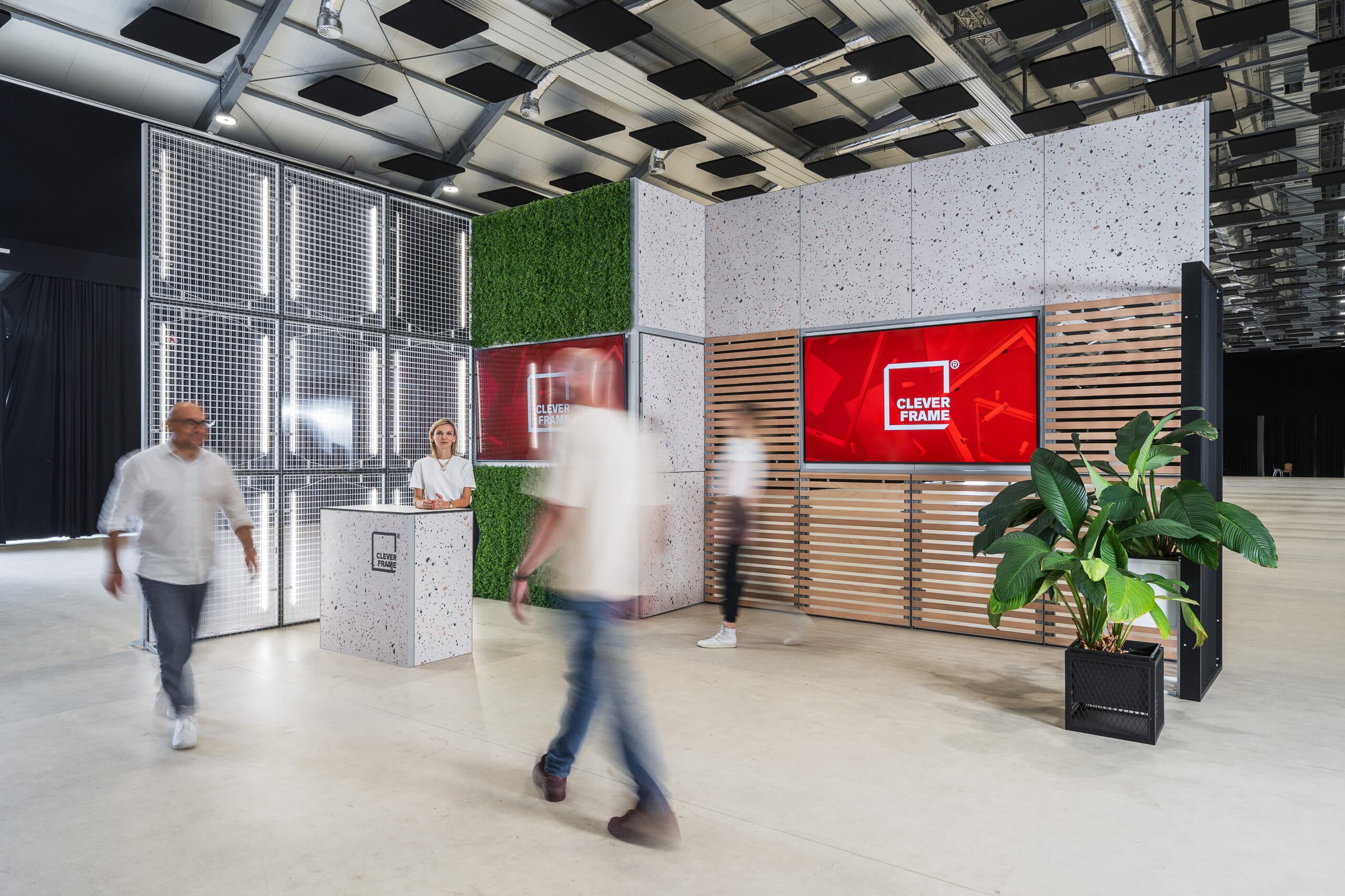
Booth design plays an important role: message visibility, conversation ergonomics, and whether the layout supports smooth visitor flow. In practice, teams analyze metrics such as the number of entries into conversation zones, dwell time, station occupancy, and the points where visitors lose interest. Clever Frame trade show booths can support an iterative measurement approach because the modular structure can be reconfigured and graphic panels can be swapped quickly, allowing messaging to be adapted to a target segment or to the next day of the event. Tool-free setup and teardown can also be an operational advantage, making it easier to test configurations within limited hall access windows.
What are practical examples of marketing performance measurement?
Measurement can cover both sales outcomes and the quality of the brand experience on-site. The best results come from combining quantitative and qualitative indicators with a consistent reporting methodology.
- comparing two communication variants (for example, different graphic panels) and evaluating the impact on the number of conversations and the share of qualified leads,
- analyzing visitor flow after changing the zone layout (entrance, demo, sales conversations), including wait times and interaction length,
- cost reporting: cost per lead and cost per meeting relative to booth size and team headcount,
- evaluating lead quality after the event based on CRM statuses (MQL, SQL, won) and the pipeline value attributed to the source,
- measuring brand impact through short post-conversation surveys: offer understanding, recall of the key message, and intent to follow up,
- measuring the effectiveness of reusing modular booth construction over an annual cycle, for example by reducing cost per qualified contact through reuse of booth elements while updating only the graphic layer.