
What is lead scoring?
Lead scoring is a method for organizing and evaluating sales leads by assigning points for specific attributes and behaviors. In event marketing and at trade shows, it helps turn qualitative booth conversations into a measurable signal of purchase intent-so the sales team can quickly identify people who are genuinely considering a purchase, and marketing can plan more relevant follow-up communication.
In offline activities, lead scoring is based not only on “hard” data (job title, industry, company size) but also on contextual signals: topics discussed during the meeting, interest in a specific product feature, attending a demo, time spent in the demo area, or returning to the booth. A well-designed booth layout, consistent visual messaging, and a clear visitor flow make these signals easier to capture and improve lead comparability across different events.
What are the main goals of lead scoring?
- prioritizing post-event outreach and reducing response time for the most promising leads,
- standardizing lead quality assessment between marketing and sales using shared scoring criteria,
- better tailoring follow-up to the visitor’s intent (e.g., demo, quote, technical materials),
- measuring the effectiveness of booth activations such as product presentations, workshops, or consultations,
- optimizing event investment by comparing lead quality across locations and dates.
What are the benefits of lead scoring?
The key benefit is more efficient use of team resources. Sales can focus on high-potential leads, while marketing can run lead nurturing for contacts who need education or have a longer decision cycle. In the trade show context, lead scoring also enables data-driven learning: if higher scores frequently come from people who watched a demo in a specific zone, it’s worth increasing that area’s visibility and improving visitor flow.
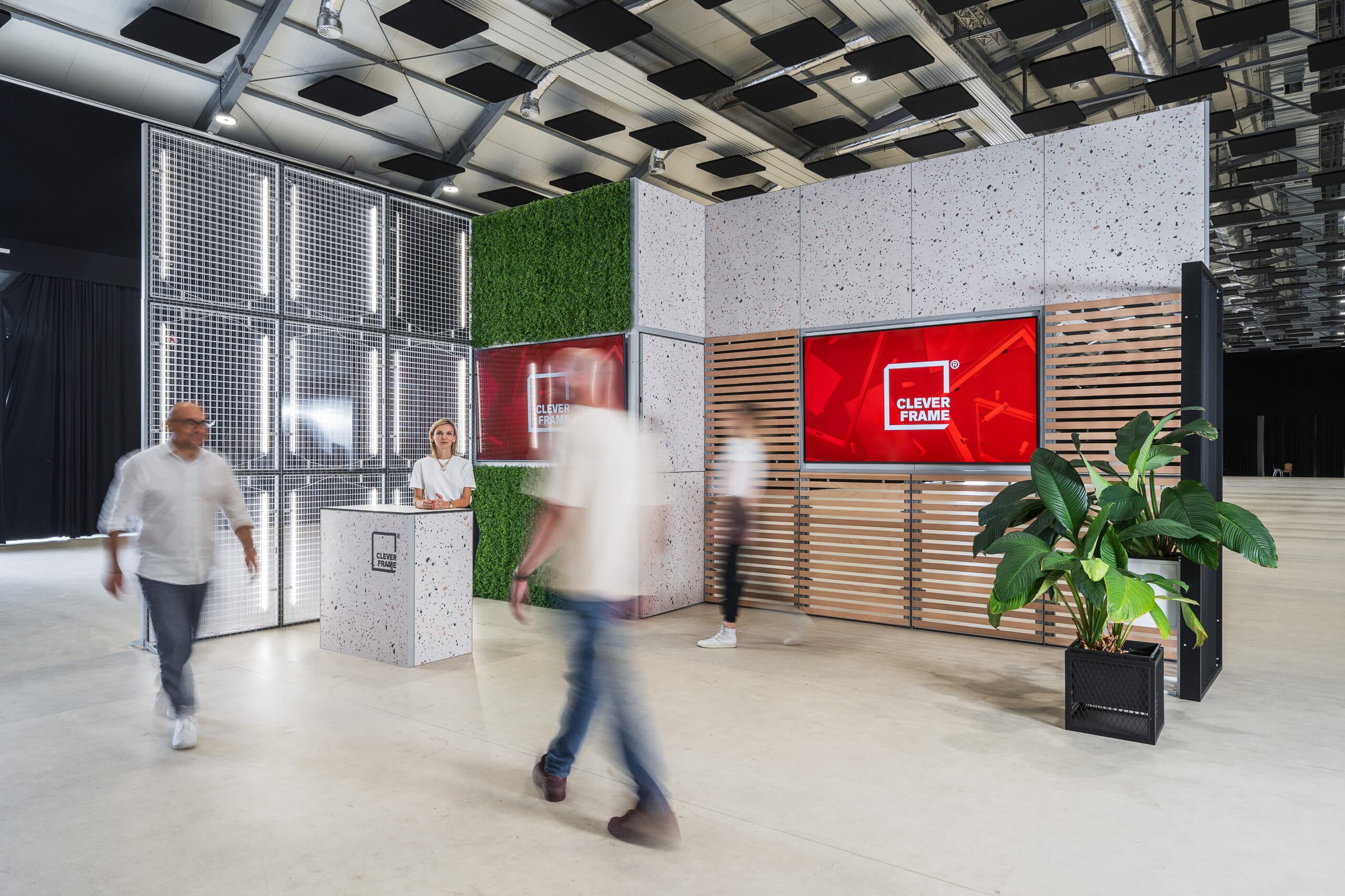
Lead scoring supports a consistent brand experience. When the booth layout, visual messages, and conversation scripts are consistent, it’s easier to compare lead quality across events and across team members. Clever Frame trade show booths help maintain a repeatable presence thanks to their modular design: frames connected with joiners and graphics on rigid panels mounted magnetically make it easy to swap messaging for seasonal campaigns and different audience personas-without tools.
What are the challenges and limitations of lead scoring?
- the risk of subjective evaluations after conversations if criteria aren’t clearly defined and tested,
- the quality of event-captured data (form errors, incomplete notes, duplicates),
- consent and GDPR compliance, including a clear processing purpose and data minimization,
- overreliance on scores without context-for example, a high score may reflect curiosity rather than buying intent,
- difficulty attributing an event’s impact on revenue when the buying process is long and multi-channel.
These limitations can be reduced by calibrating the model after each event: comparing the score to actual sales outcomes, adjusting point weights, and refining the definitions of MQL and SQL. In practice, a simple model that the team understands and applies consistently often outperforms a complex algorithm that no one can clearly explain.
How is lead scoring used at trade shows and events?
At the booth, lead scoring most often combines registration data and lead capture tools (e.g., badge scanning) with information from the conversation. The key is designing the process so the score reflects what actually happens on the floor: whether the visitor moved through the demo area, asked implementation questions, requested a quote, or booked a meeting. Booth layout and visitor flow can support this when zones are arranged logically: entry and first message, a place for quick lead qualification, a demo area, and finally a quieter space for a sales conversation.
Practical lead scoring examples
- at a B2B trade show: +10 points for target industry, +15 for a buying decision within 3 months, +20 for requesting a proposal, -10 for not matching the ICP,
- on a roadshow: extra points for attending the presentation and staying for the Q&A, which often correlates with real need,
- in a showroom: scoring based on interest in a specific product line and the number of client-side attendees in the meeting,
- at a partner event: a separate scale for “partnership leads” (e.g., integrator, reseller), where different signals matter more than short-term purchase intent,
- post-event: automatically assigning a communication track (case study, webinar, consultation) based on a scoring threshold.
See also
- event marketing
- visitor flow
- branding
- modular trade show booth