
What is data-driven marketing?
Data-driven marketing is an approach to planning, executing, and optimizing marketing activities where decisions are guided by data analysis about audiences, the context of brand interactions, and campaign outcomes. In event marketing and at trade shows, this means combining information from multiple sources – from attendee registration and badge scans, through observations of booth traffic and on-stand behavior, to sales data and CRM – so you can design a better brand experience and improve the effectiveness of sales conversations.
In offline settings, data-driven marketing supports both face-to-face communication and spatial design. Data helps select the right messages, place functional zones, assess visitor flow (how people move through the stand), and determine which parts of the exhibit actually influence product interest, lead quality, and post-event conversion.
What are the main goals of data-driven marketing?
In a trade show environment, the goals of data-driven marketing are not only “how many people came,” but also “who came, what they did, and what it means for sales and brand performance.” In practice, the most common goals include:
- better matching messages to audience segments and stages of the buying journey,
- improving the quality of sales interactions by qualifying leads based on behaviors and declarations,
- optimizing booth layout and visitor flow so it’s easier to have conversations, run product demos, and collect feedback,
- measuring the event’s impact on brand perception, purchase consideration, and sales results in the following weeks or months (accounting for buying-cycle delays),
- comparing the effectiveness of creative assets and visitor-handling scenarios across trade show editions and locations.
What are the benefits of data-driven marketing?
The biggest value is reducing “gut-feel” decisions in favor of decisions based on observation and testing. In the context of trade show booths and offline events, benefits include:
- more consistent visual communication, because creative is assessed through data on attendee attention and reactions (e.g., observations, surveys, A/B tests of messages; when using automated tools – while staying legally compliant),
- better use of space when data shows which zones attract traffic and which create bottlenecks or get skipped,
- more effective post-event actions thanks to faster and more relevant follow-up based on conversation context and interests,
- greater repeatability of the event process – building a shared measurement standard across trade shows, showrooms, and roadshows,
- easier optimization of materials and messaging when the stand enables fast graphic panel swaps for different campaigns and audience segments.
Challenges and limitations of data-driven marketing
Data doesn’t solve problems automatically – it requires high-quality collection, good interpretation, and alignment with the realities of sales conversations. The most common limitations in event settings include:
- data quality and consistent definitions, for example different “lead” criteria in marketing versus sales,
- outcome attribution, because trade show impact often appears later and mixes with other channels (often requiring multi-touch models or analysis of the event’s contribution to pipeline),
- the risk of focusing on vanity metrics, such as booth traffic alone without evaluating intent and fit,
- legal and organizational constraints related to privacy, consent, and data minimization (GDPR), including the correct legal bases for processing, information duties, and retention periods,
- spatial and operational factors, including noise, crowding, and varying team readiness to record information consistently.
How is data-driven marketing used at trade shows and events?
At trade shows, data should support three layers: space design, the way interactions are run, and post-sales activities. As early as the booth concept stage, it’s worth defining goals (e.g., product demos, consultations, insight gathering) and aligning zone layout and visual communication so visitors intuitively understand where to go and what they can gain.
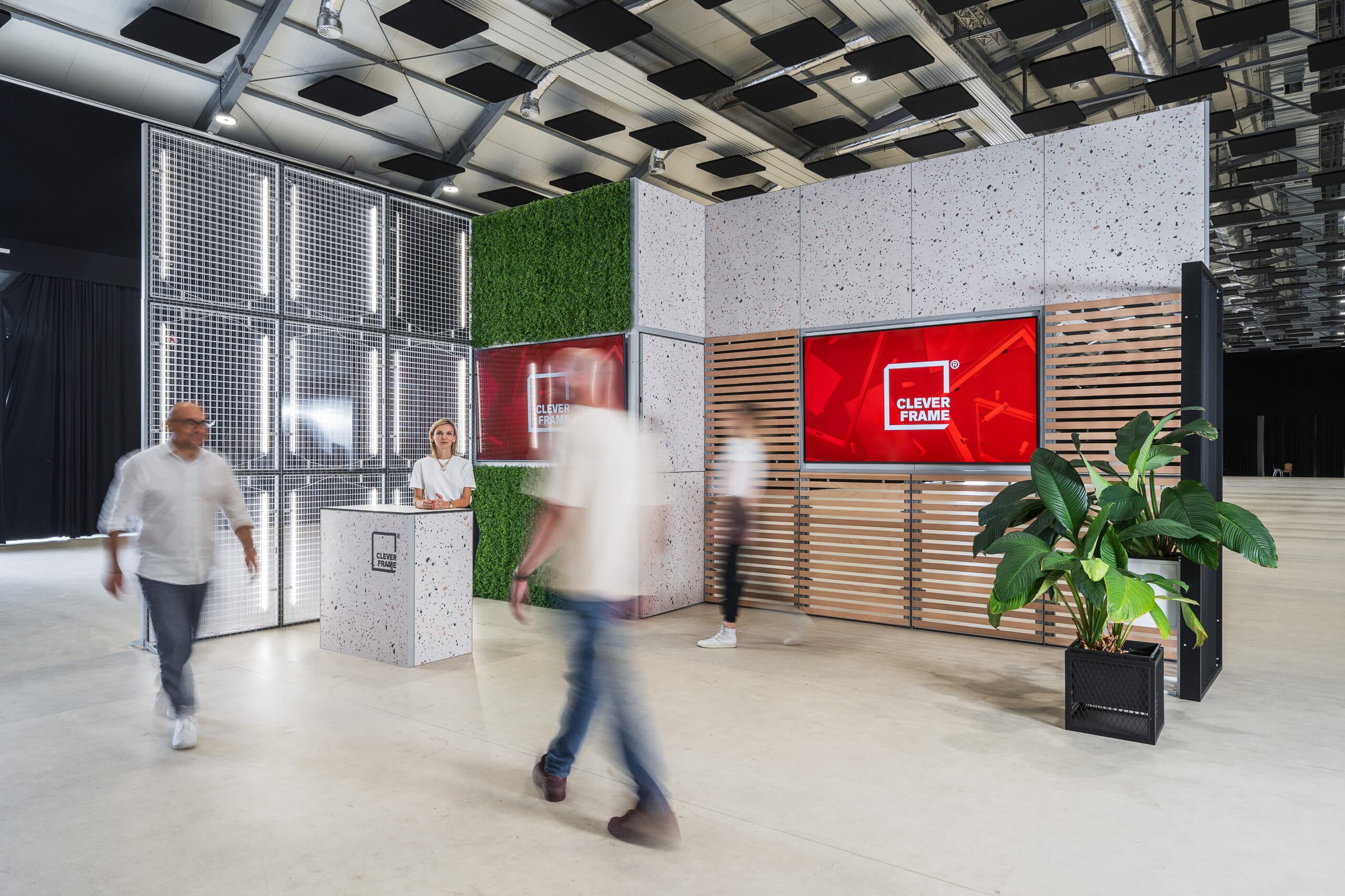
With Clever Frame trade show booths, an important support for testing and iteration is the modular structure and the magnetic mounting system for graphic panels. This makes it easier to swap messages seasonally or by campaign without rebuilding the entire stand, helping you react faster to data-driven insights, update the offer, or refine the message for a different audience segment. Equally important is organizing visitor flow: entrance widths, visibility of key messages, logical routing to conversation and demo zones, and minimizing points where bottlenecks form.
Practical examples of data-driven marketing
In offline applications, the key is a simple link: goal → measurement → decision. Below are examples of how data can lead to concrete improvements at a booth and in post-event activities:
- testing two value proposition variants by swapping graphic panels between show days and comparing entry counts, conversation duration, and lead structure,
- analyzing visitor flow using team observations, simple measurements (e.g., counting entries), and touchpoints, then adjusting zone layout so the demo doesn’t block the entrance or reduce the number of conversations,
- segmenting leads on-site using qualifying questions and product interests, which shortens sales response time after the event,
- collecting qualitative data via short post-conversation surveys and analyzing recurring objections, helping refine the brand narrative and sales materials,
- comparing the effectiveness of trade shows, showrooms, and roadshows using a shared KPI set (e.g., cost per valuable contact, follow-up meeting rate, proposal conversion), which makes budget allocation easier.
See also
- Marketing performance measurement
- Lead scoring
- Contextual marketing
- Customer-centric marketing