
What is emotional marketing?
Emotional marketing is an approach to brand communication in which the audience’s emotions play a key role – such as a sense of safety, curiosity, trust, joy, pride, or inspiration. In event marketing and face-to-face sales, this means designing brand touchpoints that build positive associations and improve message recall, rather than only communicating product specifications.
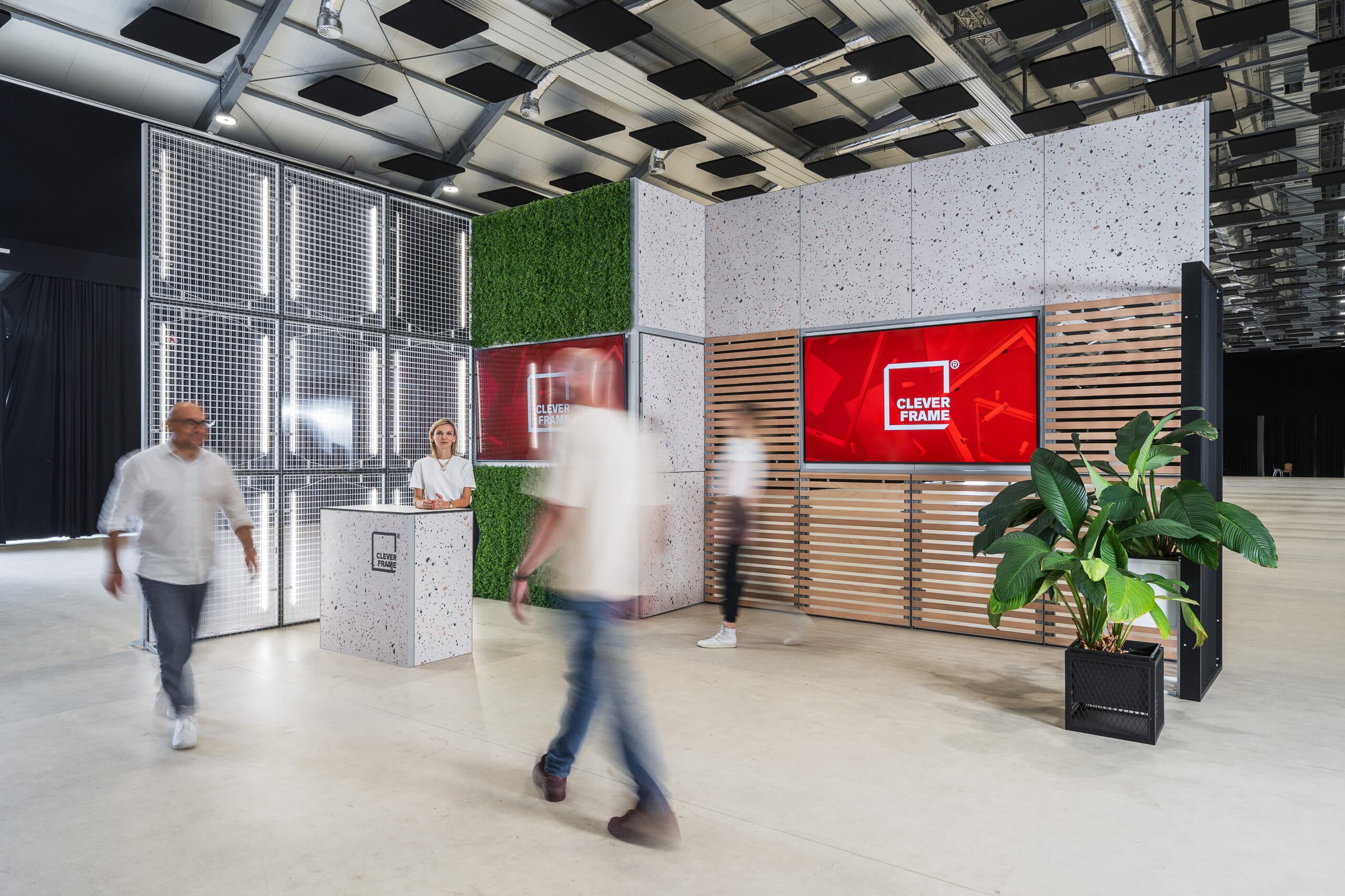
In the context of industry trade shows and offline activities, emotional marketing is especially important because decisions are made in a multi-stimulus environment, with limited time for conversation and strong competition between messages. A trade show booth then becomes a brand experience tool: it structures the contact, guides visitor movement, supports the narrative, and makes sales conversations easier thanks to a cohesive space and consistent visual identity.
What are the main goals of emotional marketing?
The goals of emotional marketing in event activities relate to both brand perception and the quality of relationships with visitors. Most often, they include:
- increasing brand and offer recall through an engaging experience,
- building trust in direct contact through clear communication and a predictable conversation path,
- reducing distance in the brand–audience relationship through benefit-led language and empathetic service,
- bringing brand identity (e.g., innovation, responsibility, premium) to life in a form that can be “felt” in the space,
- supporting purchase intent and a decision about the next step (meeting, demo, quote) without pressure or information overload.
Benefits of emotional marketing at trade shows and events
Emotions don’t replace product arguments, but they increase the chance that visitors will hold their attention and return to the conversation after the event. In the context of booths and offline activations, the most common benefits include:
- better lead quality, because a welcoming experience encourages longer conversations and more precise needs discovery,
- higher brand recognition thanks to consistent, repeatable visual identity across multiple touchpoints,
- a greater likelihood of recommendations when visitors get a simple, positive reason to talk about the brand,
- lower “re-explaining” costs, because a well-designed space organizes the message and reduces communication chaos,
- easier campaign consistency when graphics and messages can be quickly adapted to an audience segment, product, or funnel stage.
Challenges and limitations
Emotional marketing works when it is authentic and supports the real value of the offer. The most common limitations come from design and operational mistakes, such as:
- inconsistency between the brand promise and the booth team’s behavior, which quickly undermines credibility,
- sensory overload (too much content, noise, too many messages), which shortens contact time and reduces understanding,
- a lack of planned visitor flow, so visitors don’t know where to go or how to start the interaction,
- “emotions for effect” without a clear business goal and metrics (e.g., number of conversations, demos, post-event meetings),
- overlooking accessibility – designing communication and space without considering different participant needs.
How is emotional marketing used in trade show booths and events?
At events, emotions are built mainly through a cohesive in-space experience – from the first impression, through orientation in the layout, to the conversation and closing the contact. In practice, the key elements are a clear message hierarchy, a logical division into zones (e.g., welcome, presentation, conversation), ergonomics, and consistent visual identity.
Flexibility of the build also plays an important role. Clever Frame trade show booths allow the layout to be adapted to the event goal and expected foot traffic, and setup and teardown are tool-free. In addition, magnetically mounted graphic panels make it easier to swap messages efficiently, supporting seasonal campaigns and responding to changing needs across the event cycle (e.g., one message for a roadshow, another for an industry trade show).
Examples of emotional marketing in practice
Emotional marketing at a booth does not have to involve advanced technology. Most often it works best when it combines a simple interaction scenario with a clear, well-crafted space. Examples include:
- a problem–solution narrative in which visitors quickly recognize their own situation and see how the offer changes everyday work,
- product micro-experiences, i.e., short demos delivered in a consistent sequence that creates a sense of control and understanding,
- consistent visual communication across multiple points of the booth, where the key message and promise are visible from different directions,
- designing “trust moments,” e.g., clearly stating who the solution is for and when it does not make sense to implement it, which strengthens credibility,
- adapting creative to the event context through efficient swapping of graphic panels, without rebuilding the entire display.