
What is brand perception?
Brand perception is the way audiences understand, interpret and evaluate a brand based on their experiences, emotions and interactions. It is a subjective assessment formed over time through contact with visual communication, product quality, customer service and brand presence at events, trade fairs and in showrooms. Brand perception can be positive, neutral or negative and has a direct impact on purchasing decisions and long-term loyalty.
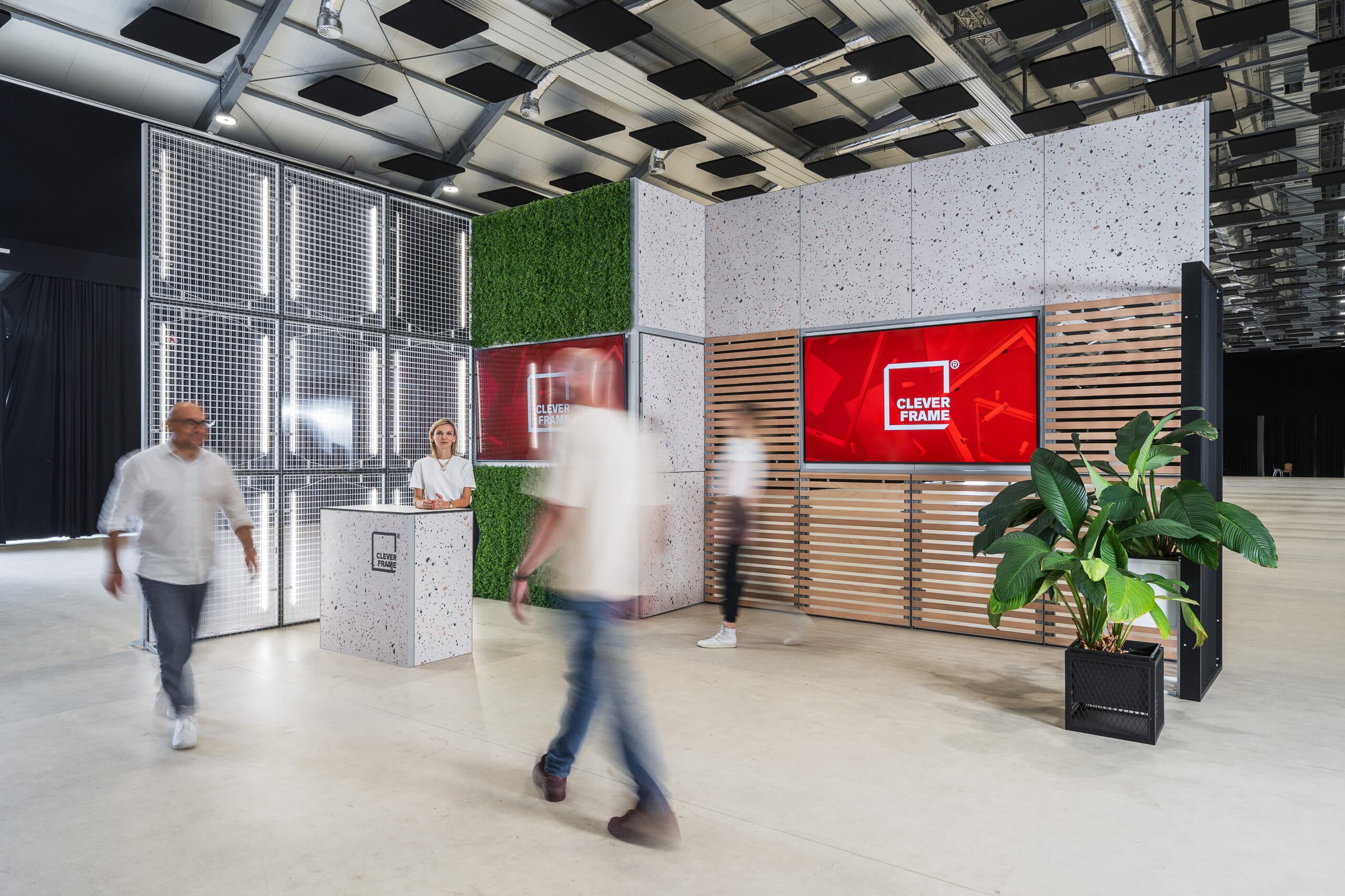
For Clever Frame, brand perception is strongly influenced by how presentation spaces are designed and executed. Modular structures, magnetically mounted graphic panels and coherent brand scenography help create professional, visually appealing environments. When visitors experience a clear, well-organised stand or showroom, they are more likely to associate the brand with quality, reliability and attention to detail.
What are the characteristics of brand perception?
Brand perception is shaped by several key components:
- emotional reactions during contact with the brand,
- judgements about product and service quality,
- assessment of visual communication and overall aesthetics,
- associations created during events and presentations,
- influence of first impressions on later evaluations.
What are the benefits of a positive brand perception?
A positive brand perception offers clear business advantages:
- greater trust in the brand and its solutions,
- higher willingness of visitors to start conversations,
- easier differentiation from competitors at trade fairs and events,
- stronger support for sales processes and lead generation,
- increased likelihood of repeat contact and recommendations.
What are the challenges in managing brand perception?
Managing brand perception requires consistency and control of details:
- maintaining a high standard of execution for all visual elements,
- ensuring coherent visual identity across different locations and events,
- adapting scenography to various spaces without losing brand character,
- aligning staff communication with the brand’s tone and values,
- reacting to feedback and improving weak points in the experience.
What are examples of shaping brand perception?
Brand perception can be strengthened in many event and exhibition scenarios. Examples include:
- Clever Frame exhibition stands with polished design and consistent branding,
- product presentations carried out in clearly structured demo zones,
- showrooms that communicate professionalism through layout, lighting and materials,
- roadshow activations with repeatable, recognisable brand environments,
- promotional zones designed to reflect the brand’s style and promise.