
At trade shows, everything starts earlier than visitors ever see. Before your booth begins to attract attention, before the first sales conversations happen, and before your brand starts delivering real event results, you need to get through one of the most critical stages of the entire process: the trade show setup window. This is the moment that determines whether your team starts the event calmly and professionally, or whether they spend the first minutes under pressure from delays, improvisation, and unnecessary stress.
In practice, the setup window is often short, governed by organizer rules, and far more demanding than first-time exhibitors or teams without experience in repeatable systems expect. Entering the exhibition hall is not just about “putting the booth together.” It also involves transport logistics, the sequence of tasks, team preparation, material flow, and the ability to work under tight time constraints. Even a well-designed trade show booth can lose its full potential if the entire move-in process has not been organized in advance.
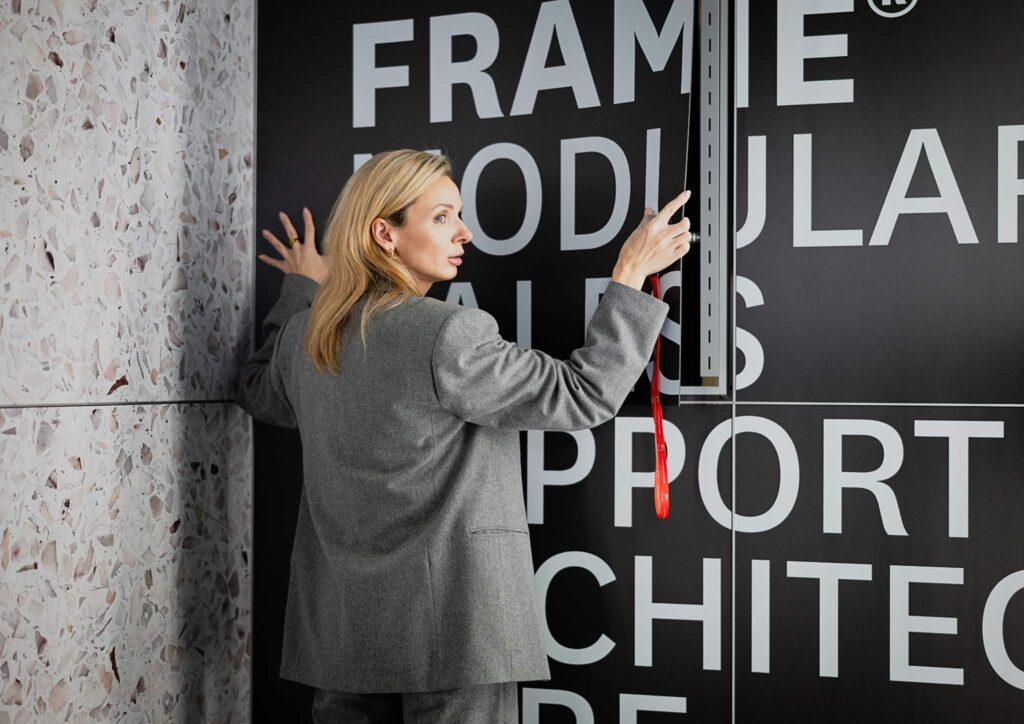
That is why installation should not be treated as a technical add-on to booth design. It is part of your event strategy, influencing team comfort, the quality of your event launch, and the final perception of your brand. This is also where the operational advantages of modular systems become especially clear. Clever Frame trade show booths support a smooth event start thanks to their modular structure, tool-free assembly and disassembly, space-saving transport, and the ability to plan layouts in a predictable, repeatable way.
A setup window is the time slot assigned by the organizer during which an exhibitor can enter the venue, bring in display elements, and prepare the booth for the start of the event. It sounds simple, but in practice, this stage is often one of the biggest sources of pressure. The reason is straightforward: multiple teams are working at the same time, access is limited, specific procedures apply, and every minute of delay affects the next stages of booth preparation.
Most problems arise when a brand starts thinking about setup too late. The team focuses on graphics, design, and materials, and only at the very end asks: how are we actually going to bring all of this in, assemble it, and get it ready on the show floor in such a short time? As a result, even a good booth design can turn out to be operationally difficult.
The most common sources of delays look very similar across different events:
That is why a smooth event entry does not begin on setup day. It starts much earlier, already at the stage of planning your booth and the logistics of your brand’s entire event presence.
One of the most common mistakes is treating setup as a separate stage, disconnected from the exhibition design itself. In reality, how quickly and efficiently a booth can be prepared depends largely on the logic of the structure. If the design is too complex, includes many custom elements, or requires numerous steps to be completed in a specific order, the trade show setup window automatically becomes more risky.
That is why a well-designed booth should not only look good, but also perform well operationally. It should be possible to assemble it in logical stages, without excessive dependencies and without the need for improvisation on the show floor. This aligns closely with the principles Clever Frame also discusses in other blog articles. It is worth taking a broader view and treating setup as part of the booth’s function, just like communication or zone layout. A helpful example is the article Trade Show Booth Design: How to Plan a Functional and Modern Trade Show Booth, which clearly shows that good booth construction is not decoration, but a working tool for your brand at an event.
The best way to reduce delays is to organize in advance all the things that should not require decisions on site. The fewer questions your team has to ask during setup, the greater the chance that everything will run smoothly.
Setup should not begin with the question, “So where do we start?” Your team should know in advance the order of operations: what comes in first, which elements form the structural base, when graphics are installed, where materials are placed, and who is responsible for checking whether the booth is event-ready.
In practice, it helps to map out a simple move-in scenario for the exhibition hall:
There is no time on the show floor to decide who handles the structure, who deals with graphics, and who manages materials and order. Even a small team should have a clear division of responsibilities. This is not about rigid hierarchy, but about avoiding situations where several people do the same thing while other tasks have no owner.
A simple role split works well:
A great number of delays begin with disorganized transport. If components arrive at the venue in random order, the team first loses time searching for the right parts and only then moves on to the actual work. This is especially important when the setup window is short and there is no room for unnecessary movement.
Packing should answer one key question: what needs to be available first, and what can come later? This way of thinking reduces chaos and speeds up the whole process. In practice, it is also worth deciding in advance where bags, crates, and packaging will be placed after unloading so they do not block the working area.
This topic is also linked to later storage and transport. If your brand wants to operate consistently across different events, it is worth planning storage and transport methods from the very beginning. The article Trade Show Booth Design Across the Brand Lifecycle: How to Plan an Exhibit for More Than One Event.
The biggest advantage of modular booth systems is predictability. Your team is not working with a random layout or a set of elements that has to be “figured out” from scratch every time. Instead, they use a structure based on repeatable frames and connectors that can be configured depending on the event, while still following the same setup logic.
In practice, Clever Frame trade show booths support a smooth event launch on several levels:
This is especially important when a brand participates in several events a year and does not want to build a new operational process from scratch every time. The same logic of flexibility and fast preparation is also well illustrated in the article Booth ergonomics: the back-of-booth space everyone forgets about, because efficient setup is not just about the structure, but also about properly prepared storage and material flow.
The booth design alone is not enough if your team does not know how to work to the rhythm of the event from the first minutes after entering the venue. A well-prepared team can not only assemble the display, but also quickly shift from technical mode into sales and communication mode.
This means that before the event, it is worth preparing not only a setup checklist, but also a “ready-to-launch” scenario. This covers very practical issues:
In practice, it is often the lack of these small arrangements that causes a booth to operate at only half speed during the first hour, even after setup is technically complete. Someone is looking for badges, someone else is arranging materials, and another person is still trying to understand the visitor journey. The more of these issues are handled in advance, the calmer and stronger your start will be.
Delays usually do not come from one major problem. More often, they are the sum of small oversights that start to accumulate on site. It is worth knowing these pitfalls, because many of them can be eliminated with very simple decisions.
Even if the brand has a detailed design, what the team needs on site is a simple, practical setup version. They should know what the final layout looks like, where each zone begins, and in what order it should be built.
If the team assumes that some decisions will be made once they are already on the show floor, the risk of delays rises fast. This applies to graphics, material placement, and zone division alike. The more things are “finalized” on site, the less predictable the setup becomes.
A booth may be assembled, but still not ready to start if sales materials, samples, giveaways, and the team’s personal belongings do not have their own designated place. That is exactly why back-of-booth space should be planned as a function, not as leftover space. This aspect also has a major impact on the later flow of work at the booth.
Sometimes the issue is not the setup itself, but a layout that already reveals its impracticality during assembly. Passages that are too narrow, an unclear entrance, conflicts between zones, or poorly positioned elements can slow down not only the start, but also later work during the event. This topic is related to design mistakes that Clever Frame discusses in more detail in the article 10 Most Common Trade Show Mistakes and How to Avoid Them.
Many companies treat setup as a purely technical stage that “happens before the real event.” In reality, the way a brand enters an event affects its actual readiness to perform from the very first minutes. A team that starts without chaos, with a well-prepared space and organized back-of-booth area, works more calmly and professionally right away.
This also matters from a branding perspective. A booth that is ready on time, tidy, and logically arranged provides better support for conversations and strengthens the impression that the brand is in control of its process. And these details often build visitor trust, especially in a B2B environment, where professionalism is judged not only by visual identity, but also by the quality of organization.
Efficient setup also has a longer-term dimension. If your booth is designed as a reusable solution and the entire move-in process can be repeated from one event to the next, your brand not only saves time, but also reduces the pressure to create new one-off solutions for every trade show edition.
In practice, repeatability is one of the most important conditions for sensible and more sustainable event marketing. The same structural base can work across different events, while changes mainly apply to the layout and visual layer. Graphic panels can be replaced quickly, adapting communication to current campaigns and marketing needs. This makes it easier to plan logistics, reduce unnecessary costs, and avoid organizational chaos in a busy event calendar.
If your brand wants to treat the trade show setup window seriously, it is worth going through a simple operational checklist before every event:
The setup window is not a technical detail. It is one of the moments that determine the quality of your entire event launch. A brand that enters the venue with a well-prepared booth, team, and logistics reduces stress, lowers the risk of mistakes, and moves faster to what matters most at trade shows: conversations, presentations, and relationship-building.
The key things to remember are simple:
If you want to prepare your booth and team to enter an event without delays and without unnecessary operational pressure, it is worth relying on a solution that supports process predictability from the start. Clever Frame trade show booths provide a modular base that makes it easier to plan layout, zone division, and assembly method, so your start on the exhibition floor is fast, professional, and repeatable from one event to the next.