
At trade shows and events, it is easy to focus on what is visible: the display, the graphics, and the first impression. In practice, however, performance is often decided “behind” the sales conversations, in the way the team’s work is organized, in the logistics of materials, and in whether the booth offers a place to put things away, restock brochures, or calmly prepare for the next meeting. An ergonomic back-of-house area is not an add-on. It is an element that supports focus, service quality, and a consistent brand image throughout the entire event day.
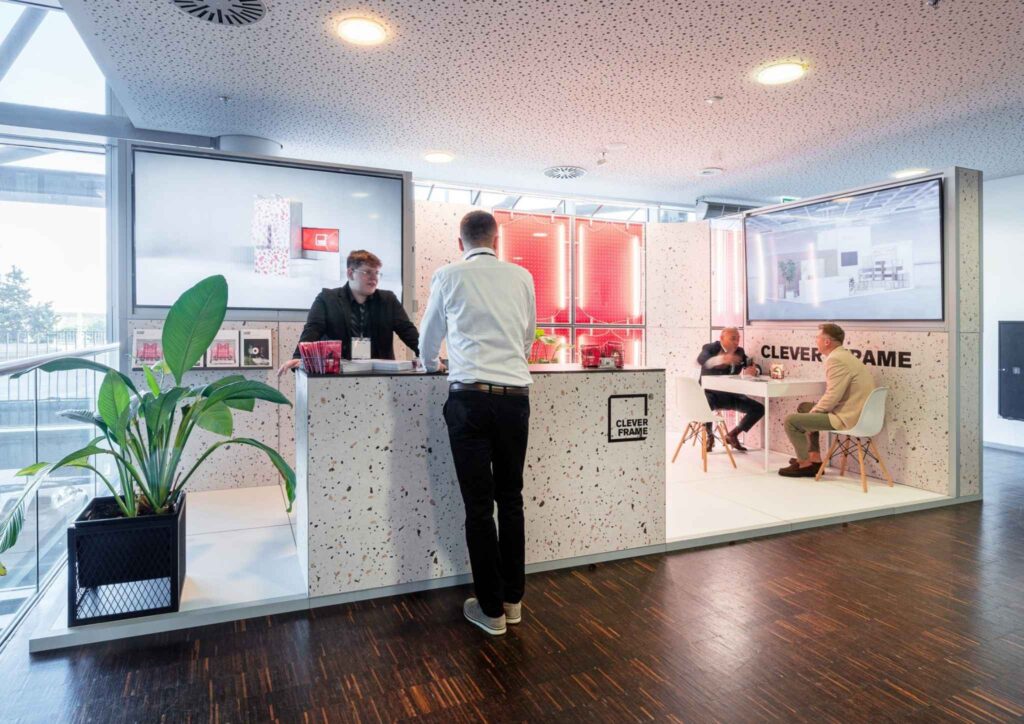
Booth ergonomics means designing the space so the team can perform tasks efficiently and without unnecessary effort: move around intuitively, access materials quickly, and maintain order despite a high number of interactions. In practice, this means well-planned zones, enough storage space, and a layout that does not create bottlenecks or chaos.
From an event marketing perspective, ergonomics directly shapes the visitor experience. When the team has control over the space, conversations flow more naturally, materials are always within reach, and the booth looks professional right through to the end of the event.
The back-of-house area is often treated as a place “for everything,” and that usually ends with an overcrowded corner and a frantic search for what is needed. An ergonomic back-of-house area is a planned function, not an accidental leftover space. At a trade show booth, it is worth providing at least a minimum area for storing materials and the team’s personal items so the front-facing zone stays organized.
With Clever Frame trade show booths, the flexible modular structure makes it possible to design the layout so the working area is fully functional while the display still looks aesthetic and cohesive. This gives the team easy access to the materials they need, while the exhibition remains clean, professional, and ready to attract visitors’ attention. The modular design also makes it possible to adjust the size of the back-of-house area to different event needs, which makes it easier to prepare the booth for multiple events throughout the year.
The back-of-house area does not have to be large, but it should be purposeful. It is worth planning it around the specific tasks that actually happen during an event:
Ergonomics begins with zoning. Even in a small space, it is possible to design a layout that organizes the team’s work. Clever Frame trade show booths support this because they make it possible to modify the configuration and expand it depending on the size of the space and the event objective.
The division does not need to be formal, but it should be clear to both the team and visitors. This reduces unnecessary movement and crossing paths. In practice, it is worth including:
Booth ergonomics is not a one-time design decision. For many brands, it changes with the event calendar, team setup, and activation goals. That is why the ability to reconfigure the booth without complications matters. Clever Frame trade show booths make it possible to modify the layout and adapt it to different spaces while maintaining a consistent display standard.
An important organizational advantage is that assembly and disassembly take place without tools. This makes it easier to plan the work on-site and reduces the risk of delays, which often add stress to the team just before the event begins.
Ergonomics is also influenced by the way messaging is updated. When changing graphics is difficult, teams postpone it or improvise, which weakens brand consistency. In Clever Frame trade show booths, graphic panels mounted with magnetic tape make fast and easy replacement possible, adapting the display to seasonal campaigns and changing marketing needs. This supports both visual consistency and operational order at the booth.
The best moment to think about ergonomics is the planning stage, not installation on the show floor. The checklist below helps organize decisions before time pressure appears.
It is worth starting with a simple question: what will be used, and how often, during the day? The highest-turnover materials should be closest to the conversation zone, while “emergency” items can be stored deeper inside. In practice, it is worth planning for:
Ergonomics also means planning for changing traffic intensity. In practice, what matters is whether the team has room for brief regrouping and preparation for the next conversations. It is worth taking into account:
An ergonomic back-of-house area and modular booth design also have an environmental dimension, especially when a brand attends many events throughout the year. Using the same structure across different events reduces the need to produce new elements for every occasion. In addition, the ability to modify layouts makes it possible to adapt the booth to changing needs without generating unnecessary waste.
Logistics also matter. Space savings during transport make shipping and storage easier to plan. In practice, this means smoother preparation and fewer “emergency” decisions right before the event.
Ergonomics and back-of-house planning are just as important outside the exhibition hall. Clever Frame trade show booths can support brands across different event formats where fast setup, repeatable quality, and adaptable layouts matter.
This approach works especially well in formats such as:
Back-of-house ergonomics is one of those elements that rarely appears in the brief, yet in practice it often determines how effective the booth will be. It is worth treating it as part of the event strategy, not as an organizational detail.
The most important points in one place:
If you want to design a booth that genuinely makes the team’s work easier, including back-of-house space, zoning, and the flow of materials, Clever Frame can help you choose a modular layout suited to the rhythm of the event and the conditions of the venue.