What is an experiential zone?
An experiential zone is a dedicated area within a trade fair stand, event space or showroom designed specifically to provide visitors with an immersive, hands-on brand experience. Instead of only displaying products, the experiential zone invites people to interact, test, explore and feel how the solution works in practice. It combines visual communication, product demonstrations and sensory elements to create a memorable encounter with the brand.
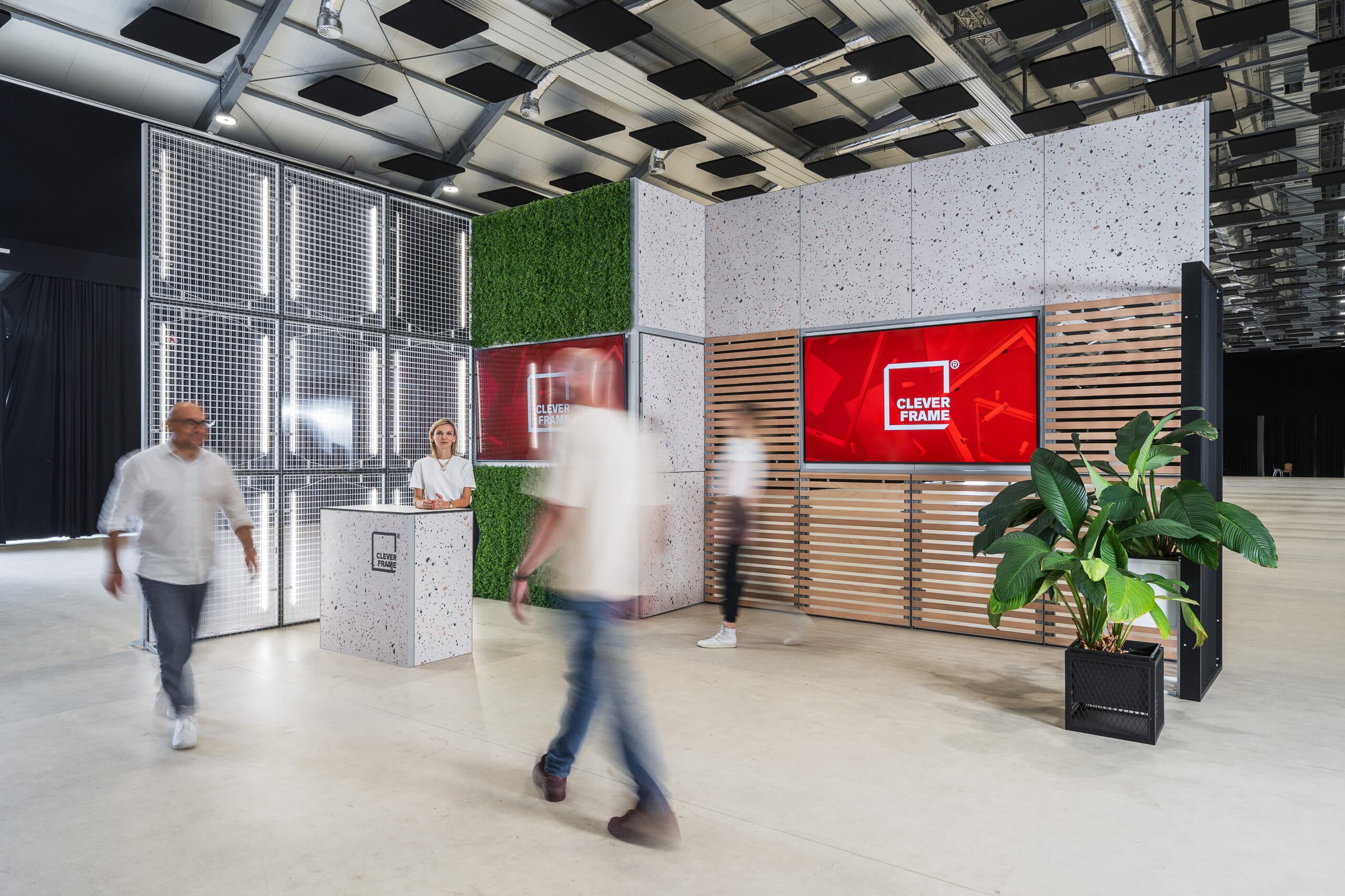
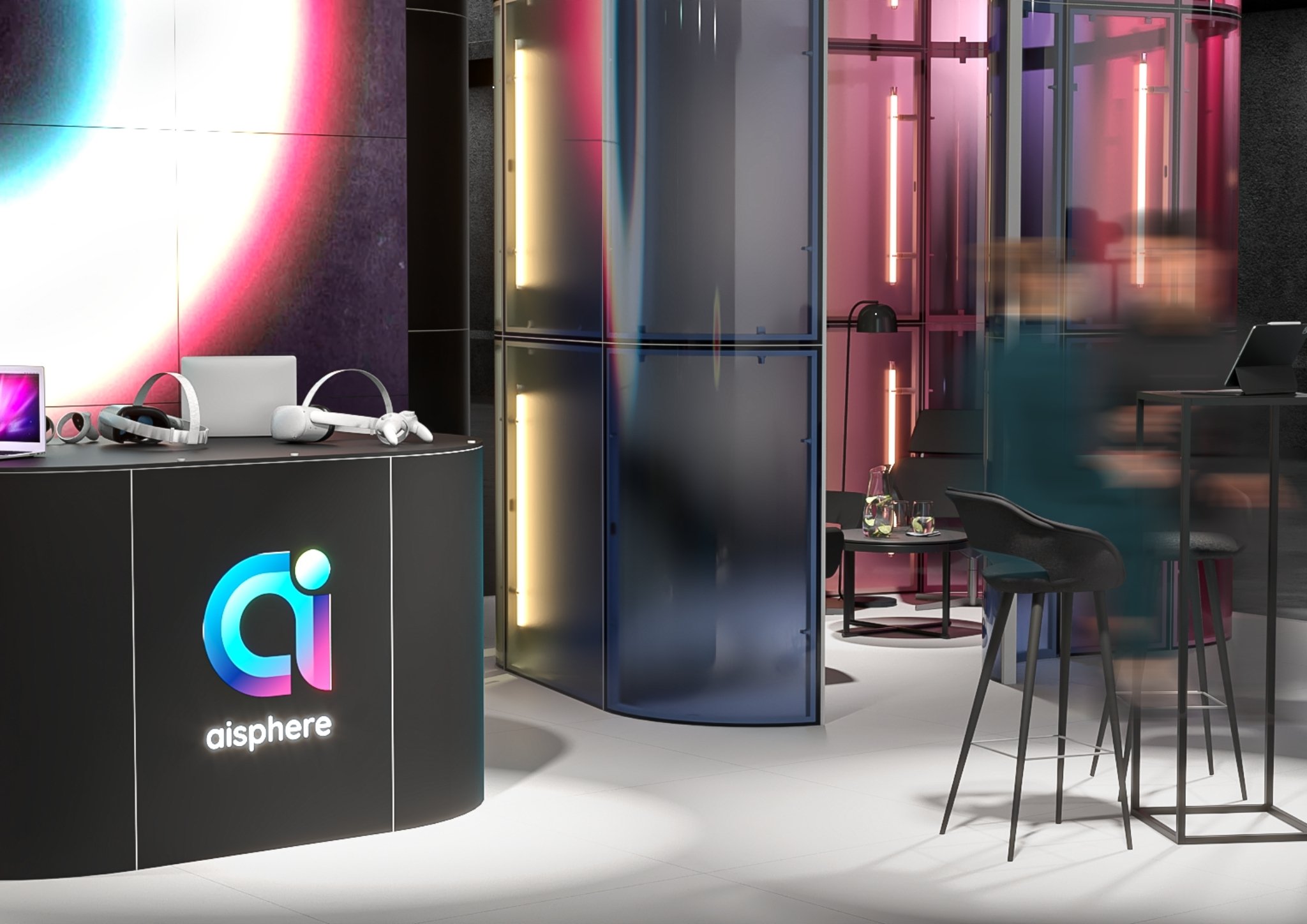
For Clever Frame, experiential zones are created using flexible spatial layouts based on modular structures and magnetically mounted graphic panels. This makes it possible to build clearly defined areas for demos, tests or presentations that can be easily adapted to different events, audiences and campaign themes.
What are the characteristics of an experiential zone?
An experiential zone has several defining characteristics:
- focus on active participation rather than passive observation,
- integration of product demonstration into the overall brand experience,
- use of space, lighting and graphics to guide visitors,
- clear functional layout that supports interaction and movement,
- coherent visual identity aligned with the brand’s positioning.
What are the benefits of an experiential zone?
Well-designed experiential zones provide several benefits:
- higher visitor engagement and longer time spent in the brand area,
- better understanding of product features and benefits,
- stronger emotional connection with the brand,
- more opportunities to start meaningful sales conversations,
- greater memorability of the stand or event compared to standard displays.
What are the challenges of creating an experiential zone?
Designing an effective experiential zone requires planning and attention to detail:
- balancing attractive design with practical functionality,
- ensuring that the area remains accessible even during high traffic,
- coordinating staff activities with the intended visitor journey,
- maintaining technical reliability of interactive elements,
- adapting the concept to different event formats and space constraints.
What are examples of experiential zones?
Experiential zones can take different forms depending on the brand and objectives. Examples include:
- Clever Frame demo areas where visitors can test products in real-use scenarios,
- interactive corners combining touchscreens with physical product samples,
- showroom sections designed to simulate the customer’s working environment,
- roadshow installations that recreate the same immersive zone in multiple cities,
- sensory spaces focusing on light, texture and visuals to reinforce brand experience.