What is visitor flow?
Visitor flow describes how people move through a trade fair stand, event space or showroom – which routes they take, where they stop, how long they stay in specific areas and how easily they can navigate the space. It is a key aspect of spatial planning, influencing visitor comfort, engagement and the effectiveness of product presentation.
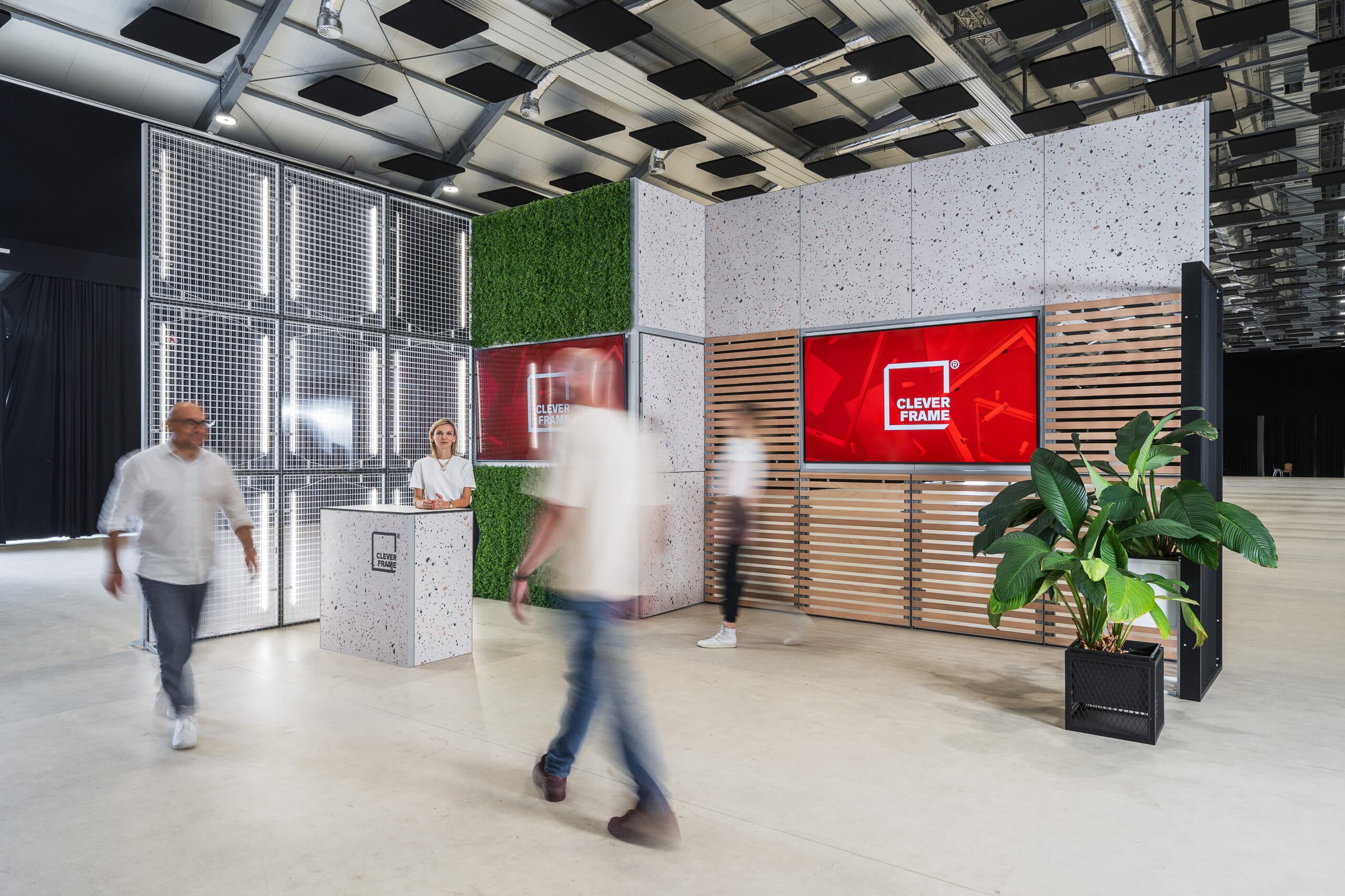
For Clever Frame, visitor flow is strongly influenced by the layout of presentation areas. Modular constructions, magnetically mounted graphic panels and clearly defined demo or meeting zones make it possible to guide visitors intuitively through the stand, highlight key points of interest and avoid congestion.
What are the characteristics of visitor flow?
Visitor flow can be described by several key characteristics:
- main routes that visitors naturally follow through the stand,
- zones where visitors tend to stop and spend more time,
- bottlenecks where movement is slowed or blocked,
- the relationship between open space and presentation areas,
- the impact of signage, graphics and stand openings on movement.
What are the benefits of well-planned visitor flow?
Carefully designed visitor flow brings multiple benefits:
- greater comfort for visitors moving through the stand,
- higher engagement with key zones such as demo areas and meeting points,
- better visibility of priority products and messages,
- more efficient use of space, especially during busy periods,
- stronger support for lead generation and sales activities.
What are the challenges in managing visitor flow?
Managing visitor flow requires planning and regular observation:
- designing entrances and exits that support natural movement,
- avoiding overcrowded or underused areas,
- positioning demo zones so they attract attention without blocking routes,
- adapting the layout to different stand sizes and event formats,
- adjusting arrangements based on real visitor behaviour during the event.
What are examples of working with visitor flow?
Visitor flow can be optimised in many exhibition and event scenarios. Examples include:
- Clever Frame stands with open corners that encourage visitors to enter from multiple directions,
- central demo zones surrounded by clear circulation paths,
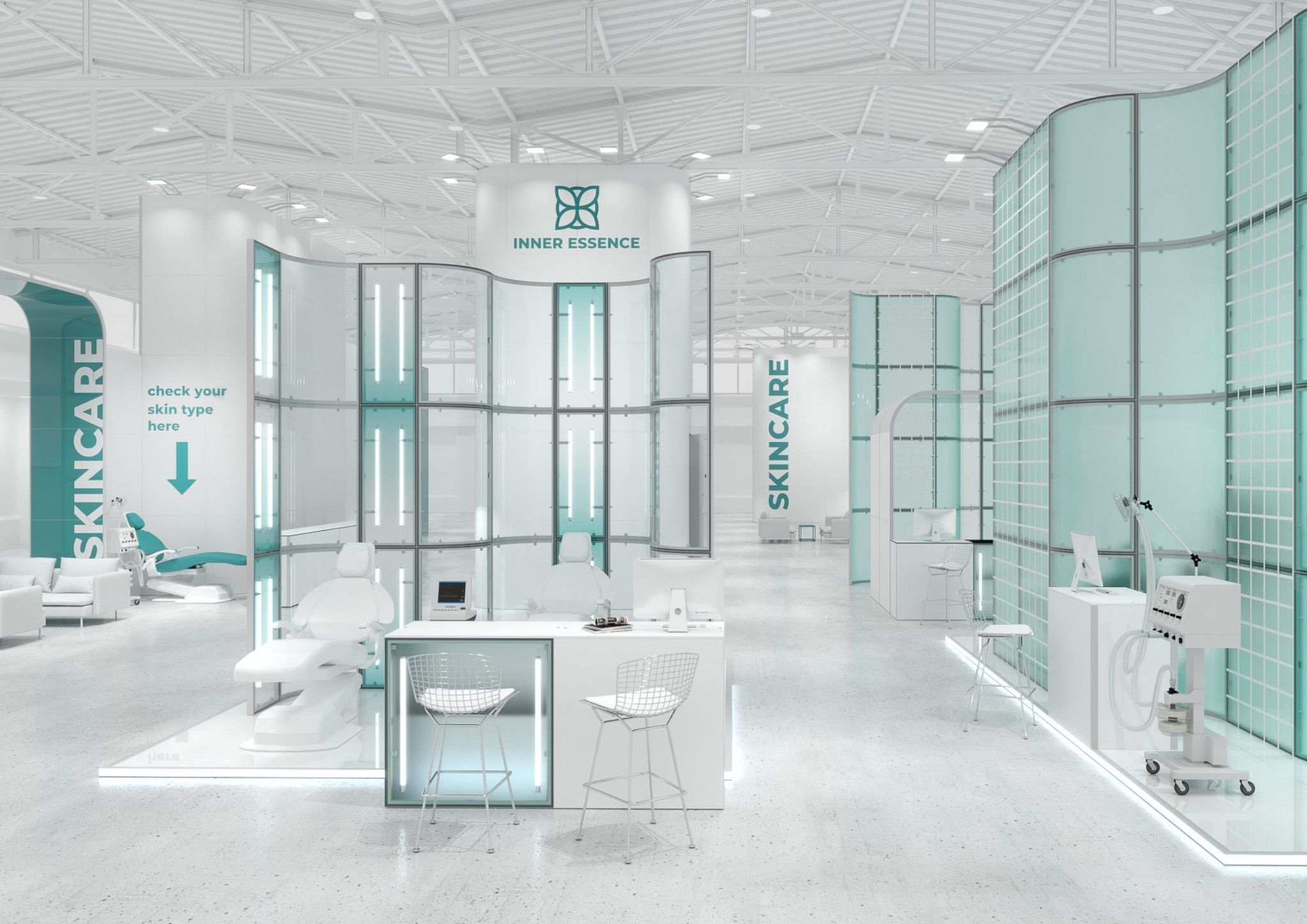
- showroom layouts that guide visitors through a logical sequence of product areas,
- roadshow setups with repeatable layouts adapted to different locations,
- experiential zones positioned so that visitors naturally encounter them on their route.