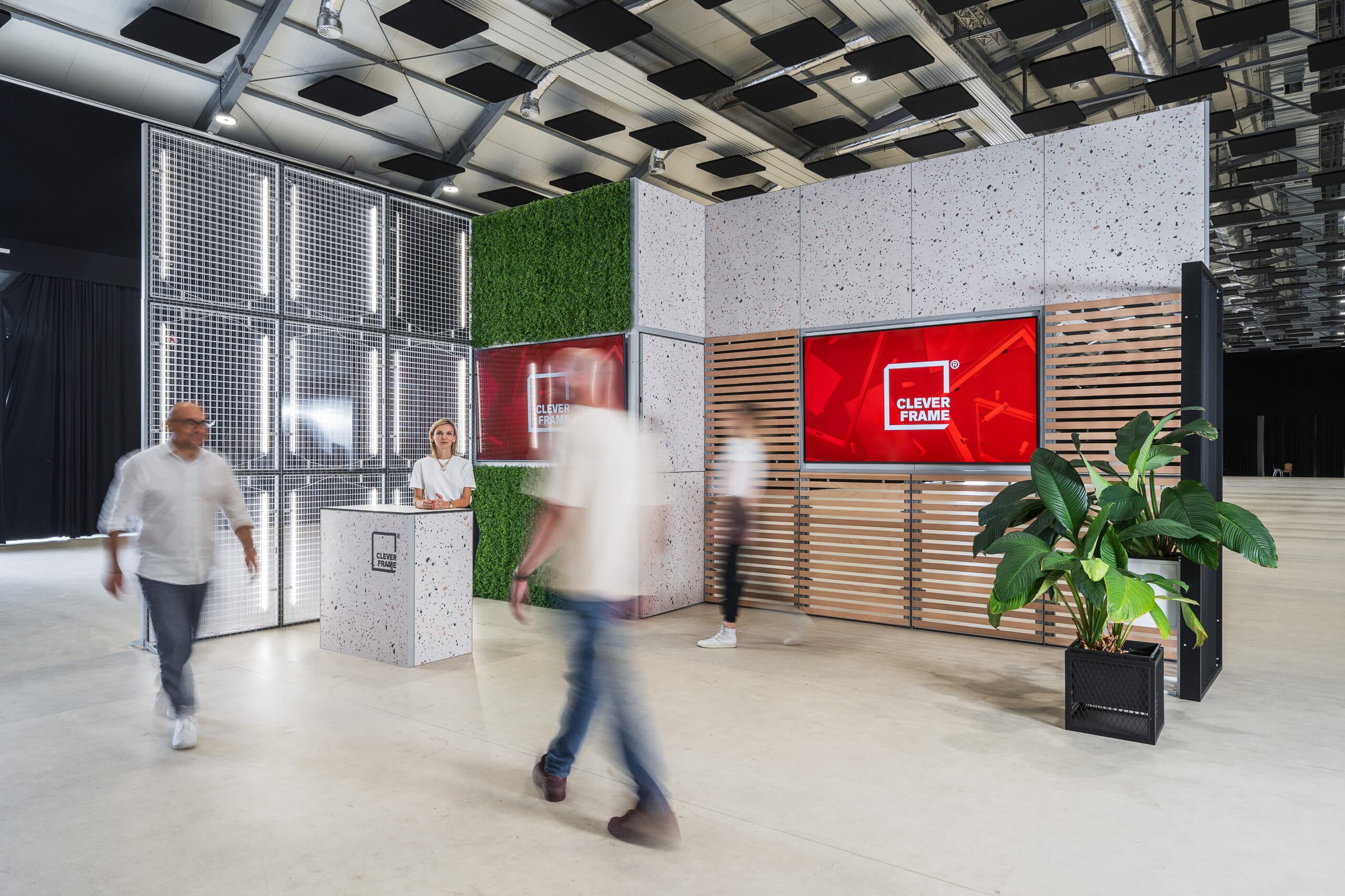

What is the halo effect in marketing?
The halo effect in marketing is a psychological phenomenon in which a positive impression of one aspect of a brand influences how audiences perceive its other attributes. When visitors experience a high-quality presentation, professional staff or an impressive exhibition stand, they are more likely to assume that the brand’s products and services are equally high quality. The halo effect works subconsciously and plays a major role in how decisions are made during and after events.
For Clever Frame, the halo effect is reinforced by carefully designed event spaces that convey professionalism and attention to detail. Modular structures, magnetically mounted graphic panels and refined brand scenography help create an immediate positive impression. This positive first reaction often transfers to the perception of the brand’s reliability, innovation and competence.
What are the characteristics of the halo effect?
The halo effect in marketing has several defining characteristics:
- positive impressions are transferred from one element of the brand to others,
- first impressions strongly influence later evaluations,
- the effect is emotional and often subconscious,
- visual and spatial presentation plays a crucial role,
- the effect can reinforce or weaken other marketing activities.
What are the benefits of using the halo effect?
When used intentionally, the halo effect can provide brands with several advantages:
- stronger trust in the brand based on a positive first impression,
- greater willingness of visitors to start conversations,
- easier differentiation from competitors at events,
- better reception of product presentations and demonstrations,
- higher likelihood of visitors remembering the brand after the event.
What are the challenges related to the halo effect?
Building a strong halo effect requires consistency and high standards:
- maintaining high quality across all visible elements of the stand,
- ensuring that visual identity is consistent in different locations,
- taking care of details such as lighting, materials and graphics,
- aligning staff behaviour with the brand image,
- avoiding elements that could disrupt or weaken the positive impression.
What are examples of the halo effect in marketing?
The halo effect can be observed in many event and exhibition situations. Examples include:
- Clever Frame exhibition stands with high-quality finish and coherent scenography,
- showrooms where a refined atmosphere enhances the perceived value of products,
- roadshow activations with a consistently premium presentation in multiple locations,
- promotional zones that stand out through clear branding and strong visual design,
- events where professional staging leads visitors to view the entire brand more favourably.