
What is a brand interaction model?
Brand interaction model describes how a brand plans and structures audience interactions in a specific context – from the first contact (e.g., a visual one), through conversation and a product/service experience, to post-event actions. In event marketing and at industry trade shows, it works as a practical “experience script”: it shows where and how a visitor should encounter brand messages, the product, the team, and credibility-building proof points (e.g., case studies, demos, samples).
In physical environments (a trade show booth/exhibition stand, a showroom, or a roadshow), a brand interaction model links marketing goals with zone planning, the visual communication layout, and the visitor service plan. As a result, interactions are not random – they follow assumptions about visitor flow, priority conversation topics, how the product is presented, and what visitor behavior should be the outcome of the brand contact (e.g., leaving a lead, booking a meeting, testing a solution).
What are the main goals of a brand interaction model?
A well-defined interaction model helps organize the team’s work and reduces communication chaos during events. It most often supports goals such as:
- ensuring a consistent brand experience across touchpoints (entry, conversation area, product presentation, take-away materials),
- guiding visitor movement and behavior through a deliberately designed visitor flow and clear “decision moments,”
- improving the quality of sales conversations by matching content, arguments, and demos to the visitor’s intent,
- turning offline presence into measurable outcomes, e.g., qualified leads, demo sign-ups, badge scans (where permitted by the organizer and regulations), and post-show meetings.
What are the benefits of a brand interaction model?
An interaction model acts as a shared language for marketing, sales, and booth staff. It streamlines design and operational decisions – especially when a brand attends many events each year.
- clearer messaging – copy and visuals are assigned to stages of the journey rather than scattered,
- greater repeatability and scalability – easier replication of a proven zone layout across locations,
- better team efficiency – clear ownership of first contact, demos, and confirming next steps,
- visual consistency despite campaign changes – swappable graphic panels (e.g., magnet-mounted, if the system uses that solution) make it easier to update messages for seasonal campaigns and shifting marketing priorities,
- more control over experience quality – the model supports testing and iteration (what works and what needs adjustment).
Challenges and limitations of a brand interaction model
Even a strong model must be adapted to the realities of a trade show hall and real visitor behavior. Common constraints are worth considering early in planning:
- fluctuating traffic levels – different interactions work better during peak hours than during quieter periods,
- different audience needs – the same visitor flow may be too long for people “on the move” and too brief for decision-makers who want detail,
- risk of sensory overload – too many messages reduce offer clarity and increase the time needed to orient in the space,
- dependence on team skills – the model works when staff can guide conversations by stages and ask the right questions,
- technical and formal constraints – noise, lighting, organizer rules, and limited floor space may require changes.
How is a brand interaction model used at trade shows and events?
At trade shows, the interaction model connects booth design with the communication and staffing plan. The space becomes a tool for guiding the conversation – from attracting attention, through needs discovery, to providing proof and making the next step easy after the event.
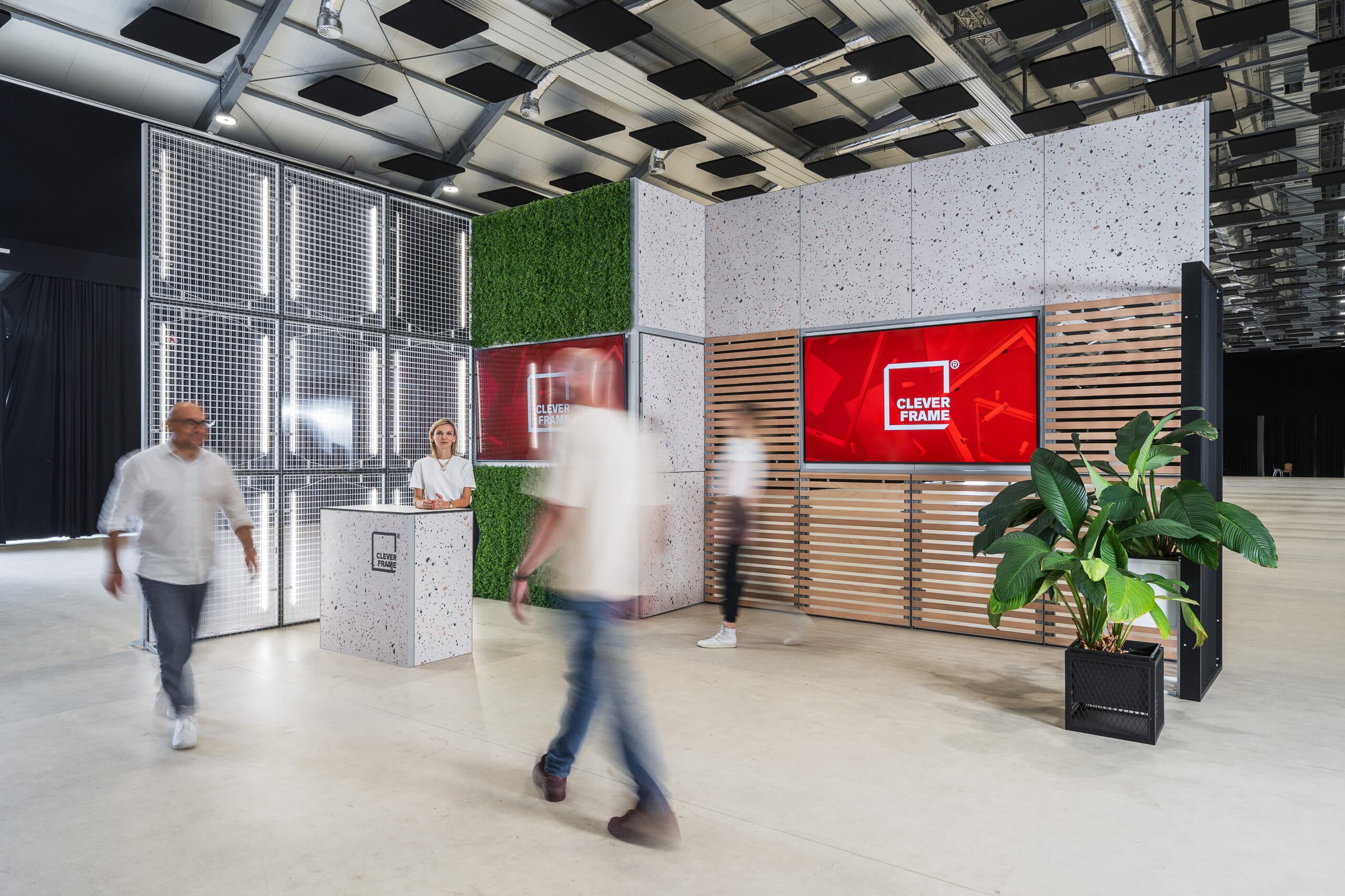
In practice, this includes planning zones with different functions (e.g., quick questions, demos, in-depth conversations), designing clear start and entry points, and managing visitor flow. Clever Frame trade show booths can support this process with a modular structure that makes it easier to adapt the layout to different footprints and interaction scenarios, as well as tool-free assembly and disassembly. Magnetic mounting of graphic panels enables quick message updates without rebuilding the entire booth, which matters when running multiple events, roadshows, or recurring campaigns.
Practical examples of a brand interaction model
It’s worth mapping the interaction model as a short set of paths tailored to the event goals and the type of audience. Examples include:
- B2B trade shows – a short sequence: attract attention with a problem-led message, qualify (industry, role, buying timeline), run a needs-based demo, agree the next step, and capture the lead,
- Product launch events – a path with a clear “wow” moment (e.g., a prototype or hands-on test), followed by an implementation discussion and deeper supporting materials,
- Showrooms – a consultative scenario where the space guides visitors through solution categories and the visual layer supports comparing options,
- Roadshows – a repeatable modular setup across cities and fast graphic panel swaps to match the message to the audience’s industry or a local partner.