
At trade shows, it is not only the booth design that matters, but also the way the team works within that space. Even a well-prepared brand presentation can lose momentum when there are no clear roles, no rhythm, no lead-handling rules, and no simple answer to “who does what, when, and where.” The good news is that operational order can be designed much like the exhibit itself: step by step, with the goals of event marketing, time constraints, and the real conditions of the exhibition hall in mind.
Below is a practical model for organising your team’s workflow at the booth, including how Clever Frame trade show booths can support this through easier logistics, flexible configurations, and more consistent communication across different events.
Chaos rarely comes from bad intentions. Most often, it appears when key decisions are not made before the event and everything is arranged on the spot, in real time. The symptoms are familiar: “Who welcomes visitors?”, “Where do we record the contact?”, “What do we say about the product?”, “Who runs the presentation?”, “Who has access to the materials?”
In practice, this leads to lower-quality conversations, lost leads, overload on key people, and chaotic movement within the exhibit. Booth operations work like a connected system: a missing process in one area immediately affects everything else.
A booth team workflow is a set of rules, roles, and repeatable actions that take the visitor from first contact to lead handoff into the next stage of sales or marketing. The goal is predictability and repeatable quality, regardless of traffic volume and changing event conditions.
The best processes are simple and resilient under trade show pressure. It is worth planning them so that:
An effective process starts with the brief, but not with a vague statement like “we want more leads.” A better approach is to define a few key questions the team should answer during the conversation. These determine the qualification structure and what is worth noting down.
Example qualification dimensions include:
When the team knows exactly which three pieces of information matter after a conversation, half the chaos disappears. The rest comes down to consistency in roles and a simple documentation standard – notes Artur Balcerzak, Branch Director at Clever Frame.
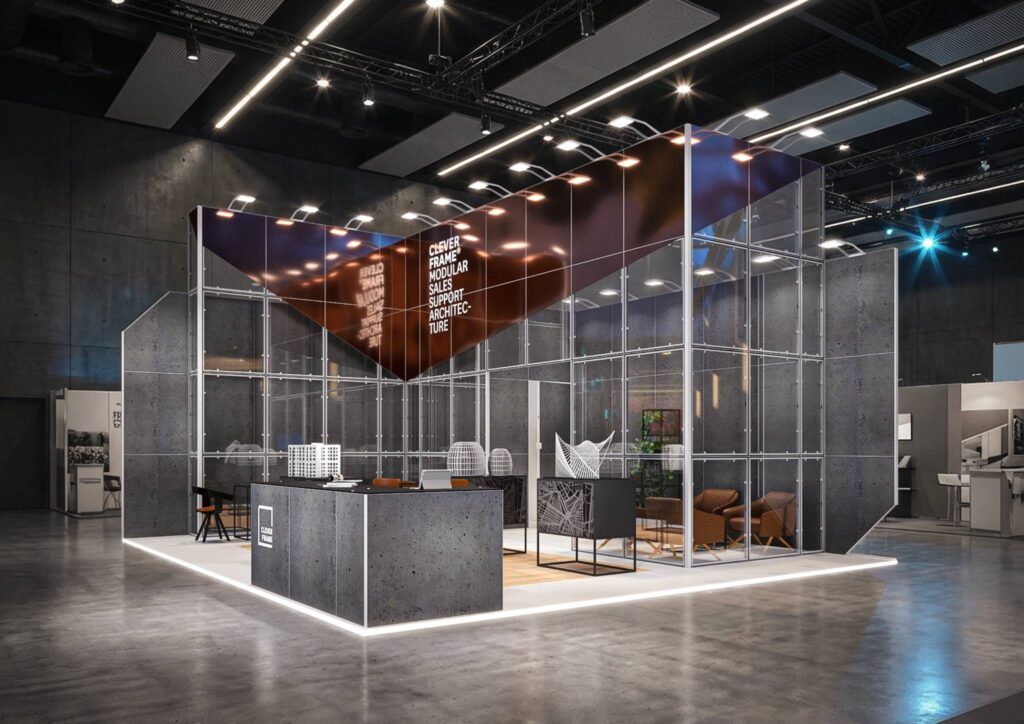
Your team workflow is much easier to maintain when the booth layout naturally suggests the next steps: attract attention, start a short opening conversation, clarify needs, present the solution, record the lead, and confirm the next step. Clever Frame trade show booths, built on modular frames, make it possible to adapt the configuration to the event’s goals and expected foot traffic.
Even a small exhibit can work like a mini-process if it is divided into spatial roles. In practice, it is worth planning for:
Importantly, the layout should be easy to modify for future editions of the same trade show or for other events. A modular booth design makes it easier to adapt the format to the floor space and workflow scenario instead of forcing the team to improvise.
At the booth, part of the communication should work without staff involvement. That is why key messages should be placed where visitors will see them before the conversation starts. In Clever Frame trade show booths, graphic panels can be replaced quickly and easily, which makes it possible to adapt messages to seasonal campaigns or changing marketing needs. This helps keep the process consistent even when slogans, promoted products, or the campaign narrative change.
On event days, the role should matter more than the job title. The most common mistake is failing to assign responsibility, which leads either to gaps, because no one is greeting visitors, or to duplication, because three people explain the same thing. Below is a role model that is easy to implement regardless of team size.
Depending on the size of the team, one person may cover more than one role at different times of day. What matters is that responsibilities are clear at any given moment:
A trade show day usually has several phases: opening and warm-up, peak visitor traffic, slower periods, and the final stretch with closing conversations. Without a rhythm, the team works unevenly, with bursts followed by downtime, while key organisational tasks happen at the wrong moment.
Checklists reduce the number of decisions made on site and make it easier to onboard new people. They work particularly well at three moments:
The biggest operational loss at trade shows is valuable conversations that never enter the right post-event process. That is why the standard matters more than the tool itself: which data is mandatory and how priority is labelled.
The standard should be short and realistic to maintain in a crowded environment. It is worth deciding:
Operational chaos often begins before the hall even opens. When setup is delayed, the team starts the trade show day tired and under time pressure. Clever Frame trade show booths support order in this area because assembly and disassembly happen without tools, and the modular construction makes it easier to adapt to different floor spaces.
In practice, this also means easier planning for future events: the same booth build can work at different events, in showrooms, temporary displays, or roadshows, and the graphic panels can be updated without rebuilding the whole structure.
The team workflow also affects how many things have to be produced from scratch for each event. A modular approach to booth design helps reduce one-off builds and supports the reuse of the same elements across future projects. Operationally, this means fewer changes, fewer risks, and more predictable preparation.
It is worth connecting brand goals with practice: a consistent presence across multiple events builds recognition, and the ability to replace graphic panels makes it easier to adapt messages to seasonal campaigns or changing marketing needs.
To make the process easy to implement, it helps to write it out as a simple sequence. Below is a universal flow that can be adapted to different industries:
A consistent booth process combines space planning, team roles, and a lead management standard. To reduce operational chaos, it is worth remembering a few principles:
If you want to bring more structure to your team’s work at the booth before the next event, start with two things: role assignment for peak hours and a minimum lead-recording standard. The Clever Frame team can help choose a modular booth configuration and communication variants that support the operational process, from first contact to follow-up handoff.