
Trade shows and events are environments where visual content is created almost automatically: social media coverage, PR materials, documentation for management, and videos for recruitment campaigns. At the same time, they are also spaces where formal mistakes are easy to make – especially when shots include people, name badges, presentation screens, or booth elements belonging to other exhibitors. Below is a practical guide to image consent, GDPR, and photography rules, prepared from the perspective of brands that use Clever Frame trade show booths as a repeatable communication base across multiple events.
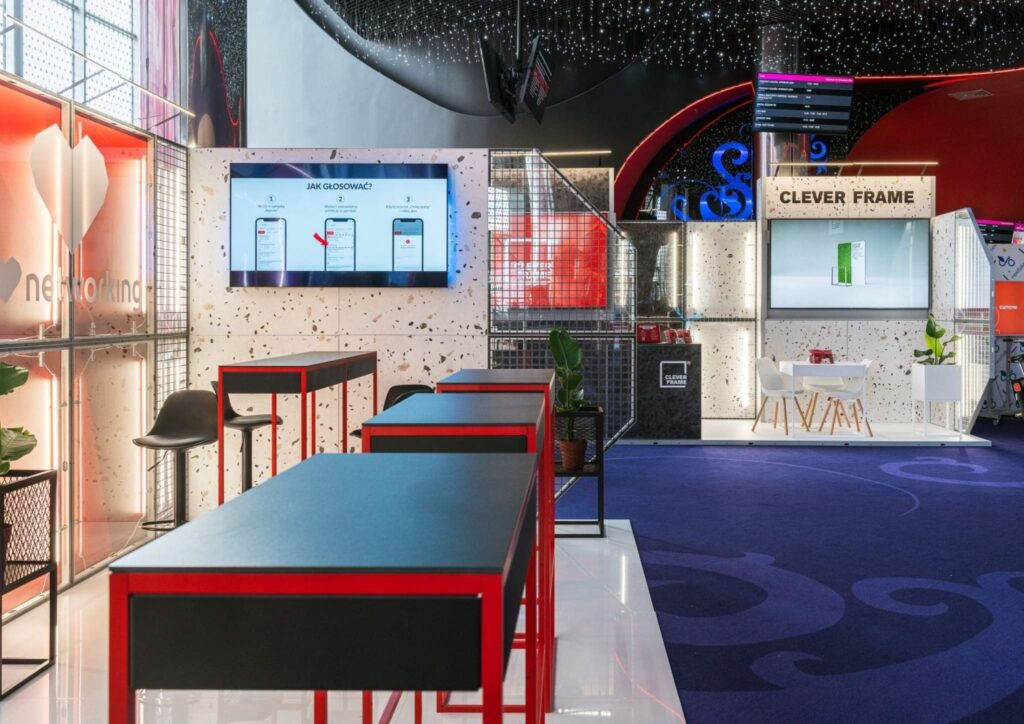
A person’s image may be protected under civil law, and in many situations a photo or recording also becomes personal data under the GDPR if it makes someone identifiable. At trade shows, these risks increase because the space is public, people move between booths, and brands publish materials intensively in real time.
In practice, this means combining three areas:
Image rights and personal data often go hand in hand, but not always. A crowd shot may not identify specific individuals, while a close-up of a conversation at a booth, with a clear face and a visible name badge, usually will.
As a rule, distributing someone’s likeness requires that person’s consent. There are exceptions that may apply to events in practice, but they should be interpreted cautiously, because disputes most often arise when the material is published in a marketing context.
If a person is recognisable and the material is linked to a brand, event, location, or other identifying information, the photo may qualify as personal data. That triggers typical controller obligations, such as defining the purpose, legal basis, retention period, and providing a privacy notice.
At a trade show booth, different types of material are created: from wide crowd shots, through sales conversation coverage, to product demo recordings. Each of these situations requires a different level of formalisation.
This is usually the safest type of content, as long as people appear as part of the background rather than the main subject of the frame. A good practice is to plan your framing so that the recognisability of random attendees is minimised.
In the context of the booth, background predictability matters as well. Clever Frame trade show booths help maintain it, because the structure can be reused across future events, and easy graphic panel replacement allows the backdrop to be adapted to seasonal campaigns or changing marketing needs.
Once a specific person or a small group is framed, the risk increases. In practice, it is recommended to obtain clear consent, especially if the material will be published online or used in a campaign.
In this scenario, spatial organisation matters too. A clear booth layout and the ability to modify the configuration help create zones: one for filming and another for conversations, limiting the accidental capture of people in the background. The modular nature of Clever Frame trade show booths supports this approach, because the configuration can be changed between events or even between trade show days, and assembly and disassembly are tool-free.
Live content is the hardest to control because it is published immediately. A good rule is that live streams should be run in a planned zone, and people entering the frame should have a real possibility of avoiding being recorded.
In the case of employees, image consent is sometimes confused with a work instruction. From an employment-law perspective, an employee’s consent to use their image for marketing purposes is often not considered fully voluntary because of the relationship of dependence. It is therefore safer to rely on separate, explicit arrangements and ensure a real option to refuse, and if needed, consider another GDPR legal basis for data processing.
At trade shows, most risks do not come from recording itself, but from the lack of a standard: who collects consents, where filming takes place, and how we respond to objections. If that is not agreed, even good material can become a problem – Artur Balcerzak, Branch Director.
Consent should be informed and demonstrable. At trade shows, a layered approach works best: general information for everyone plus individual consents for people who are the main subject of the shot.
The right format depends on how and where the brand plans to publish the content. The most common solutions are simple, but organised:
For consent to be useful, it must define the scope clearly. In practice, it should include at least:
At trade shows, the privacy notice should not be hidden in a document nobody reads. Accessibility and clarity matter. In many companies, the model that works best is short on the booth, detailed via link – a brief notice on-site and the full policy on the website.
Consistent zone labelling matters too. Clever Frame modular trade show booths make it easier to keep communication organised, because booth elements can be arranged so that the entrance, meeting area, and filming area are clearly separated. In addition, the same booth can be reused across different events, which reduces the risk of improvising the messaging from scratch every time.
The best results come from a short internal policy known to the booth team and the photo-video agency. It should answer three questions: what may be recorded, what may not be recorded, and what to do in the event of an objection.
Example rules that help maintain control:
Legal compliance and high-quality materials often come from the same source: a predictable space, controlled framing, and less background chaos. In this context, the booth has operational value, not just aesthetic value.
If the booth is meant to support event marketing, it should allow fast switching between goals: sales conversations, networking, filming, and demos. Clever Frame trade show booths can be configured and expanded depending on the event format, and assembly and disassembly are tool-free. This makes it easier to create repeatable filming setups and reduces the number of accidental people in the background.
At trade shows, visual content should be aligned with the brand’s current messaging. In practice, this means the message must be changed quickly without rebuilding the entire booth. In Clever Frame trade show booths, graphic panels can be replaced easily, adapting them to seasonal campaigns or changing marketing needs. This makes it easier to match the background to a specific event or to planned content formats.
If a brand attends several events each year, consistent framing and formal compliance stop being one-off tasks and become a process. The ability to use the same booth across different events, combined with space-saving transport, supports standardisation: the same zones, the same messages, the same layout, and therefore a lower risk of mistakes made in a rush.
Environmental responsibility in events is not limited to printed materials. It also involves reducing waste resulting from one-off builds and frequent booth replacements. A modular approach helps plan the exhibit across multiple years, while replacing only the graphic panels allows the communication to be refreshed without creating the entire booth from scratch.
From a content and ESG communication perspective, this matters because trade show materials increasingly support narratives about responsible practices. A consistent, reusable booth helps demonstrate continuity of action rather than a one-time declaration.
The list below makes it easier to prepare both the booth and the publishing process in a way that limits legal and operational risks.
Safe photography at trade shows is a combination of formal compliance and good spatial design. Consents and GDPR are easier to manage when shots are planned, zones are clear, and the publishing process is organised. Clever Frame modular trade show booths support this way of working because they allow repeatable layouts, easy message changes through graphic panel replacement, and fast tool-free assembly and disassembly.
If you want to organise the content creation process at events – filming zones, predictable backgrounds, fast message updates, and less improvisation – treat the booth as a consistent production set that can be moved between events. The Clever Frame team can help choose a modular configuration tailored to your content formats and the rhythm of your trade show season, so that high-quality visuals and formal compliance result from the way the space is organised, not from constant firefighting.
This article is for informational purposes only and does not constitute legal advice.