
In B2B, a trade show booth is a marketing tool designed to support sales conversations, build brand awareness, and make lead generation easier. In practice, many issues do not come from a lack of budget, but from planning mistakes and poor choices in booth design. Some of them repeat regardless of industry: unclear messaging, an impractical layout, or solutions that cannot be efficiently reused at future events.
Below you will find the most common exhibitor mistakes and practical tips on how to avoid them from the perspective of planning and organising a trade show booth. This article shows how to prepare a space that supports brand communication, makes the team’s work easier on-site, and allows messages to be adapted efficiently to the nature of the event.
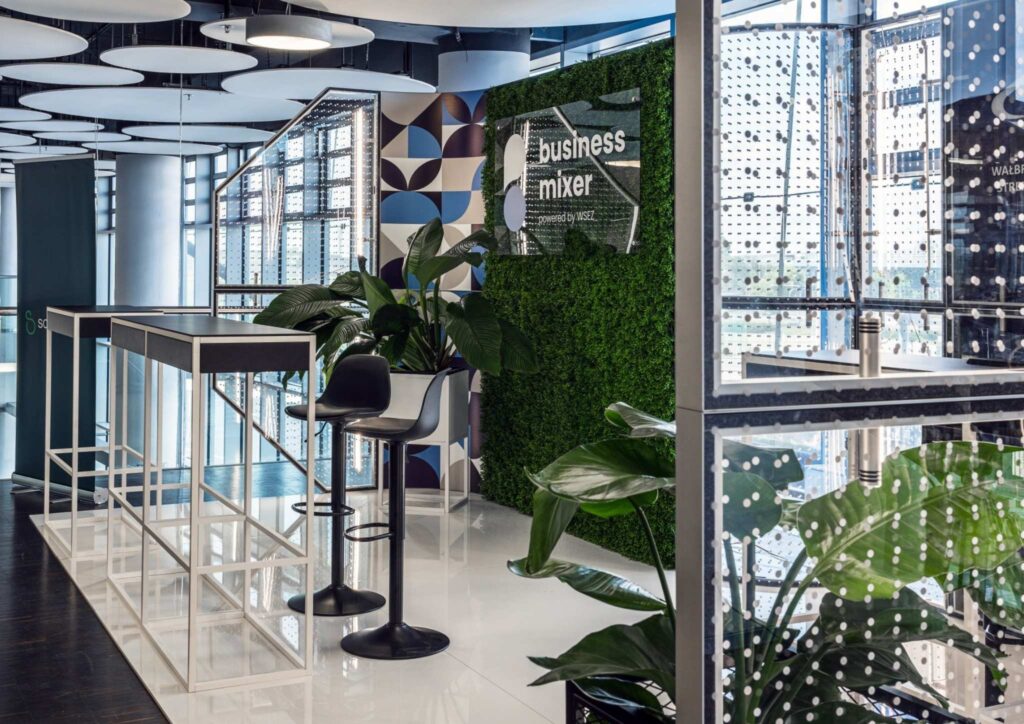
Preparing for a trade show is usually done under deadline pressure. Decisions about the booth build are made too late, and the project becomes focused on having something rather than making it work. On top of that, B2B teams often mix goals: they want to generate leads, hold meetings, showcase the portfolio, and build employer branding all at once, without setting priorities.
A simple rule helps: define goals and conversation scenarios first, then choose the booth layout, and only at the end work on graphics and details. A modular booth build makes this easier because it allows the configuration to be adapted to the event format and the team’s work plan.
Design matters, but it cannot be the only criterion. A booth should support a process: attract the right people, make it easy to start a conversation, enable lead qualification, and provide conditions for meetings. If the display looks refined visually but does not guide visitors through a simple flow, the on-site team starts improvising.
How to structure it in practice:
Most often, the issue is not a lack of ideas, but a lack of priority. When a booth is meant to do everything at once, it usually ends up doing nothing well – and sales is the first to suffer – emphasises Artur Balcerzak, Branch Director.
Clever Frame trade show booths, thanks to their modular approach, allow you to build layouts that match the booth’s role at a given event: more open for lead generation or with a clearly separated area for conversations.
People do not read long descriptions at trade shows. If the graphics try to explain the entire offering, they usually communicate nothing. In B2B, a clear value proposition is particularly important: who the solution is for and what problem it solves.
A good direction is to limit communication to a few layers: a headline, a short clarification, and elements that support the conversation, such as icons or a benefits list. It is worth remembering that messages can change between events, and even during the season.
In this context, easy visual updates are important. In Clever Frame trade show booths, changing graphic panels is easy, which makes it possible to adapt them to seasonal campaigns or changing marketing needs. As a result, one structure can work across different events while the messaging stays current.
Exhibitors often assume that visitors will walk in and find their way around the booth on their own. In practice, people move quickly through exhibition halls, scan the space, and respond to clear signals: an open entrance, a visible contact point, and a simple message. If the layout is closed off or unclear, part of the traffic will pass by without interaction.
The most common layout issues include:
This approach makes it possible to test different booth variants and adapt the layout to the floor space available at a given event, without having to design everything from scratch each time.
Briefs often assume that a mobile bar will become the central networking spot. In B2B, this usually does not work. Networking is the outcome of a process: the quality of conversations, team visibility, a clear reason to approach, and a smooth way of inviting people to connect. A bar-like element can support hospitality, but it will not replace an interaction strategy and is not an automatic magnet for high-value conversations.
A better approach is to create a clear first-contact point and a comfortable conversation area. Then the booth elements play a supporting role rather than trying to force visitor behaviour.
One of the most expensive mistakes is choosing solutions that look great in a rendering but are difficult to handle: they require long setup times, involve too many people, or create complicated transport requirements. Then even a strong display becomes a source of stress for the event team.
With Clever Frame trade show booths, an important advantage is tool-free assembly and disassembly, as well as booth mobility. In practice, this means easier planning, lower risk of delays, and better control over event preparation. In addition, the modular structure supports space-saving transport, which matters in an intensive trade show calendar.
Exhibitors often treat events as one-offs: a separate design for each trade show, separate production, separate graphics. The result is rising operational costs, longer lead times, and inconsistent branding. Meanwhile, most B2B brands need a booth build that can evolve along with their communication plan and different event formats.
In practice, it is worth planning a base setup and expansion scenarios. Modularity makes it possible to:
Booth graphics are viewed from different distances and angles. What looks good on a screen does not always work in a trade show environment. Information hierarchy is key: headline first, then clarification, and only then details that support the conversation. Text that is too small, low contrast, or overloaded with detail reduces effectiveness.
A good practice is to prepare message variants for different event types: industry trade shows, conferences, and partner meetings. The Clever Frame system allows quick and easy graphic panel replacement, which makes it possible to treat the visual layer as part of a marketing plan rather than a one-time cost.
Sustainability in event marketing is not just about declarations. For B2B brands, what matters is whether the display is designed for repeated use and waste reduction. One-off builds that lose their purpose after an event are difficult to justify in ESG reporting and increasingly raise questions from stakeholders.
Modular trade show booths support a reuse-first approach: the structure is used repeatedly, while only the communication changes, when required by the event context, the campaign, or current marketing goals. In addition, reduced transport volume supports logistics efficiency. As a result, it becomes easier to build a consistent image of a responsible brand without statements disconnected from practice.
Some companies design a booth exclusively for a single exhibition hall, missing the potential of using the same elements at other events. A modular booth build can work across the entire marketing calendar, as long as usage scenarios are planned from the beginning.
Where Clever Frame trade show booths can support activities beyond trade shows:
The most common mistakes are predictable and avoidable when the booth build is treated as a goal-driven tool rather than a one-off decoration. It is worth focusing on a few practical rules:
If you want upcoming events to stop being a series of one-off projects, a good next step is to review your layout, logistics, and communication layer for repeatability. You can explore configuration examples and the modular approach at https://cleverframe.com/ to make it easier to plan a display that keeps working toward your sales goals in future seasons.