
The decision to rent or buy an exhibition stand rarely comes down to the budget for a single event. For marketing managers, event managers, and brand managers, it is above all a choice of working model: whether the brand wants to build its display from scratch every time, or develop a repeatable format of presence that can be quickly adapted to different objectives and spaces. In practice, it is very often the frequency of events, the need for image consistency, and the pace of marketing campaign changes that determine when investing in Clever Frame exhibition stands pays off.
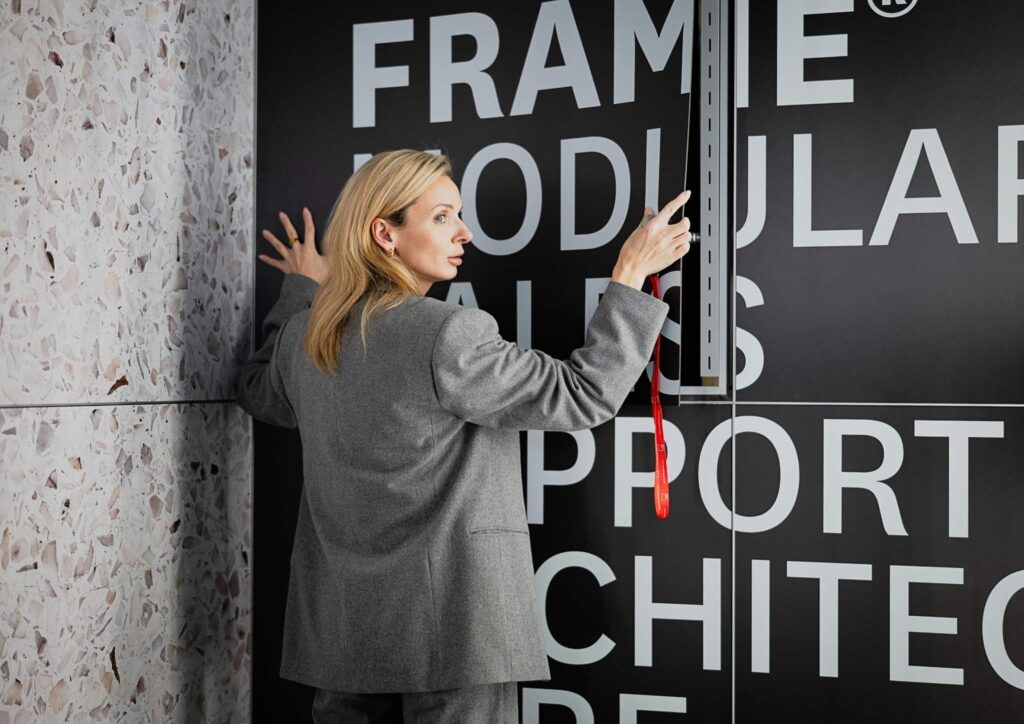
Renting and buying are two equally valid models that work well in different circumstances. The choice is determined primarily by the events calendar, the structure of the marketing budget, and whether the brand wants to manage its own display resource or prefers to focus solely on the event itself.
It is worth approaching this decision in terms of managing marketing resources. A stand can be a one-off display expense, or it can be a tool that, over the coming months, supports lead generation, brand image, and product activations – without the need to design and build from scratch every time.
Renting can be a rational choice when the priority is budget flexibility and limiting future commitments. It is chosen both by brands making their debut at trade fairs and by experienced companies that consciously opt for a flexible model without committing their own logistical resources. It is a sensible strategy wherever budget freedom, a variable events calendar, or the absence of any need to maintain a proprietary structure are the priorities.
Renting is particularly worth considering when: participation in trade fairs is a one-off or very occasional occurrence; the format of presence is being tested and there is no certainty about the repeatability of events; a quick decision is needed and the brand does not want to build its own display assets; or the team needs external support in organising display elements rather than maintaining its own solution.
In this model, however, the key risk is a lack of continuity: each successive build may look different, and maintaining brand experience consistency requires additional control and time from the marketing team.
Buying a modular stand is a strategic decision. The cost-effectiveness grows with the number of events, the need for quick communications changes, and the aspiration towards a consistent, recognisable brand presence. Clever Frame exhibition stands are designed so that the stand layout can be changed, the configuration can be expanded, and the same base can be used in different spaces.
A purchase most often becomes justified when: the brand participates in trade fairs and events on a recurring basis and the display is intended to work multiple times per year; brand image consistency and the ability to reproduce the stand layout repeatedly are important; the speed of preparation matters, including assembly and disassembly without tools; the team plans regular communications updates and the panel replacement system allows graphic panels to be changed easily, adapting them to seasonal campaigns or changing marketing needs; and different sizes and layouts are needed for successive events without changing the entire display concept.
In this approach, the stand is not “one project” but an asset that can be developed: the configuration can be modified, the layout adapted to a corner, island, or in-line space, and successive iterations planned on the basis of what is already working in terms of sales and image.
The return on investment in a modular stand rarely results from a single parameter. It most often consists of organisational savings, the ability to reuse, and better control over the quality of the display. Modularity means that the same base can change its layout and function – depending on the event’s objective.
In practice, Clever Frame modular exhibition stands can support team efficiency because they allow preparation for an event to be completed faster thanks to tool-free assembly and disassembly; they reduce the number of design decisions at successive trade fair editions, since the starting point is a proven configuration; they simplify communications change management through efficient graphic panel replacement; they reduce quality risk, because the brand is working with a familiar, repeatable structure and layouts; and they support logistics thanks to space efficiency during transport and easier transport planning.
A stand is a physical touchpoint with the brand – and therefore an element of the customer experience. A repeatable, well-designed structure helps maintain a visual and functional standard regardless of the location of the event. Modularity supports consistency: the display layout can be recognisable while also being adapted to the conditions of a specific hall and the scenarios of the conversations expected.
Many brands still resort to one-off structures – designed for a specific campaign and not suitable for reuse. This approach gives full creative freedom at every event, but at the cost of continuity: each trade fair edition is a new project, a new budget, and a new quality risk. In practice, marketing changes more frequently than the trade fair calendar: new products arrive, audience segments shift, campaigns rotate seasonally. That is why it is worth having a display that keeps pace with these changes without having to build it from scratch.
With Clever Frame exhibition stands, the graphic replacement system plays an important role, making it easy to swap graphic panels and adapt them to seasonal campaigns or changing marketing needs. This allows the brand to retain the same structural base while updating the communications layer without rebuilding the entire display.
Buying a proprietary structure pays off most when the design is created with multiple use in mind. This means a considered approach to the layout of zones and communications, so that accents can be shifted without rebuilding everything.
In long-term planning, the following assumptions work well: designing several configuration variants for different floor areas, so that the same base fits different stand plans; designating functional zones in a flexible way – for example, conversation and presentation areas in a layout that can be rearranged; preparing different sets of graphic panels for key campaigns, so that updating communications is quick and predictable; planning the display so that it can also work outside trade fairs – for example in the company’s headquarters as part of a showroom; and maintaining consistent branding principles so that even when the layout changes, the stand is immediately recognisable.
As a result, the brand gains a tool that supports not only “trade fair presence” but also the broader event marketing strategy – including launch cycles, partner meetings, and recruitment activations.
In the context of ESG and growing environmental awareness, reducing one-off event structures is becoming increasingly significant. A modular approach supports a longer display lifecycle: instead of building a new structure for every event, the brand uses the same base multiple times, changing only what is necessary.
From an organisational perspective, the sustainable approach is also supported by reduced transport and storage needs resulting from compact packaging, and by the ability to replace graphic panels instead of replacing the entire structure – which limits the overproduction of display components.
The cost-effectiveness of a purchase grows when the structure works in more scenarios than just classic industry trade fairs. Clever Frame exhibition stands can also serve as a mobile display in other event formats.
In practice, a modular structure can support activities such as roadshows and presentations in different cities, when a repeatable brand identity is needed across multiple locations; corporate events and conferences, where the stand serves as a contact point and offer presentation; temporary showrooms at the company’s headquarters, when the brand wants to create a demonstration space for a defined period; product displays in partner spaces, when a consistent and professional presentation is required; and indoor marketing activations where fast setup and a repeatable result matter.
This approach supports the building of recognisability: audiences encounter the brand more frequently in a similar, polished environment, and the team avoids improvising each time.
When choosing, it is worth basing the decision on a few practical criteria that structure the internal team discussion and make it easier to justify the business case: renting works well for occasional events; buying pays off when the stand is intended to work repeatedly and in different configurations; modularity supports ROI through the ability to expand and modify layouts; the graphic replacement system allows graphic panels to be changed easily, adapting them to seasonal campaigns or changing marketing needs; and logistics benefit from space efficiency during transport and tool-free assembly and disassembly.
Buying a modular stand most often wins when events are part of a permanent marketing plan and the display is intended to be a reusable tool. In this approach, the importance of configuration flexibility, quick communications updates, and consistent brand experience all grow. Renting works well with a flexible budgeting model, a variable calendar, or when zero logistical commitment on the client’s side is the priority.
If you want to compare the rental and purchase scenarios based on your events calendar – floor areas, number of events, campaign variability – the Clever Frame team will help you choose the base configuration and the set of graphic panels for rotation between events.