
Ciemne logo CleverFrame
Book a free consultation
Tell us what you need and we'll take care of the rest!
write to us
SHOWROOM - read online
Exhibition inspiration, booth designs and more!
Read online

New branding, same structure – changing communication without a new booth

A visual identity update, a new campaign, or expansion into another market often means that trade show communication also needs to be refreshed. In practice, that creates a common dilemma: how do you refresh the look of a booth without starting everything from scratch and without replacing the structure? Clever Frame booths make it possible to update graphics and communication elements quickly within an existing setup, so a branding change becomes simple, predictable, and aligned with the needs of event marketing.
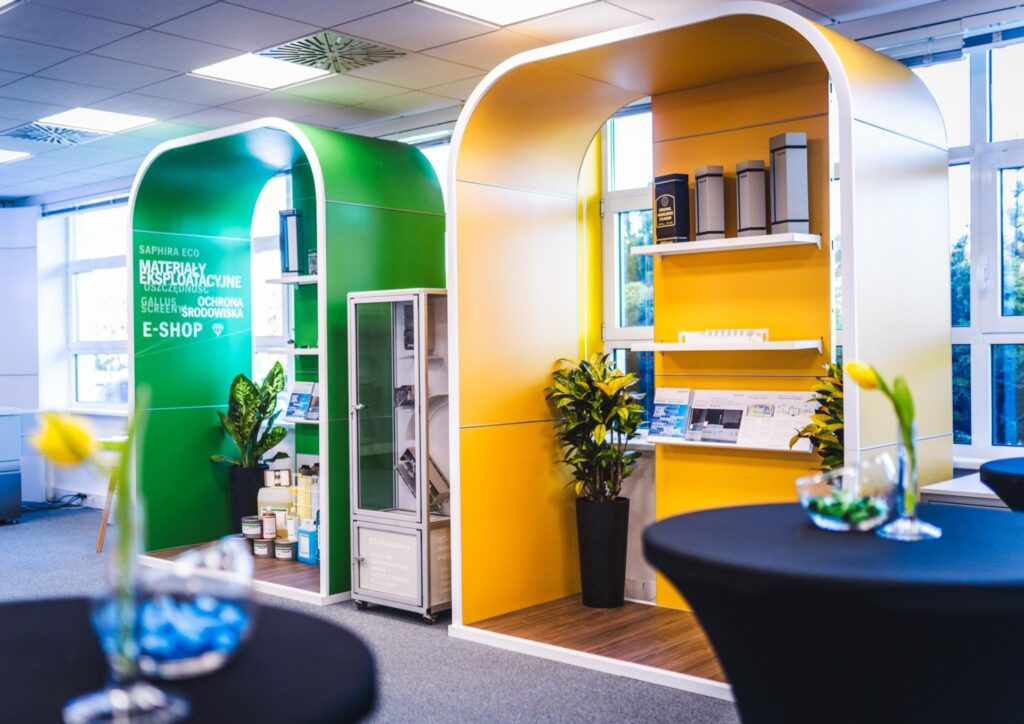
changing communication without a new booth

Why is it worth refreshing the branding instead of the booth itself?

A booth works on the brand image in an environment of intense competition for attention. At the same time, branding is not fixed: the offer changes, the language of communication evolves, the key visual is updated, and sometimes even positioning changes. If the booth structure is flexible, updates can focus mainly on the visual layer and the display layout, instead of replacing the entire build.

This approach supports marketing goals because it allows you to:

  • stay consistent with the current campaign without giving up a refined structure;
  • respond to seasonality and product cycles instead of “freezing” communication for years;
  • reorganize booth messaging after strategic changes, for example through a new category hierarchy;
  • create display variants for different event types while keeping one booth base;
  • save budget, because the base remains the same and only the graphic panels change.

What does “changing branding without replacing the structure” actually mean?

In the context of Clever Frame booths, it means keeping the same modular structure and using communication elements that can be easily replaced and reconfigured between events. Most often, the refresh includes graphic panels, color accents, the spatial layout, and the way the brand story is presented within the display, while the structure itself remains unchanged and its modules can be adapted to different configurations.

The key mechanism: fast graphic updates

In practice, the graphic layer makes the biggest difference, because it creates the first impression and guides visitor movement. In Clever Frame booths, graphic panels mounted with magnetic tape can be replaced easily, adapting communication to seasonal campaigns or changing marketing needs.

The second pillar: modularity and layout changes

Branding is not just graphics, but also the way a visitor is guided through the booth. A modular structure makes it possible to reorganize the layout so the display can be adapted to:

  • a different booth size resulting from the booked trade show space;
  • different booth locations, such as a corner, island, or aisle-facing position;
  • changed brand priorities, for example greater emphasis on product demos or consultations;
  • different visitor-flow scenarios, from quick conversations to longer meetings.

A branding refresh plan: from objective to design

It is best to start the refresh with the exhibition strategy and only then move to graphics. That way, the new look does not become just a “layer on top,” but a direct consequence of the marketing objective.

Step 1: clarify the event objective

A booth designed for lead generation will look different from one focused on brand awareness, and different again from one supporting a product launch. Before changing the identity on the booth, it is worth defining:

  • what the main brand message is for this event;
  • which on-site activities are most important, such as sales conversations, consultations, or presentations;
  • what the visitor journey should look like, from attracting attention to making contact;
  • which materials and messages must be visible within the first few seconds.

Step 2: audit what stays unchanged

Changing the branding without replacing the structure means consciously keeping what already works. The audit should include:

  • structural modules that can be easily adapted to different booth sizes;
  • proven conversation and presentation points that support team comfort on site;
  • logistics solutions that make transport and storage easier;
  • configurations that perform best in specific types of trade show locations.

Step 3: design graphics using a “swappable messages” logic

The most effective executions assume that some content will be updated more often than the rest. Instead of designing one “closed” composition, it is better to build communication around a set of graphic panels in which:

  • fixed identity elements remain unchanged, such as the logo, umbrella tagline, and key values;
  • campaign elements can be swapped between events, such as the key visual, product claim, or list of use cases;
  • content is condensed and readable from a distance, without too much text;
  • the information hierarchy supports conversation instead of competing with it.

Design inspiration: how to refresh a booth without a “revolution”

A refresh does not have to mean building a new concept from the ground up. Often, changing just a few accents is enough to make the booth look different while still using the same structure.

1. Change the narrative: from product to benefit

If the booth previously functioned like a “product catalog,” it may be worth shifting to benefit-led communication. Graphic panels with a clear structure help here: problem – solution – result. This kind of arrangement supports consultative conversations and fits event marketing goals better.

2. Seasonal campaigns without rebuilding

Seasonality in B2B and B2C applies not only to promotions, but also to the topics customers consider most urgent. In practice, you can prepare graphic variants for annual cycles and then swap selected panels depending on the event.

3. Company rebranding and display continuity

A rebrand often requires changes in color palette, typography, and the way the offer is presented. Thanks to a modular structure, you can keep the proven booth layout while refreshing its “skin” and adapting the communication to new brand book guidelines.

4. A layout adapted to the event, not the other way around

One booth can work across many formats if its structure allows reconfiguration. In practice, this means the display can be adapted more easily to the conditions of a specific event, such as different layouts, a different footprint, or a changed location.

Sustainability: less waste, a longer lifecycle

Refreshing branding without replacing the structure supports a more environmentally responsible approach. In the event industry, a large share of waste comes from one-off executions and the short lifecycle of booth builds. Clever Frame modular booths help reduce this problem by allowing the structure to be reused many times while updating mainly the communication layer.

In practice, a more sustainable approach means:

  • fewer one-off executions and fewer elements made “for one event only”;
  • the ability to plan graphics as a set of variants rather than a single version;
  • longer use of the same booth base across many events, showrooms, or roadshows;
  • a more predictable production and logistics process across future seasons.

Efficiency and cost: where do the savings appear?

Changing branding without replacing the structure also matters operationally. Beyond reducing the number of elements that need to be produced, it also means simpler logistics and easier on-site work for the team.

The most common areas where efficiency improves are:

  • a shorter event preparation process thanks to a ready structural base;
  • lower production costs, because the same base remains unchanged and only the graphic panels tailored to the needs of the event are updated;
  • fewer organizational risks, because the configurations have already been tested;
  • space savings during transport, which makes logistics planning easier;
  • assembly and disassembly without tools, which streamlines work on the exhibition floor;
  • the ability to expand and modify layouts without replacing the entire structure.

Not only trade fairs: where else can the same structure be used?

A refreshed booth branding can work longer than a single trade show season if you plan its use across other formats. A modular structure makes it easier to move the display between different events and spaces.

The same elements can support:

  • corporate events and industry meetings, where consistent brand presentation matters;
  • roadshows, where mobility and fast reconfiguration are essential;
  • showrooms and temporary displays, as a backdrop for product presentations and sales conversations;
  • product zones at company headquarters when flexible campaign communication is needed.

Checklist: how to prepare a branding refresh step by step

The list below helps organize the process so the change is fast, consistent, and repeatable across future events:

  • define the main objective of the booth for the upcoming event cycle and 1-2 secondary objectives;
  • map content into zones: “visible from afar,” “for conversation,” and “for interested visitors”;
  • plan graphic panels divided into fixed elements and campaign elements;
  • verify that the messages are clear and consistent with the brand’s visual identity;
  • choose booth configurations suited to the booth sizes and location types where the brand most often exhibits;
  • plan variants for different events so changes are limited to replacing selected panels;
  • define a storage and transport process, taking into account space savings during transport.

In short: key takeaways for marketing and events

Refreshing branding without replacing the structure is an approach that combines brand consistency with operational efficiency. The key points worth remembering are:

  • a modular structure makes it easier to adapt the layout to different booth sizes and events;
  • a system based on panels mounted with magnetic tape makes it possible to update visual communication without rebuilding the structure, adapting it to seasonal campaigns and changing marketing needs;
  • assembly and disassembly without tools support smooth execution on site;
  • the ability to use the same booth across different events improves continuity of communication;
  • fewer one-off executions can support sustainability goals.

If you want to refresh your booth branding without replacing the structure, Clever Frame can help you choose the right configuration and the scope of graphic panel replacement so the new communication is consistent and ready for upcoming events.

Tell us what you need.

Our designers and consultants will help you find an idea for your exhibition system or refine your promotional setup vision together. Feel free to reach out to us.
Consent*

Newsletter

terms*
POROZMAWIAJMY

Umów bezpłatną konsultację z naszymi doradcami

Bezpłatnie wykonamy wizualizację Twojego pomysłu na stoisko
Zgoda*