
At B2B trade shows, the number of business cards collected is rarely a real measure of success, because what ultimately drives business results is the quality of conversations, the fit with the ideal customer profile, and the ability to continue the relationship effectively after the event. A lead magnet at the booth is not just “bait” for contact details, but a strategic tool that helps move from casual interest to a meaningful exchange of value. A well-designed activation should act as a precise filter, helping the team quickly qualify the lead and diagnose their needs within the first minutes of contact.
This article brings together proven B2B activation ideas that work well at trade shows while also improving the quality of acquired contacts. Clever Frame trade show booths support a wide range of activities thanks to their modular construction, which makes it possible to reconfigure the same elements freely and adapt the booth to the nature and purpose of each event.
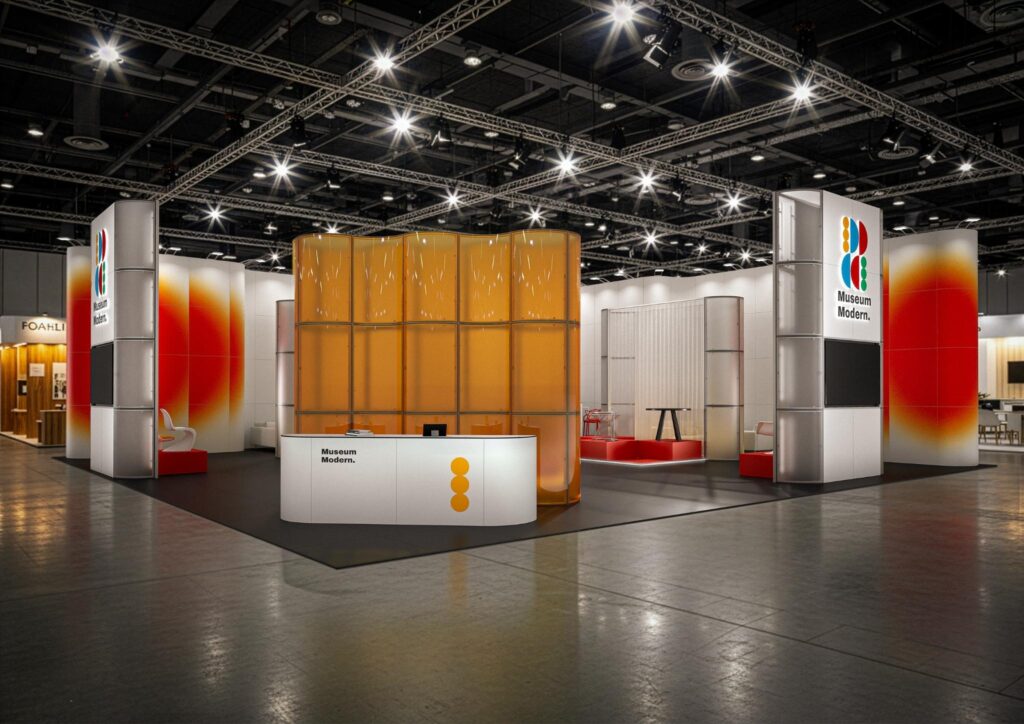
A lead magnet at a trade show booth is a specific value offer such as knowledge, a problem-solving tool, or expert material that a brand gives to a visitor in exchange for contact details and consent for further communication. In B2B, however, its role goes far beyond simply “collecting data” – it becomes a strategic tool that works as a filter, a starting point for a substantive conversation, and a reason for a quick diagnosis of the customer’s needs.
In B2B, it is easy to create activations that generate traffic but do not translate into sales. That is why a lead magnet should reward people with the right problem to solve and encourage a meaningful conversation, not just random participation.
In practice, it is worth designing activations so that they:
If an activation does not help you determine within two minutes whether this is the right person and what their decision context is, it usually turns into traffic without value. A lead magnet should structure the conversation, not just attract a crowd – says Artur Balcerzak, Branch Director at Clever Frame.
Even the best idea loses effectiveness if the booth lacks space for conversation, a clear zoning concept, and messaging that guides the visitor step by step. It helps to think of a lead magnet as a process: entry, quick engagement, qualifying conversation, data capture, and agreement on the next step.
B2B lead magnets usually require two interaction modes: a quick “first touch” and a calmer, more in-depth conversation. A modular approach makes it easier to create a layout that works across different events, while still allowing adjustments depending on floor space and traffic.
It is worth planning for:
With lead magnets, relevance to the event context matters: one promise will work at an industry trade show, another at a technology conference, and yet another during a roadshow. Clever Frame systems create the foundation for this type of strategy because their construction allows for quick replacement of magnetic graphic panels without interfering with the booth structure. This makes it possible to adapt messages freely to seasonal campaigns or to the needs of a specific target audience, turning the booth into a dynamic marketing tool that works toward results without the cost of producing a new build for every event.
The ideas below were selected to support sales conversations and qualification rather than simply generate traffic. Each concept can be launched in a simple version and then improved over time using a repeatable modular booth setup.
A short audit works because it provides a concrete diagnosis and naturally leads into a conversation about implementation. There is one condition: the result must be easy to understand, and the questions should qualify, not just “engage.”
Benchmark-style content is effective when the visitor can quickly compare themselves to a standard and see the gap. It is a lead magnet that filters out random visitors because it mainly appeals to people who are genuinely dealing with the topic.
In many industries, the problem is not a lack of options but the difficulty of choosing between them. A simple decision map helps organize criteria and creates a natural opening for a consultative conversation.
Limited availability creates value, but in B2B the key point is that a consultation requires a short description of the need. This format automatically improves lead quality because the people who sign up usually have a real problem to solve.
Instead of showing many projects at once, it is better to match one or two to the visitor’s situation. The mechanics of “selecting” a case study are a form of qualification in themselves and increase the chance of a meaningful follow-up.
If the brand runs workshops or consulting, a trade show can be the place where the visitor experiences a fragment of the method. In B2B, this is often more effective than swag because it demonstrates expertise and a way of working.
Collecting contacts at trade shows should be transparent and tied to a real business purpose. Beyond formal compliance, the visitor experience matters too: people should understand what they will receive and what to expect after sharing their details.
It is worth implementing rules that improve both data quality and conversation quality:
B2B lead magnets often require repeatability, testing, and iteration. A modular booth approach supports this because once a booth format is developed, it can be carried from one event to the next, with the layout and messaging adjusted without building everything from scratch. This is operationally efficient and also supports a more sustainable event strategy thanks to the longer life cycle of the booth elements.
In the context of Clever Frame trade show booths, particularly practical benefits include:
The same lead magnet can perform differently depending on whether the priority is sales pipeline, expert positioning, or entering a new segment. That is why it is worth defining the goal in advance and choosing the mechanics that lead to specific behaviors.
The activation should identify needs quickly and make it easy to agree on the next step.
The activation should demonstrate the way of working and teach rather than promise a quick win.
The activation should surface shared pain points and the language used by the target group.
Strong B2B trade show lead magnets are both a marketing and a sales tool. They make it easier to start conversations, organize the visitor’s needs, and create a logical reason for follow-up.
If you want to match the activation to your goal – whether pipeline, expert positioning, or a new segment – talk to the Clever Frame team. We can help you choose the modular booth layout, plan the zones for your lead magnet, and prepare graphic panel variants that can be changed quickly between events so the activation genuinely improves contact quality rather than just increasing the number of conversations.