
At many industry events, a brand is not speaking to just one type of visitor. The same trade show booth may attract potential customers, existing business partners, distributors, resellers, trade media, and sometimes even prospective collaborators or representatives of the organizer. Each of these groups arrives with a different motivation, a different pace of conversation, and a different level of knowledge about the brand. That is exactly why a booth designed “for everyone” often ends up working well for no one in practice.
In situations like this, attractive graphics and proper logo placement are not enough. What is needed is a deliberate spatial logic: a booth layout that organizes traffic, separates functions, and allows the team to move smoothly between different types of conversations without communication chaos. This is especially important in B2B event marketing, where one brand may simultaneously generate sales leads, hold partner discussions, and give statements to trade media.
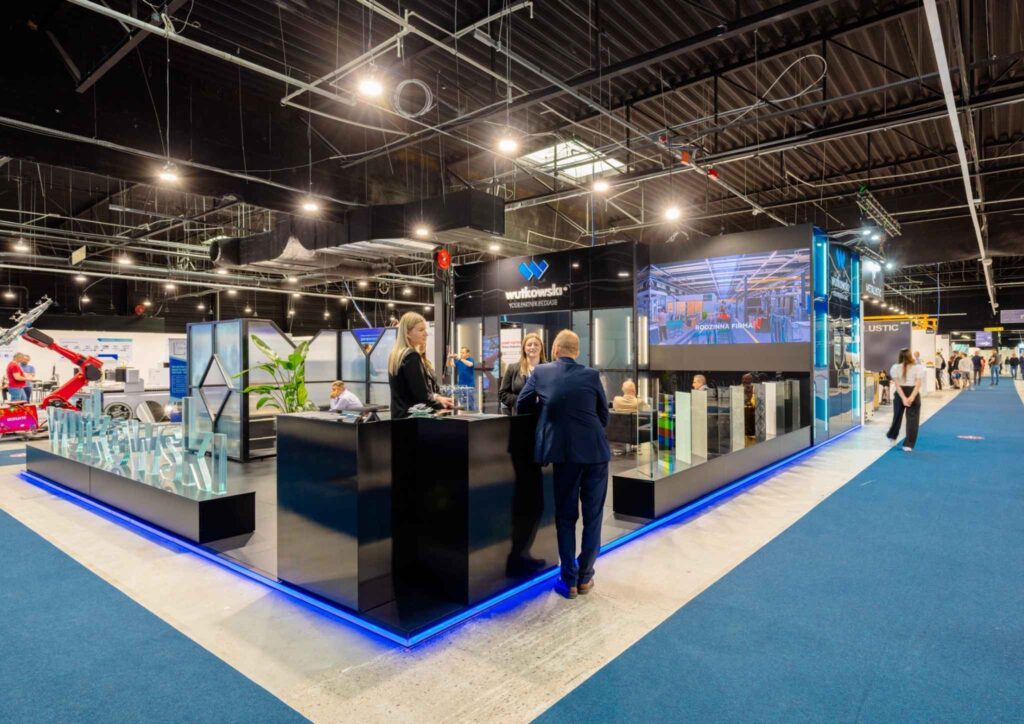
This is precisely where the practical value of modular solutions becomes clear. Clever Frame trade show booths make it possible to design a flexible layout with clearly defined zones, reconfiguration options, and communication updates without rebuilding the entire structure. As a result, one core booth setup can support different conversation scenarios and different event goals, while the brand maintains a consistent, professional image.
Just a few years ago, trade show participation was more often planned in a linear way: a brand attended an event mainly to generate leads or mainly to build awareness. Today, most companies operate more broadly. A single event may simultaneously be a place for sales conversations, partner meetings, a product launch, industry networking, and PR activities. This naturally changes the way brands should think about their exhibition booth.
The problem appears when all of these goals are handled within one unstructured space. A sales team needs conditions for calmer, more focused conversations. Partners want to feel they are not “just another random visitor.” Trade media expect to grasp the topic quickly, hear a clear story, and have good conditions for a short interview or recording. Potential customers, on the other hand, often want a simple entry point: a quick answer to whether it is worth stopping at the booth for longer.
If the booth does not organize these paths, it starts working against the brand. Conversations overlap, messages compete with one another, and the team loses energy on improvisation instead of valuable interactions.
To design a trade show booth effectively for multiple audience groups, it is worth first understanding what each of them expects from contact with the brand at an event.
This is usually the group that reacts to the booth the fastest and most intuitively. They need a clear message visible from a distance and an easy entry into conversation. For this group, first impressions matter, as do offer clarity, display logic, and whether they can quickly assess if the brand solves a specific problem. An overly complicated layout or overloaded messaging reduces the effectiveness of this path.
This group usually expects a different level of conversation. It is no longer about the brand’s general message, but about cooperation terms, business potential, distribution model, sales support, or development plans. These types of discussions rarely work well “in the middle of traffic.” They require more comfort, a more private zone, and a sense that the contact with the brand is structured and professional. That is why it is worth pairing this article with the text Co-branding at trade shows. How to design a shared booth for two brands?, which clearly shows how important a logical division of roles and space is.
Media work differently as well. For them, what matters is brevity, topic relevance, and the appeal of the story. A journalist or editor usually does not need a full sales presentation, but rather a few very specific answers: what is new, why it matters, what it means for the market, and who can comment on it quickly. The booth should therefore make it easy to “grasp the point” and provide space for a short briefing, photo, recording, or the handover of press materials.
The most typical mistake in designing a booth for several audience groups is assuming that one narrative and one style of conversation will be enough for everyone. In practice, this leads to two extremes. Either the brand simplifies the message so much that it becomes too shallow for partners and media, or, on the contrary, it creates a message so complex that it becomes unclear to the average visitor.
A much more effective model is one in which the booth has one shared communication core, but different levels of entry. From a distance, visitors should understand what the brand does and why it is worth stopping. Closer in, you can present more detailed areas: the customer offer, a space for partners, a media angle, or new products. This structure is often what determines whether a brand is perceived as mature and well organized.
The key is zoning. However, this does not mean artificially dividing a small space into too many tiny “rooms,” but rather creating a layout that organizes functions and supports different types of interaction with the brand.
This is the most “open” part of the booth, designed to drive traffic. Its role is to capture attention quickly, explain the brand’s core value, and invite conversation. For customers, this is the entry point. For media, it is the place to quickly understand the topic. For partners, it is the first signal of whether the booth looks structured and professional.
It does not have to be large, but it should be clearly calmer. This is the space for more valuable interactions, where you can talk about customer needs, product or service fit, and next steps after the event. If the brand conducts many sales conversations, this zone becomes one of the most important elements of the entire booth layout.
At some events, it is worth separating a space that will not be treated like a standard visitor conversation point. Business partners often expect greater attentiveness, a more relationship-focused meeting style, and conditions that support a calmer exchange of information. Even a symbolic separation of this part of the booth can significantly improve the quality of such interactions.
This does not always need to be a separate enclosed area. Sometimes a well-designed spot is enough, where someone can stand, present a product, take a photo, or have a short conversation without crossing the main traffic flow. What matters is that the team knows where to lead this type of interaction and how to provide the most important information quickly.
With several audience groups, operational complexity also increases. You need a place to store sales materials, catalogs, samples, branding elements, team members’ personal items, and supplies for quickly replenishing the booth. That is why back-of-house ergonomics are not a detail, but part of the effectiveness of the entire brand presence. This is also explored further in the article Booth ergonomics – the back-of-house area everyone forgets about.
A booth serving multiple audience groups should not try to communicate everything at once with the same intensity. That is one of the main causes of chaos. Instead, it is better to design communication in layers.
The first layer is the main message – visible from afar, simple, and understandable to a broad range of visitors. The second layer consists of directional messages: more detailed information assigned to specific zones or topics. The third layer includes content that supports the conversation, meaning materials the team uses during direct contact with a specific type of audience.
This model structures the experience effectively. A customer does not need to read everything immediately. A business partner can reach the right area faster. Trade media gain a simple, clear narrative axis. Importantly, this layered communication often needs updating between events – sometimes end customers are the priority, while at other times it is partners or media. A modular structure makes it easy to replace graphic panels, so the brand can keep one consistent booth base while flexibly updating its message. This logic is well developed in the article New branding, same structure – changing communication without a new booth.
The greatest strength of Clever Frame trade show booths in this scenario lies in their flexibility. A brand does not need to design a separate booth for every event type or rebuild the entire setup from scratch just because participation priorities change.
The modular construction allows the booth to be organized as a set of functional elements that can be combined and reconfigured depending on the event goal, floor space, and audience type. In one case, greater emphasis can be placed on an open first-contact zone and brand presentation. In another, the focus can shift to calmer partner conversations or a more separate area for demos and media meetings.
In practice, this means several important benefits:
It is also important that Clever Frame trade show booths support fast, tool-free assembly and dismantling, which matters greatly in a busy event calendar. This aspect is complemented well by the article Trade show coming up fast? A plan for a quick and effective booth, which shows how important operational predictability is when working under time pressure.
When designing a booth, it is worth remembering that the issue is not only who arrives, but also how long and in what way they want to talk. A customer who is just discovering the brand may need two minutes. A business partner may need twenty. Trade media may need a short, content-rich briefing. If the booth does not account for this difference, congestion or fragmentation appears quickly.
That is why a good exhibition booth design should enable parallel activity. One team member handles short opening conversations. Another takes more valuable contacts to a calmer zone. A third person can simultaneously support media or a partner without disrupting the entire rhythm of work at the booth. This kind of flow does not happen by accident. It comes from design.
Even the best space layout is not enough if the team does not have a shared operating scenario. With several audience groups, it is crucial to define simple rules: who handles first contact, who runs sales conversations, who takes over partner meetings, who serves as the media contact, and exactly where each type of conversation should happen.
In practice, it is worth defining before the event:
Only the combination of space and process creates a result in which a booth truly “serves” several groups at once, rather than merely trying to do so.
From a marketing perspective, it also matters that this multifunctionality does not mean a new investment in booth construction every single time. If a brand participates in different events and needs a slightly different setup each time, the most cost-effective solution is one that offers adaptability without rebuilding everything from the ground up.
That is why it is worth viewing the booth as an asset, not a one-off cost. The same base can work at a sales event, partner event, conference, or media event, as long as it has been designed in a logical and scalable way. This approach is also well explained in the article Renting or buying a trade show booth – how to choose the best option for your needs, because it shows that the decision about the booth model concerns not just one event, but the entire way a brand manages its offline presence.
A booth that serves customers, business partners, and trade media at the same time requires more than an attractive display. It needs a logical structure: clearly defined zones, a hierarchy of messages, well-prepared back-of-house support, and a team that knows how to move between different types of conversations.
The most important principles to remember are:
If a brand wants to talk to customers, partners, and trade media simultaneously at one event, it is worth relying on a solution that supports clear zoning and layout flexibility. Clever Frame trade show booths offer a modular base that can be configured for different conversation paths, updated without rebuilding the entire structure, and used across various event formats – so the display genuinely supports the brand’s presence at every level of audience contact.