
A trade show stand has only a few seconds to catch the attention of someone walking down the aisle and convince them to stop. However, visitor numbers depend on more than the appearance of the stand itself. A clear message, a functional layout, well-planned activities and a properly prepared team are equally important. Discover how to increase footfall at your stand and attract people who could become genuine customers of your brand.
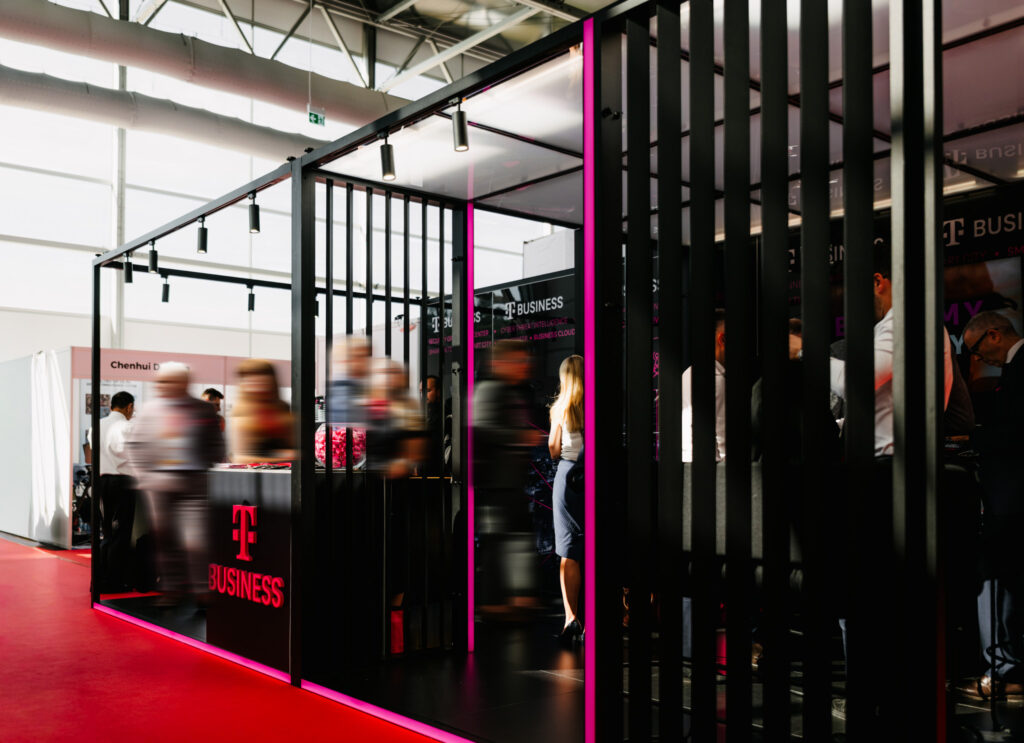
High attendance at an event does not automatically guarantee heavy traffic at your stand. Visitors move through exhibition halls quickly and selectively, usually stopping only when they immediately understand what they can see, try or gain. Stand attendance therefore depends not on a single eye-catching feature, but on a consistent combination of spatial design, communication, promotional activities and team performance. So how can you attract more visitors to your trade show stand and turn footfall into valuable conversations?
Before designing the stand, determine who your brand wants to attract and what should happen once a visitor enters the space. A stand designed to generate sales leads will require a different layout from one created to launch a new product or host meetings with existing customers.
The objective should be measurable. It could be a specific number of conversations with representatives of a selected industry, product demonstrations, consultation bookings or follow-up meetings arranged after the event. Defining the objective helps guide subsequent decisions—from the placement of product displays and counters to team composition and the method used to record contacts.
It is also important to remember that visitor numbers alone do not determine whether a stand is successful. Attractions may draw large crowds of people who do not belong to your target audience. A smaller number of conversations with the right decision-makers can be far more valuable than a queue of people waiting for a random giveaway.
Someone walking down an exhibition aisle will give your stand only a brief moment of attention. During that time, they should be able to understand what your company does and why it is worth taking a closer look. A message intended to be visible from a distance must be short, specific and focused on either a customer benefit or a problem the audience wants to solve. A logo or a generic brand slogan will rarely be enough.
Instead of trying to tell your entire brand story on the walls, create a simple hierarchy of information. Begin with the category or key promise, then introduce the product or application, and only afterwards provide the details. Stand graphics should function like signposts, not oversized leaflets.
Clarity also depends on where the message is displayed. Key content should not be obscured by a counter, screen, product display or people standing inside the booth. If the stand has several open sides, consider repeating the main message so that it remains visible from different directions.
Even an attractive stand can unintentionally create a barrier. A large counter positioned at the entrance, too much furniture or an enclosed wall layout can make visitors feel that they must make a deliberate commitment to enter. For someone unfamiliar with the brand, this may be enough to make them keep walking.
The area facing the aisle should be easily accessible and allow visitors to make initial contact without feeling obliged to start a conversation. It could feature a product demonstration, samples, a screen showing a short presentation or an element that people can explore independently. Areas for consultations, detailed presentations or meetings around a table can be positioned further inside the stand.
The layout should also reflect the natural flow of people. Visitors need enough space to enter, stop and leave without squeezing between pieces of furniture. If a demonstration attracts a group of viewers, it should not block access to the rest of the display.
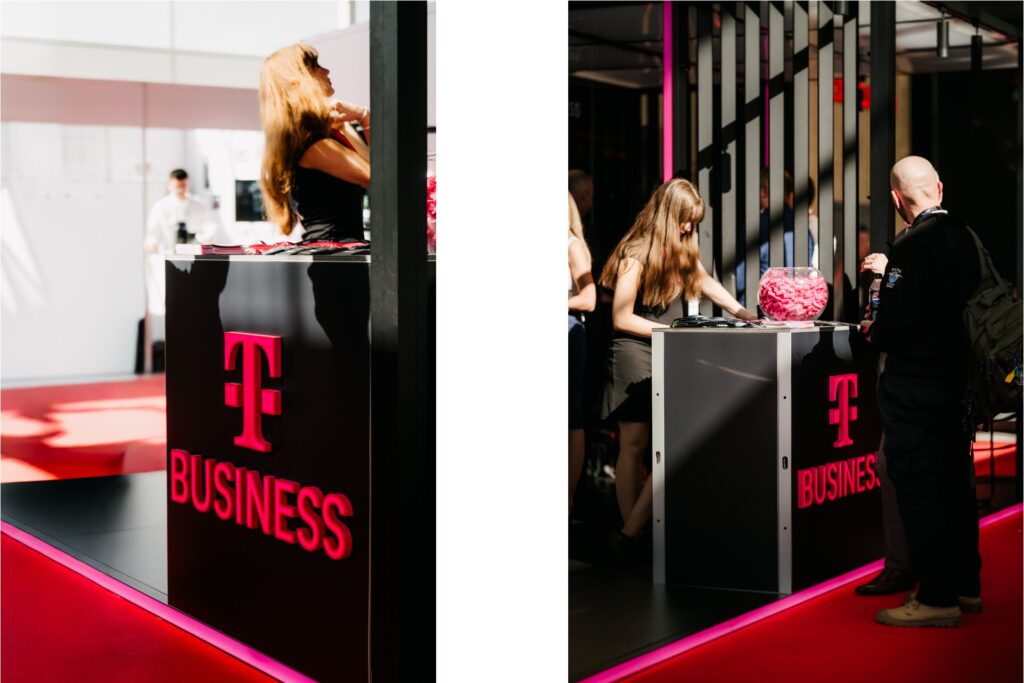
Your stand should start working before visitors reach its immediate surroundings. High-level branding, strong colour contrast, lighting and a distinctive structure can help people locate it in a crowded hall. Each of these elements should reinforce the brand identity rather than compete with the others.
Review the design from the perspective of the hall’s main routes. A visualisation shown exclusively from the front will not reveal what someone approaching from the side will see. With a corner, peninsula or island stand, every accessible side can capture part of the traffic and therefore requires carefully planned communication.
A distinctive and consistently repeated visual motif can also help. It could be a colour, a spatial form, a lighting arrangement or a large graphic detail. It does not need to be loud. Its purpose is to make the stand easier to recognise and remember after the visit.
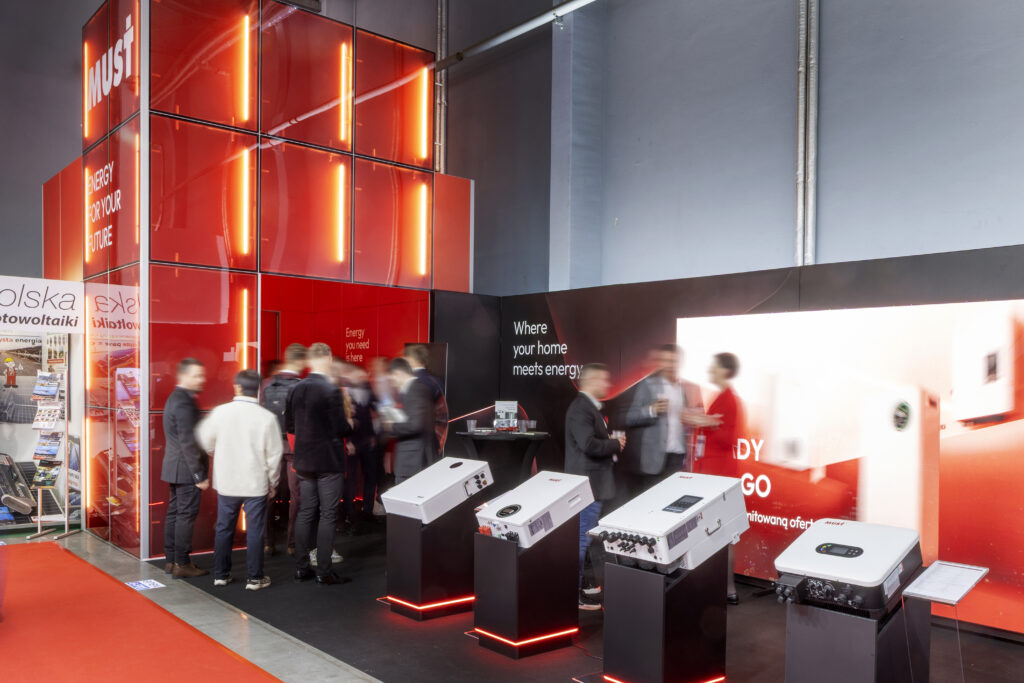
A live presentation provides a stronger reason to stop than a static description. Movement, change, the opportunity to touch a material or the chance to test a product’s features naturally attract attention. A demonstration should be short and easy to understand, even for someone who joins halfway through.
A recurring demonstration schedule, promoted both before the event and at the stand, can work particularly well. Interested visitors can return at a specific time, while the team can prepare the space more efficiently. If the product is too large, expensive or difficult to transport, its operation can be presented using a scale model, animation, configurator or short video. A screen should support the conversation and product display rather than replace human interaction with content played without context.
Activities are most effective when they are directly connected to the company’s offer. A product test, quick consultation, personalised sample, mini-workshop or analysis of a specific problem allows visitors to experience the value of the brand.
Competitions and giveaways can increase traffic, but if they have no connection to the product, they rarely help initiate worthwhile sales conversations. The activity should be easy to understand and participate in. Interest will quickly decline if entering requires lengthy registration or the instructions are unclear.
You should also allow enough space for people waiting, determine how much time is required for each participant and plan how the team will move from the activity to a conversation about the visitor’s needs. A giveaway should be treated as part of the experience rather than its primary purpose. The most useful materials are those connected with the theme of the event or the company’s offer, as they provide a natural reason to resume the conversation after the trade show.
The stand’s appearance attracts attention, but the team’s behaviour determines whether a visitor steps inside. Employees looking at their phones, talking only to one another or sitting behind a counter send a clear signal that starting a conversation will require effort.
The team should understand the objective of the event, recognise the profiles of priority visitors and know several effective conversation starters. Instead of opening with a generic “How can I help?”, refer to the context of the event or the solution being presented. A short question about the visitor’s area of responsibility, current way of working or upcoming projects can quickly reveal whether the conversation has potential.
Clear roles are also necessary. One person can initiate contact near the aisle, another can lead demonstrations, while someone else speaks with visitors who have already shown an interest in the offer. When traffic is heavier, this approach reduces the risk of a potential customer leaving simply because nobody noticed them.
A successful stand should not rely exclusively on incidental traffic inside the exhibition hall. Before the event, invite selected people, provide the stand number and give them a specific reason to visit. This could be a product launch, a consultation with an expert, a scheduled demonstration or an opportunity to see a solution that is unavailable online.
The invitation can be shared through email campaigns, social media, employee email signatures, account managers and the event website. Consistency is essential. If the campaign announces a product launch, visitors should be able to locate it immediately at the stand, and the team must be ready to present it.
For key contacts, it is worth scheduling meetings at specific times. Pre-arranged conversations create a reliable level of activity from the beginning of the day and increase the likelihood of meeting people who might otherwise never reach the stand.
A stage presentation, panel discussion, workshop or talk in a themed area can direct people who are already interested in a particular topic towards your stand. The company representative’s presentation should lead to a specific next step, such as a demonstration, consultation or collection of additional materials from the stand.
Traffic can also be generated in cooperation with partners, customers and the event organiser. Tagging one another in communications, running a joint demonstration or presenting a solution implemented by a customer can expand reach and build credibility. However, every collaboration should have a clearly defined subject and deliver more value than simply exchanging logos.
When a visitor approaches the stand, do not immediately present them with a contact form. They should first have an opportunity to see the product, receive an answer or have a short conversation. Registering their details becomes a natural next step when it is connected with receiving an offer, sample or summary, or arranging another meeting.
The form should collect only the information required for the next action. The team must also record the context: what interested the visitor, what problem they want to solve and what was promised to them. A business card or email address alone is not enough for an effective follow-up.
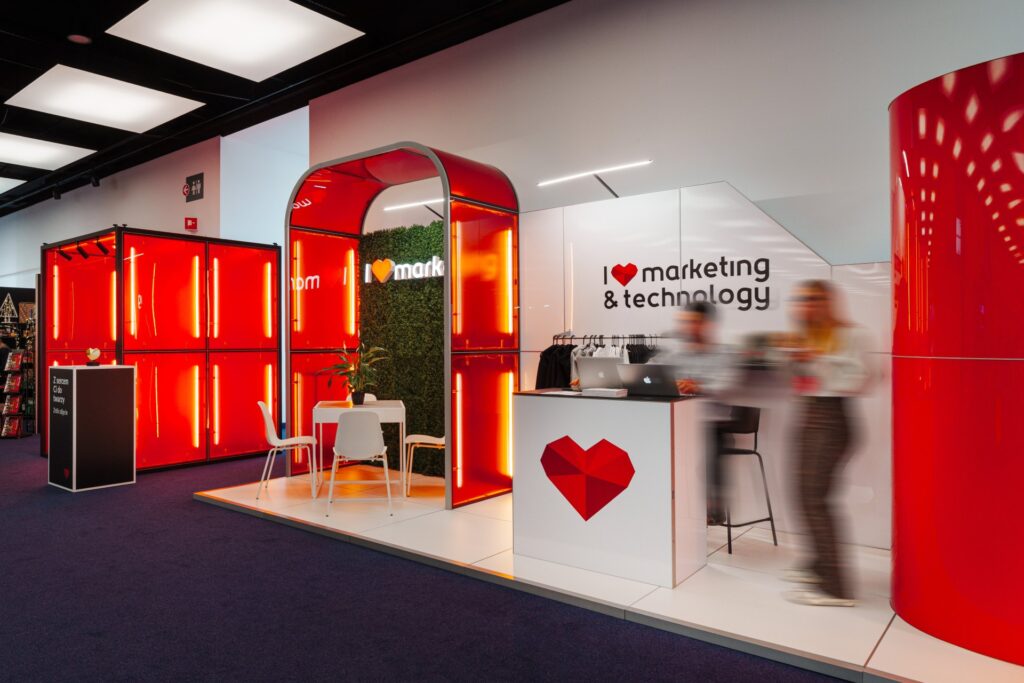
A company attending several events during the year will rarely receive the same floor area and location every time. At one event, it may need a wide display open on three sides; at another, a compact inline stand. A fixed and unchangeable layout can make inefficient use of the available space and reduce visibility.
A modular exhibition system makes it possible to reconfigure the structure, change the direction of entry, select suitable furnishings and replace individual graphic surfaces. This allows the brand to maintain a recognisable visual identity while adapting the stand to a specific hall, visitor flow and event objective. With the Clever Frame system, the same frames can be used to create different configurations, while magnetic graphic panels allow the communication to be updated without rebuilding the entire stand from scratch. How does it work? Watch the video on YouTube.
Flexibility is also valuable during the planning process. If an analysis of the previous event shows that the presentation area was too small or the counter obstructed the entrance, the next configuration can be improved instead of repeating the same layout.
Without measurement, it is difficult to determine which activities actually increased the number of visitors to the trade show stand. Consider comparing the number of people who stopped by the display, entered the stand, attended a presentation, shared their contact details or took part in conversations that met your qualification criteria. The data can be analysed by hour, day and type of activity.
Observing visitor behaviour is equally important. The team should note which direction most people came from, which elements attracted their attention for the longest time, which questions were asked most frequently and where bottlenecks occurred. This analysis provides practical guidance for changing the graphics, furniture arrangement, demonstration schedule or stand staffing.
Traffic alone, however, is not the most important measure. The true indicator of effectiveness is how many visitors progressed to the next stage: a post-show meeting, preparation of a proposal, a product trial or a sales conversation. Only by combining attendance data with an assessment of contact quality can you determine the stand’s actual value.
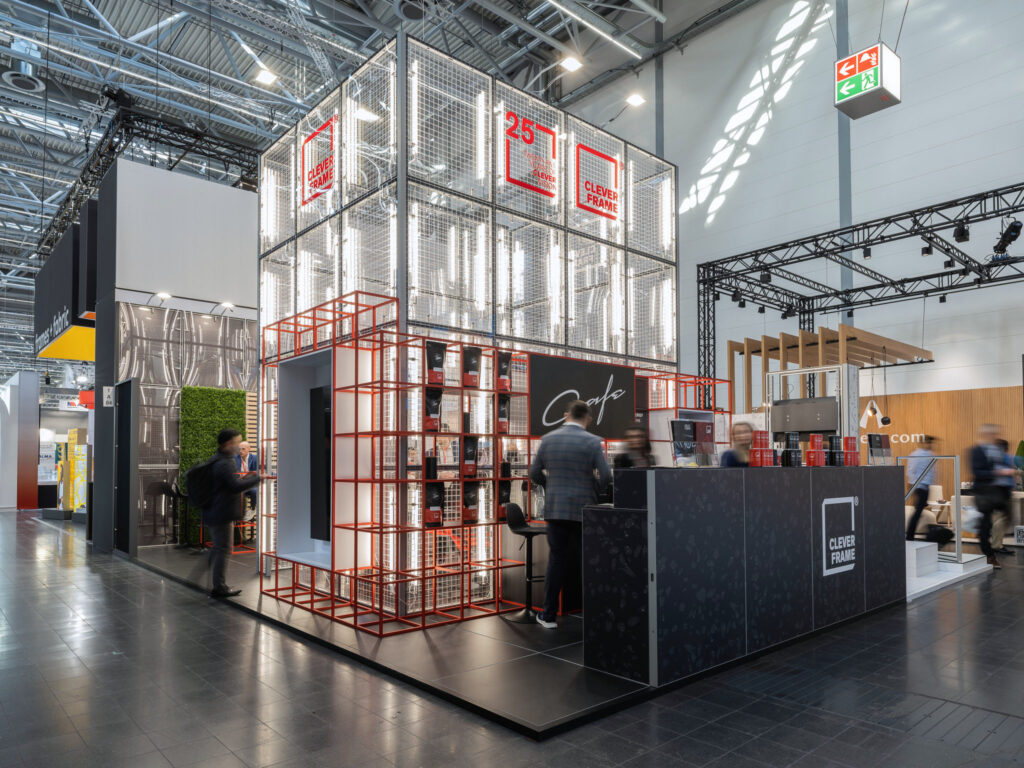
To attract more visitors to a trade show stand, you need to plan the entire visitor journey—from the first communication before the event and the moment they notice the display in the hall to the conversation and subsequent follow-up. A clear message, open layout, product presentation and well-prepared team should all support the same objective.
The greatest value does not come from a random crowd, but from visitors for whom the offer is genuinely relevant. A trade show stand should therefore be evaluated not only in terms of its appearance, but also by whether it makes it easier to start a conversation, present the solution and take the next step after the event.