
How much does a trade show stand cost? This is one of the first questions that arises when planning to exhibit at a trade show. However, there is no single, universal answer. The final price depends not only on the size and appearance of the stand, but also on the materials used, equipment, logistics, assembly and the possibility of reusing the structure at future events. For this reason, the cost of a stand should not be considered solely from the perspective of a single event. The total cost of ownership and the length of time the investment will continue to work for the brand provide a much more meaningful picture.
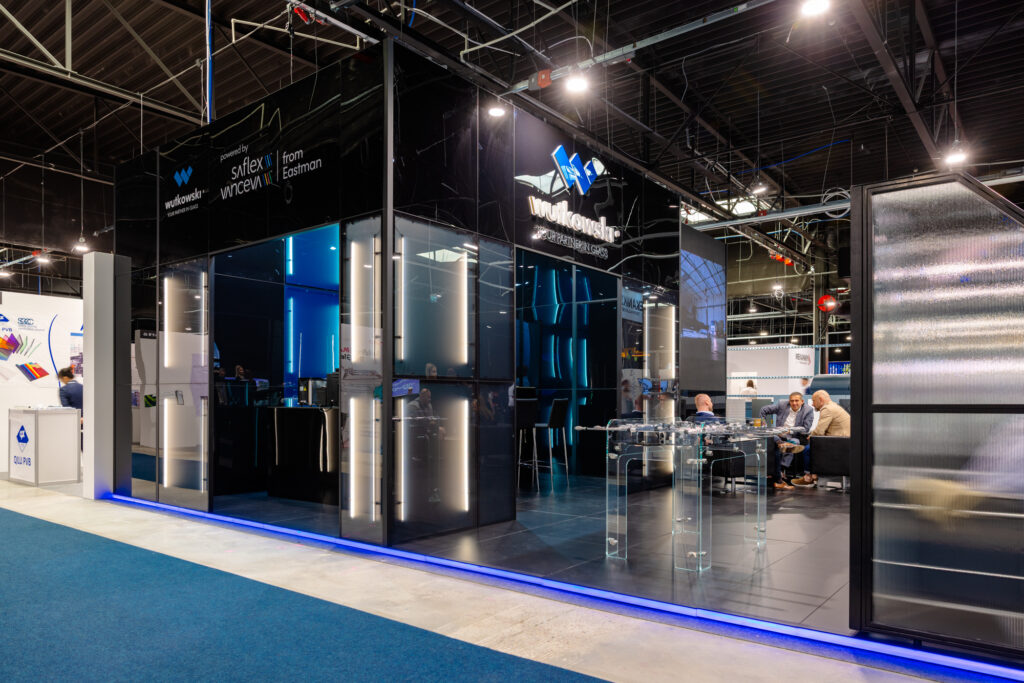
The cost of a trade show stand is calculated based on a wide range of factors. Two stands of exactly the same size may differ significantly in price if one is a simple, open space while the other includes a storage room, multimedia equipment or custom-made furnishings.
Below, we discuss the most important factors that affect the cost of a trade show stand.
The size of a stand has a significant impact on its cost, but it should not be the only point of reference when planning the budget. The type of stand is equally important—whether it is an inline, corner, peninsula or island stand—as each format requires a different number of structural components and offers different design possibilities.
The final quotation is also influenced by how the available space is divided into functional zones, such as a product presentation area, meeting spaces, a reception desk, a storage room or a multimedia zone. The more walls, partitions, enclosed rooms and additional furnishings included in the design, the more materials are required and, consequently, the higher the cost. This is why two stands with exactly the same floor area can vary considerably in price depending on their layout, functions and degree of enclosure.
One of the most important factors is the technology used to construct the stand. A traditional custom-built stand is usually created for a specific design, floor area and event. It can provide considerable freedom when developing unusual forms, but the possibilities for reusing it are often very limited.
An alternative is a modular trade show stand built from components that can be reused, extended and reconfigured into new layouts. In practice, the company is not purchasing a single stand, but a base for creating many different stand designs.
The level of customisation also affects the price. A standard structure with printed graphics will cost less than a stand featuring unusual forms, bespoke details, custom-made components or advanced multimedia solutions. However, this does not mean that a distinctive design must be disposable. With modular systems, the stand’s individual character can be created through:
This makes it possible to retain a consistent technical base while adapting the appearance of the stand to a particular event, product range or campaign.
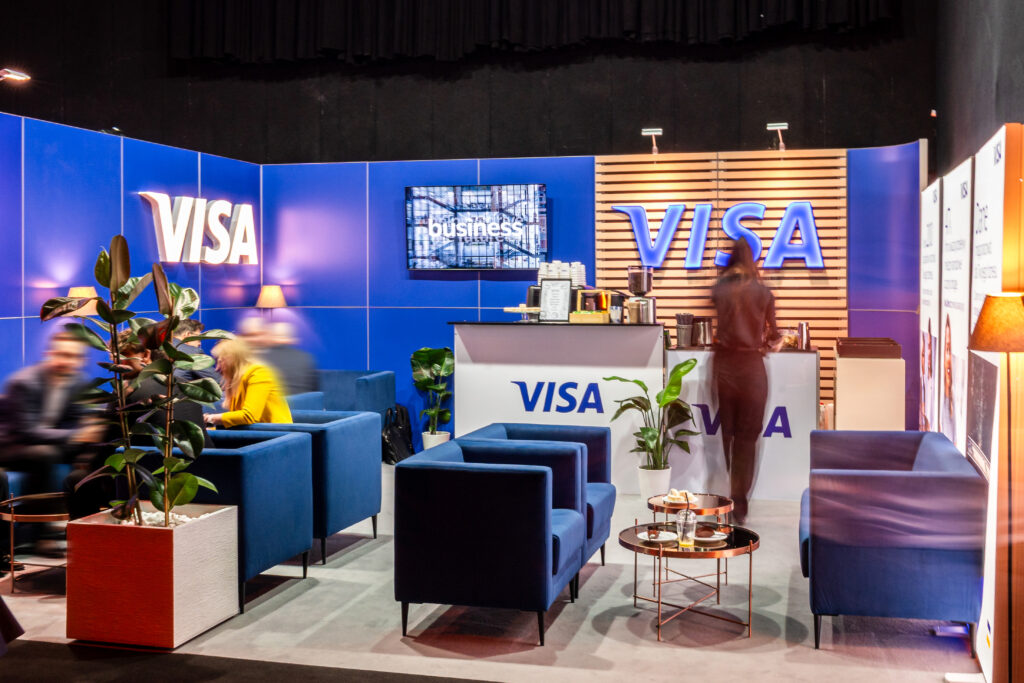
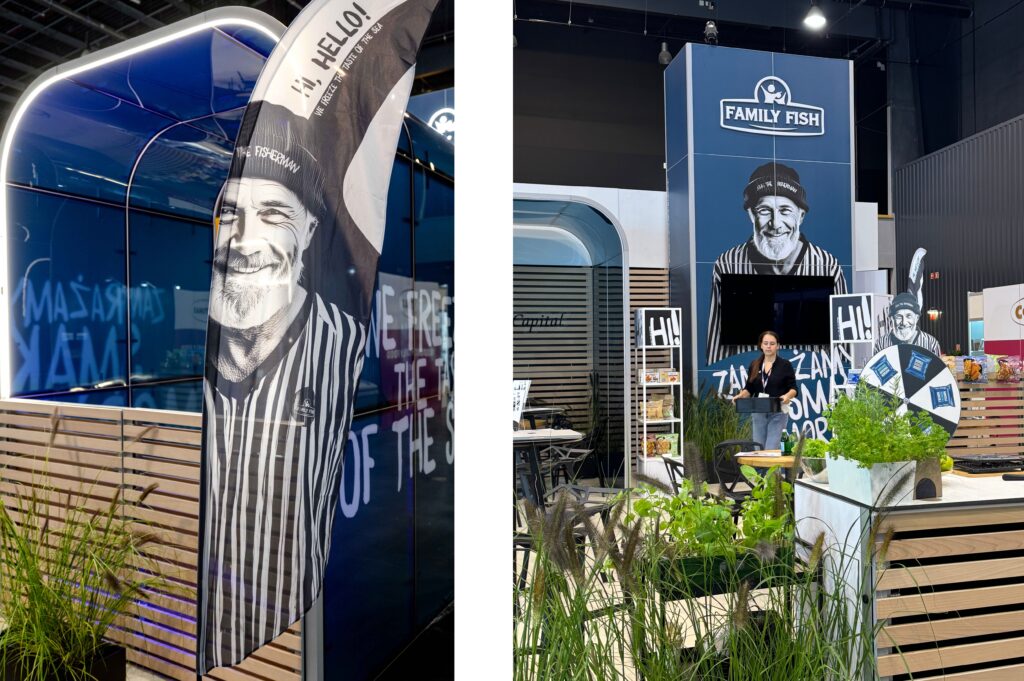
The type and number of graphic surfaces also affect the budget. Their dimensions, printing technology, mounting method and future replaceability all play a role.
With modular solutions, the structure can remain unchanged, while refreshing the stand’s appearance may involve ordering new panels or replacing only selected graphics. The company does not have to invest in an entirely new stand each time. It can update a campaign, change the featured product range or introduce a different language version of its messaging without replacing the existing system.
The cost of a stand also includes its furnishings. Counters, shelving units, shelves, multimedia devices and decorative elements can account for a significant part of the overall budget. The same applies to lighting. Basic structural lighting will have a different price from an elaborate lighting design incorporating linear lighting, backlit graphics, directional spotlights or decorative lighting effects.
It is worth choosing furnishings that can easily be transferred to a new stand configuration. This means that an expense incurred once does not have to be repeated in full at every subsequent event.
The trade show budget does not end with the production of the structure. It must also take into account:
Logistics costs are influenced by factors such as the size of the stand, the distance to the event venue and the complexity of the assembly process. Modular exhibition systems designed for repeated use can help reduce these expenses thanks to standardised components, easier packaging and more efficient assembly.
A short lead time means that the design, production, printing and preparation of the stand components must all be accelerated. It may also limit the availability of selected materials and solutions, while increasing transport and technical labour costs.
Starting preparations earlier provides more time to optimise the structure, refine the functions of individual zones and plan the budget more effectively. It also makes it possible to consider the stand from a longer-term perspective and account for its use at future events from the very first design stage.
At Clever Frame, planning ahead also brings measurable savings. Under the Early Bird programme, customers can receive a discount of up to 15% on the purchase of a stand—the highest discount is available when the order is placed at least four months in advance. Making an early decision therefore not only creates more time for the design process, but can also significantly reduce the overall cost of the investment.
When comparing offers, it is easy to focus on the figure shown in the initial quotation. However, this type of analysis can lead to misleading conclusions. A cheaper, single-use stand does not always prove to be the more economical solution.
A traditional custom-built stand is usually created for a specific floor area and a particular design. After just a few days at a trade show, a large proportion of the materials used can no longer serve their original purpose and becomes waste. The components are disposed of, along with the value of the budget spent on producing them. Before the next event, the entire process—including design, production and construction—has to begin again.
With a modular stand, most of the structure returns to storage and can be used again. At the next event, the company primarily pays for reconfiguration, additional components, new graphics, transport and, where required, an assembly service. It does not have to finance the entire stand again from scratch.
The most meaningful indicator is the cost per use. It can be calculated using a simple formula:
Purchase cost of the system + cost of modifications, logistics and storage ÷ number of events
If the stand is used only once, the entire cost is allocated to a single event. If the same structure is used at five, ten or even more events, the initial investment is spread across all of them.
The more frequently a company uses a modular stand, the lower the average cost of each trade show appearance becomes and the sooner the investment pays for itself. This is particularly relevant for brands that regularly participate in trade shows, conferences, congresses, product launches and industry events.
Repeated use does not mean recreating exactly the same stand every time. A well-designed exhibition system can be adapted to different floor areas and types of display.
If a larger space is required at the next event, the set can be extended with additional modules. For a smaller stand, only some of the existing components need to be used. The company is therefore not restricted to a single stand size or layout.
The final price alone does not reveal all the differences between the proposed solutions. Before making a decision, it is worth asking:
Only the answers to these questions make it possible to assess reliably which offer genuinely provides better value.
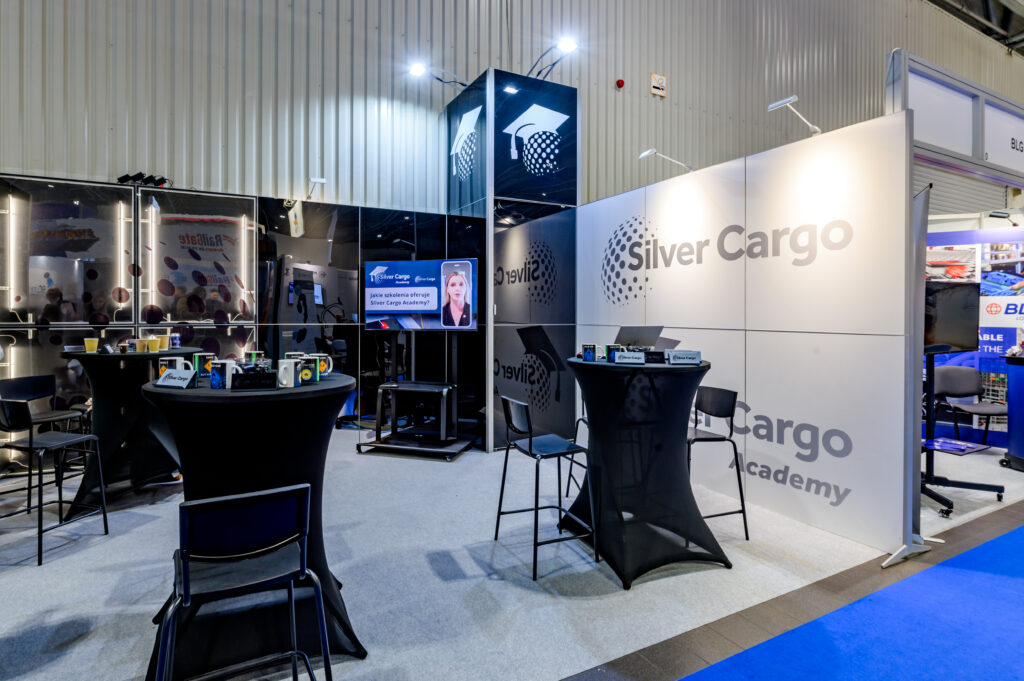
The best starting point is the company’s event calendar, rather than simply the size of its next stand. It is worth analysing how many events the company attends during the year, which floor areas it books most frequently and which stand functions remain consistent.
Based on this information, a core system can be created to meet the company’s most common needs and then extended or modified for individual events. This approach helps avoid both purchasing a set that is too small and investing in components that will only be used occasionally.
A trade show stand does not have to be an expense that loses its value as soon as the event ends. It can become a long-term company asset used repeatedly and in many different forms.
In the traditional model, a large proportion of the budget is consumed during a single event, while much of the stand eventually becomes waste. In the modular model, the investment remains at the company’s disposal. Every subsequent use increases its cost-effectiveness, reduces the average cost of exhibiting and shortens the payback period.
This is why the question “How much does a trade show stand cost?” should be followed by another: “How many times will we be able to use it?” The answer provides the clearest indication of the stand’s true cost.