
Claims about “green events” now show up in almost every industry. The problem starts when sustainability messaging gets ahead of real action – or, in extreme cases, replaces it. In event marketing, this approach is especially risky because attendees experience the organisation live and quickly judge whether the promises match what happens on site.
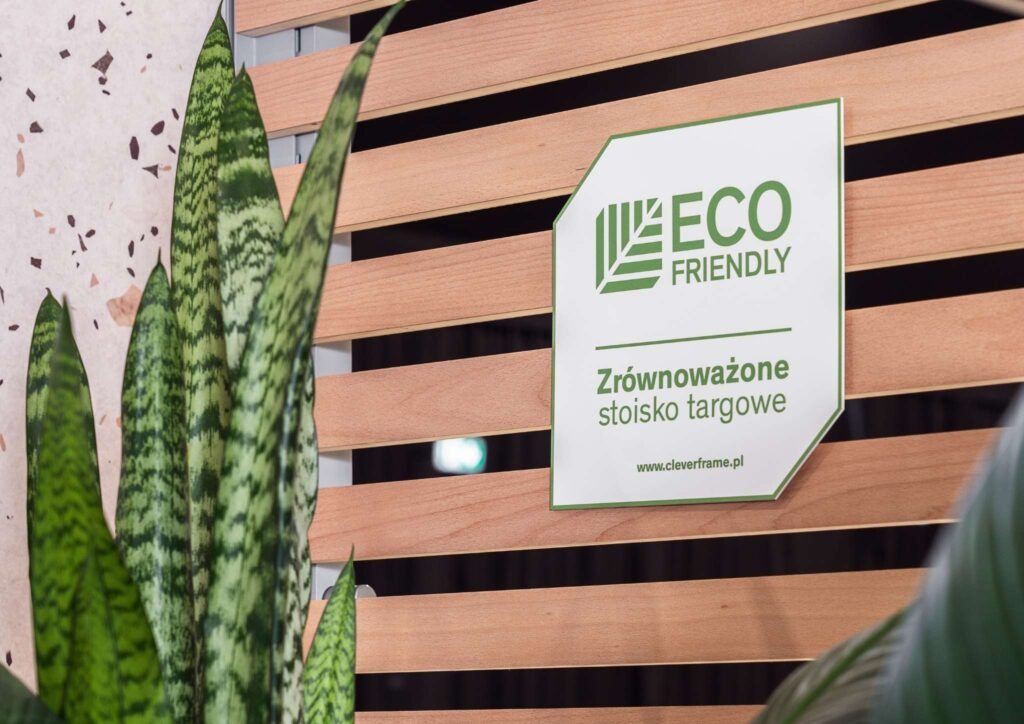
Greenwashing doesn’t always mean deliberate deception. It often comes from oversimplification, vague wording, missing data, or poorly considered purchasing decisions. In this context, a well-designed modular exhibition stand can genuinely support environmental goals while also reducing the risk of communication missteps.
Greenwashing is presenting eco-friendly or sustainable actions in an exaggerated, ambiguous, or misleading way. In event marketing, it can relate to both promotional content and operational decisions: the choice of stand build, materials, logistics, and how display elements are reused.
An event is an environment where claims are immediately tested against the attendee experience. If a brand promotes “less waste” but leaves behind a pile of single-use stand build after the event, credibility drops much faster than it would in purely digital channels.
The risk of greenwashing also increases because events involve many vendors and subcontractors. Without shared standards, inconsistencies are easy: one story in marketing communications and different practices on site.
In practice, greenwashing follows a few repeatable patterns. The checklist below makes it easier to quickly assess whether an event claim or decision is credible and verifiable.
Most often, watch out for:
Most misunderstandings arise where marketing meets production. Brands want to communicate responsibility while operating under time pressure, budget constraints, and venue technical limitations. The result can be “green claims” that don’t reflect the real-world nature of event stand builds.
Single-use stand builds are hard to defend in sustainability communications, even if some materials can be recycled. In event marketing, what matters isn’t only what elements are made from, but also how long they last and how many times they’re used across different events.
Natural colours, botanical motifs, or “planet” slogans may create a look and feel, but they are not the same as reducing environmental impact. When communication relies mainly on image, it can easily come across as performative.
The safest strategy is to design your event display for repeated use, and base your messaging on specifics: what exactly was planned, how it will be reused, and how it improves logistics. In this approach, Clever Frame modular exhibition stands can play an important role, as they can be configured and modified depending on the event.
If your exhibition stand is meant to support event marketing over the long term, it needs to be flexible. A modular structure makes it easier to build different layouts from the same components, increasing repeatability and reducing the need to manufacture new parts for every event.
In practice, this means planning your display for multiple scenarios: trade shows with different footprints, brand experience zones, product presentations, as well as roadshows or temporary showroom installations.
One of the most common reasons stands get replaced is a change in campaign, offer, or visual identity. In a waste-reduction approach, the key is making the communication layer replaceable while keeping the core stand structure the same.
With Clever Frame exhibition stands, a magnetic system can enable quick swaps of graphic panels, adapting the stand to seasonal campaigns or changing marketing needs. This allows a brand to refresh the message without redesigning and rebuilding the entire stand from scratch.
An event’s environmental impact isn’t only about materials – it’s also about logistics. Consider how the stand is packed, transported, and stored, because that affects how often it can realistically be reused and whether “green claims” are operationally feasible.
Clever Frame exhibition stands are designed to make transport and storage easier. Space efficiency during shipping supports the smooth delivery of multiple activations throughout the year – especially when a brand operates across markets and frequently changes event locations.
If installation is complicated, teams are more likely to choose “something new and easier” for the next event. That’s why real-world reusability also depends on how quickly the stand can be set up at the next venue.
With Clever Frame exhibition stands, set-up and dismantling can be done tool-free. This simplifies operations, reduces on-site time, and helps maintain consistency across events without pushing teams toward single-use solutions.
The most reliable standard in communications is simple: only say what you can prove and repeat. In event marketing, it’s also crucial to distinguish between a “plan” and a “fact” – if something is still being implemented, state that clearly.
The guidelines below help create descriptions that sound credible and align with event delivery in practice.
In your messaging, stick to these rules:
Credibility in sustainability grows when the stand is part of a long-term strategy rather than a one-off build. A modular approach makes it easier to align marketing goals with operational feasibility.
A brand attends industry trade shows, hosts partner meetings, and plans a series of presentations in several cities. In this case, the ability to expand and modify layouts is especially valuable. The same components can create different configurations, while the message is updated by swapping graphic panels.
When campaigns, offers, or hero products change, the on-stand messaging usually changes too. Instead of designing a new stand build, separate the “structure” from the “communication layer.” In Clever Frame exhibition stands, a magnetic system can enable quick replacement of graphic panels, adapting them to seasonal campaigns or evolving marketing requirements.
In event marketing, a stand supports brand image, conversations, and product presentation. A credible sustainability approach means the quality of the attendee experience comes from design and functionality – not from one-off “effects.” Modular stand builds help maintain a consistent exhibition standard across multiple events without creating pressure to produce new elements every time.
Greenwashing often appears when a brand wants to quickly build a responsible image without changing how it works. Real progress in sustainable events usually comes from process improvements: planning for multiple activations, using the same stand in different configurations, and reducing single-use builds.
In practice, a modular approach can improve efficiency because the same stand can be used repeatedly, while changes mainly involve the layout and graphics. This supports resource control and makes long-term event calendar planning easier.
Greenwashing in event marketing most often comes not from bad intent, but from oversimplification, missing definitions, and a one-off approach to stand builds. Below are the most important principles to reduce the risk.
The key rules to remember:
If you want to reduce the risk of greenwashing in your event communications, start by designing your display for reuse and grounding your message in concrete, repeatable actions – Clever Frame can help you choose a modular exhibition stand layout and an update method for your communications that can be backed up with facts.