What is visual merchandising?
Visual merchandising is the practice of designing and arranging a physical space so that visitors quickly understand what a brand offers, what they should focus on and what the next step should be. It combines stand layout, product display, graphics and sensory cues to guide attention and decision-making, while also strengthening brand positioning through a consistent visual language.
In event marketing, at trade shows, in showrooms and during roadshows, visual merchandising turns brand and product strategy into customer experience within a branded space. It supports direct communication by making key messages readable from a distance, structuring the visitor journey within seconds and creating a coherent setting for presentations, consultations and lead generation.
Main goals of visual merchandising
Visual merchandising connects business goals with visitor behaviour in a real environment. The most common goals include:
-
making the offer easy to understand within a short attention window,
-
setting priorities – what visitors should notice first, next and last,
-
shaping visitor flow to reduce friction and avoid bottlenecks,
-
supporting conversations through clear demo and meeting zones,
-
strengthening brand recognition through consistent visual communication,
-
improving the quality of interactions by clearly showing who the brand is for and why it matters.
Benefits for brands at trade shows and events
Well-designed visual merchandising improves performance because it takes into account how people perceive and move through space. Research in environmental psychology and wayfinding shows that clear cues, focal points and easy-to-understand information reduce cognitive load and increase willingness to interact. In practice, this translates into:
-
higher visibility of the exhibition stand and a stronger first impression,
-
more purposeful conversations, because visitors self-qualify before engaging,
-
better message recall through repetition of key visual codes,
-
stronger product understanding through the combination of context and demo zones,
-
more consistent brand perception across different locations and event formats.
Challenges and limitations
Visual merchandising is limited by venue rules, budget, time and available floor space. Typical challenges include:
-
short setup and dismantling times, which limit the complexity of storytelling in space,
-
variability in stand location and sightlines, which affects how graphics and products are perceived,
-
conflicting stakeholder priorities, for example product teams may want depth while sales teams expect speed,
-
overloading the stand with too many messages, which weakens the main value proposition,
-
inconsistent execution across events, which weakens brand memory and makes results harder to compare.
It is also worth remembering that visual merchandising cannot replace a trained team, a clear offer or a realistic visitor engagement plan. It should be treated as a support layer that makes conversations easier and improves the visitor journey.
How visual merchandising is used at trade shows and events
In trade show environments, visual merchandising usually starts with three questions: what should be visible at first glance, what should be discovered up close and what should only appear during a conversation or presentation. This approach helps define three layers of communication:
-
distance communication, for example a concise headline and brand elements readable from several metres away,
-
mid-range communication, for example category markers and benefit-led messages that encourage visitors to enter,
-
close-up communication, for example product details, proof points and implementation examples that support conversion.
Stand layout and visitor flow are critical. A clear path reduces hesitation and prevents bottlenecks, while defined zones help teams work effectively. Typical zones include an entry area that signals relevance, a demo or consultation area that supports longer interactions and a back-of-house area that keeps operational elements out of sight. The goal is not to force movement, but to make the next step obvious.
Examples of visual merchandising in practice
Implementation depends on the brand, the category and the role of the event in the customer journey. Practical applications include:
-
building a hero moment with one main message and one flagship product, then supporting it with secondary content,
-
using comparative displays to clearly show differences between product tiers or service packages,
-
turning a case study into a spatial narrative in which each stage of the process corresponds to a specific station,
-
designing a tactile demo sequence that leads from problem to solution in a predictable order,
-
maintaining a consistent brand look across multiple events by repeating key visual assets and layout logic.
Visual merchandising and modular exhibition stands
Modular exhibition stands support visual merchandising because they make it possible to maintain a repeatable layout, adapt the space easily and refresh the display over time. Instead of treating each event as a one-off build, brands can plan a core structure and update the messaging depending on the target audience, product priority or campaign timing.
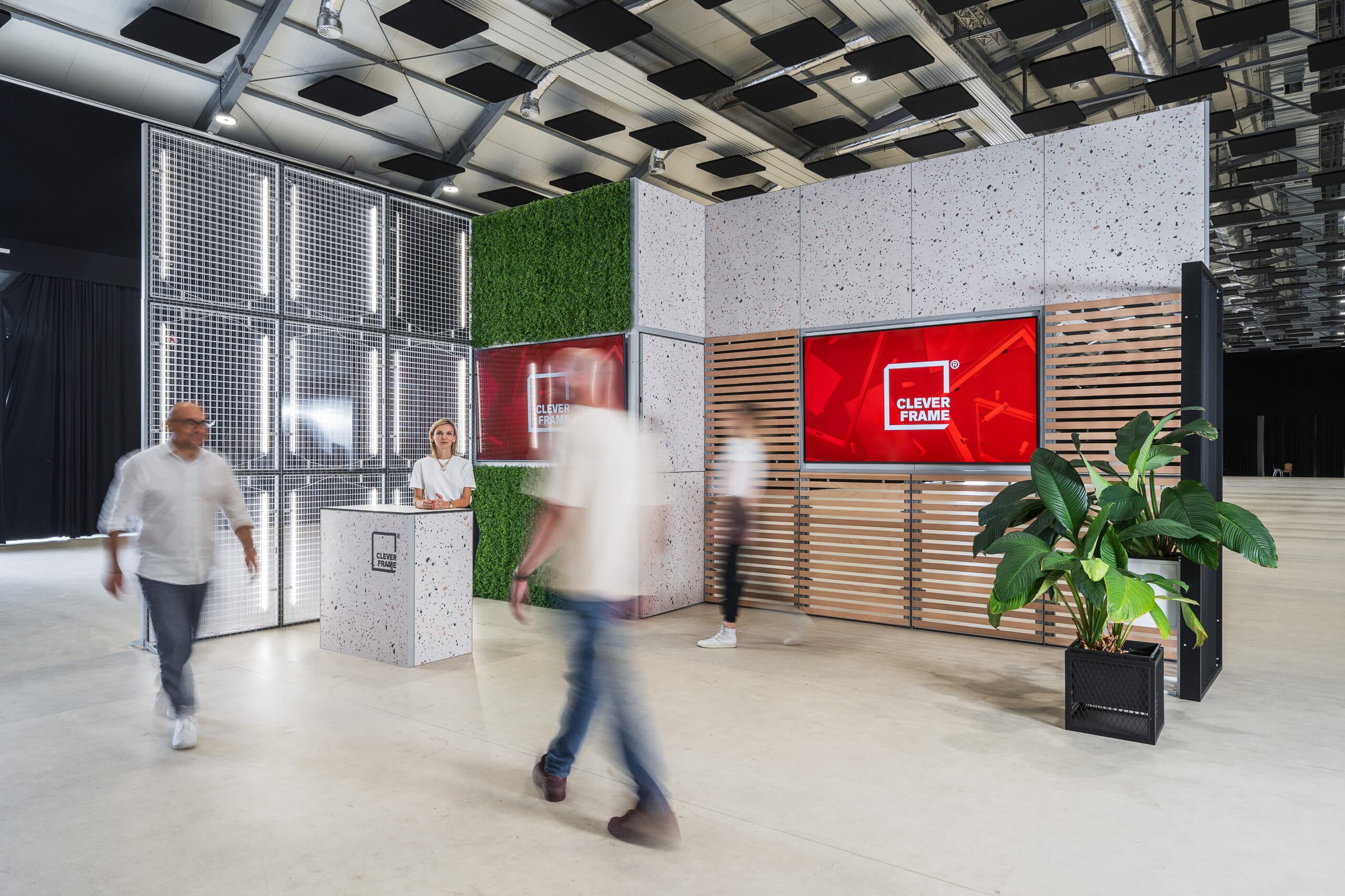
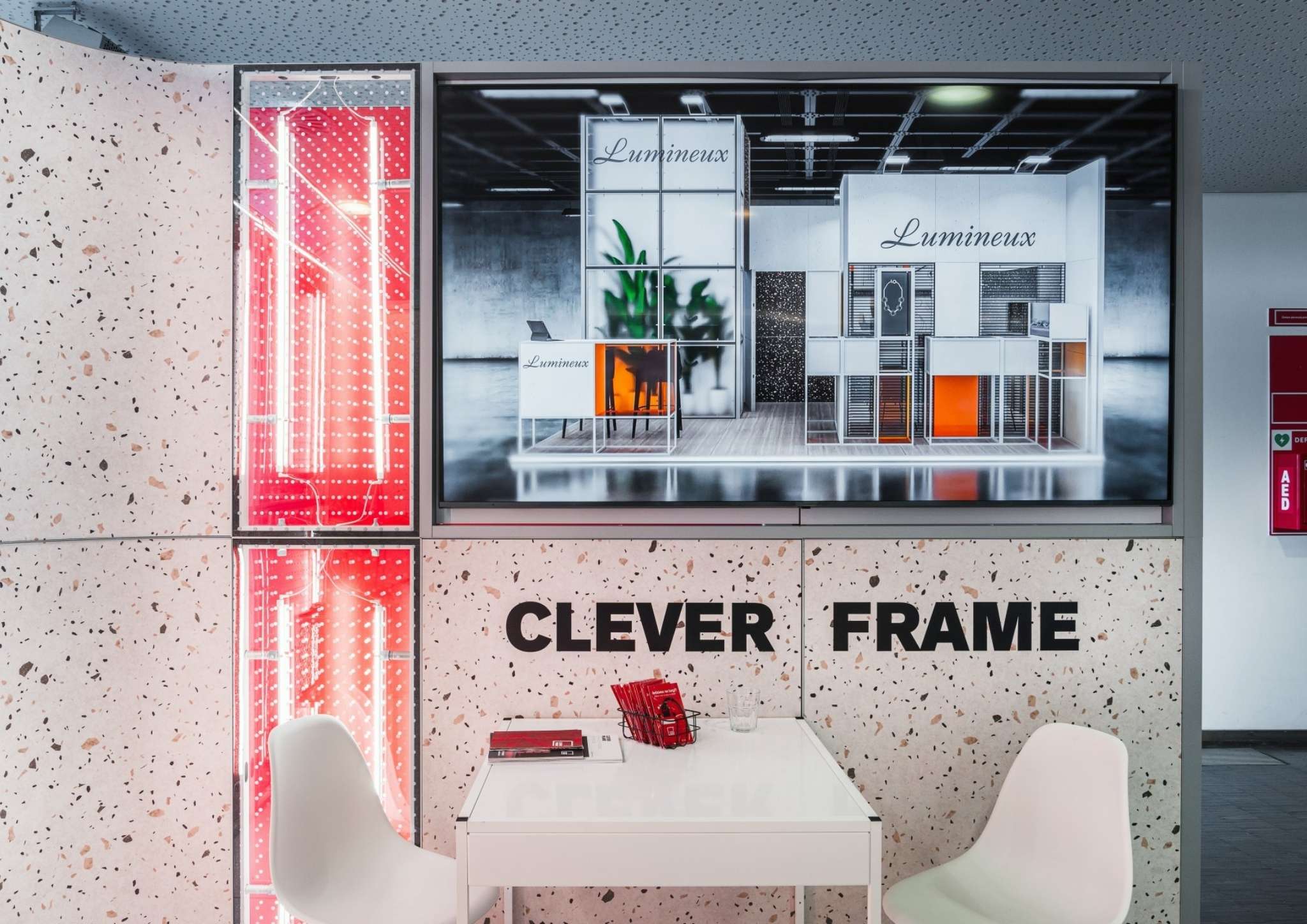
In Clever Frame exhibition stands, modular frames can be configured into different footprints and functional zones, while graphic panels mounted on magnetic strips allow quick graphic changes without tools. This is particularly useful for seasonal campaigns, regional variations or schedules covering multiple events, where the same layout base requires different content. The operational advantage is consistency: the stand keeps the same spatial logic and brand codes, while only the messaging layer changes.
How to evaluate the effectiveness of visual merchandising
Because visual merchandising influences behaviour, it can be assessed using practical indicators linked to event objectives. Useful evaluation methods include:
-
observing visitor flow and time spent in key zones,
-
monitoring the ratio of passers-by to meaningful interactions,
-
checking message recall and product understanding through short on-site questions,
-
analysing lead quality against the intended visitor profile,
-
comparing results across events while keeping the same core layout.
Iterative improvements are often more effective than radical redesign. Even small changes in hierarchy, spacing and content density can significantly improve clarity and the overall approachability of the stand.
See also
-
modular exhibition stand
-
visitor flow
-
brand experience
-
event marketing