What is Visitor Experience?
Visitor Experience (VX) is the total perception a person forms while interacting with a brand in a physical environment, such as a trade fair booth, an event activation, a showroom, or a roadshow space. It combines functional factors (how easy it is to navigate the space, find information, and speak with the right people) with emotional factors (how the brand feels, what it stands for, and whether the interaction is memorable and credible).
In event marketing and face-to-face communication, visitor experience is shaped by spatial design, consistent visual communication, staff interactions, and the sequence of touchpoints from first sightline to follow-up. A well-designed VX supports product and service presentation, reduces friction in conversations, and helps turn short encounters into qualified leads and lasting brand associations.
Main goals of Visitor Experience
Visitor experience is planned to achieve concrete business outcomes while respecting how people behave in busy, information-dense environments like trade fairs. Typical goals include:
-
helping visitors quickly understand what the brand offers and who it is for,
-
guiding attention toward priority messages, product categories, or key demos,
-
supporting meaningful conversations between visitors and the booth team,
-
reducing cognitive overload through clear wayfinding and structured content,
-
creating a consistent brand impression across touchpoints, from layout to graphics to tone of voice,
-
increasing the likelihood of post-event actions, such as booking a meeting, requesting a quote, or visiting a showroom.
Benefits of a strong Visitor Experience
A strong visitor experience improves both marketing performance and operational efficiency during live interactions. Key benefits include:
-
higher engagement, because visitors understand what to do next and where to go,
-
better lead quality, because conversations start with clearer context and relevance,
-
stronger brand recall, supported by consistent visuals and a coherent narrative,
-
more efficient use of staff time, because the space design supports quick triage and routing,
-
higher reuse of assets, when modular booth structures enable repeatable layouts and predictable visitor paths,
-
faster campaign adaptation, when graphic panels can be exchanged to match seasonal campaigns or evolving marketing needs.
Challenges and limitations
Visitor experience is influenced by many factors that are difficult to fully control at trade fairs and events. Common challenges include:
-
limited attention spans, because visitors compare many offers within a short time,
-
noise and visual clutter, which can weaken message clarity and reduce dwell time,
-
space constraints, including fixed entrances, neighboring booths, and venue rules,
-
inconsistent execution, when booth staff behavior does not match the intended brand experience,
-
overdesigned layouts, where aesthetics reduce usability and break visitor flow,
-
measurement gaps, when teams track volume metrics but miss experience indicators such as drop-off points or conversation outcomes.
How Visitor Experience is used at trade fairs and events
At trade fairs, VX is implemented through decisions that connect space, content, and human interaction into one journey. A practical approach starts with defining the primary visitor groups (for example, buyers, partners, media, or job candidates), then mapping a realistic sequence of touchpoints that fits the expected time at the booth.
Space and visitor flow
Visitor flow describes how people enter, move through, pause within, and exit the booth area. It is influenced by the openness of the layout, the placement of entry points, and the visibility of key messages. Good flow supports quick orientation and helps prevent bottlenecks during peak hours.
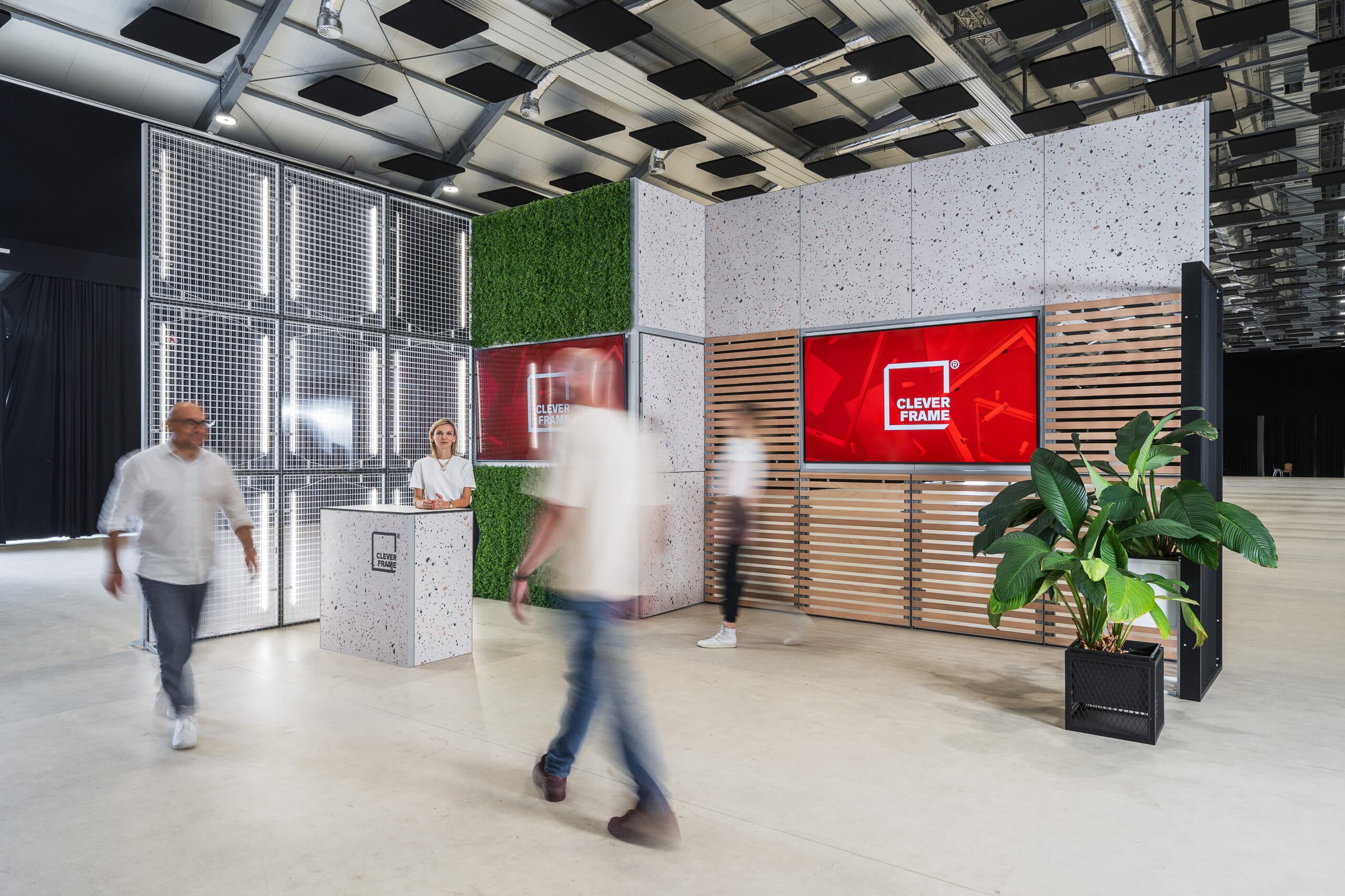
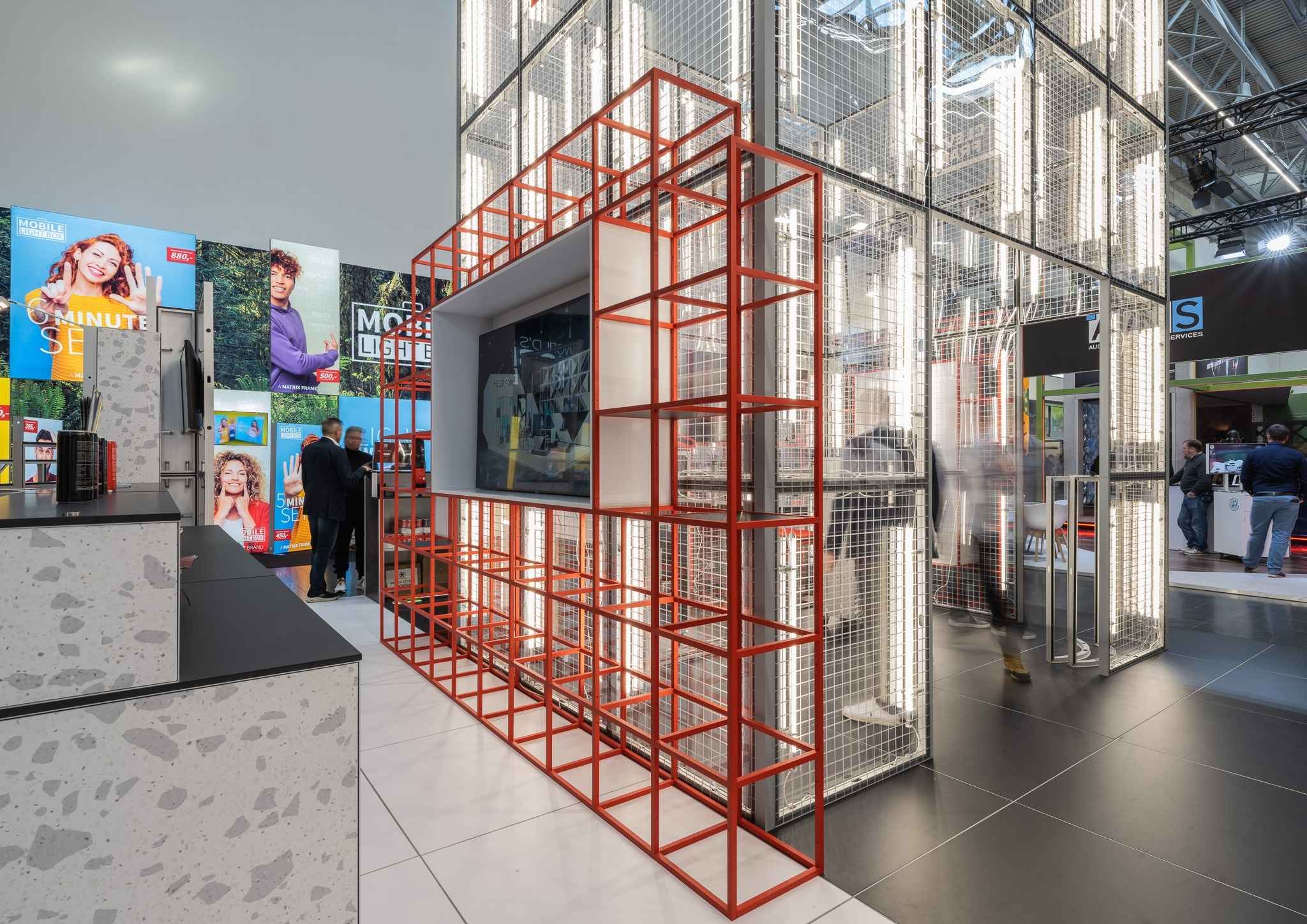
Modular exhibition stands are particularly useful in this context because the same set of frames and connectors can be arranged into layouts that prioritize different behaviors, such as short interactions at the edge of the booth, deeper product discussions inside, or scheduled meetings in a quieter zone. Tool-free assembly and disassembly also supports operational agility, especially when setup windows are short.
Consistent visual communication
Visual consistency helps visitors process information quickly and reinforces brand cues. This includes hierarchy (what should be seen first), repetition (recognizable elements across panels), and legibility (distance, lighting conditions, and crowding). In practice, teams often treat graphics not as decoration, but as a navigation layer that signals categories, solutions, or visitor types.
With graphic panels, updates can be executed with less disruption: teams can exchange panels between events to reflect new product releases, market-specific messaging, or seasonal campaigns, while keeping the underlying structure consistent. This supports both brand coherence and content relevance across a calendar of events.
Interaction design and human touchpoints
Visitor experience is also determined by micro-interactions: greeting behavior, the first question asked, how demos are explained, and whether follow-up steps are clear. High-performing booths typically define simple conversation paths, align staff roles with zones, and use the space to support privacy when needed for sensitive discussions.
Examples of Visitor Experience in practice
Visitor experience is easier to manage when translated into concrete design and operational choices. Typical examples include:
-
a clear entry area that communicates the core promise in seconds, followed by a structured path to deeper content,
-
separate touchpoints for different intent levels, such as quick discovery at the perimeter and longer consultations in a dedicated meeting zone,
-
graphics organized by solution areas, helping visitors self-select the most relevant topic before engaging staff,
-
a modular booth layout adapted for a roadshow, where the same components are reconfigured for different venues and floor plans,
-
a showroom setup that uses consistent branding and updated panels to reflect the current campaign, while keeping the spatial logic stable for repeat visits,
-
an event activation where the visitor journey is timed, with a clear start, a guided demo moment, and an explicit next step for sales follow-up.
See also
-
Visitor flow
-
Modular exhibition stand
-
Brand experience
-
Sustainable exhibition stand