
What is Trade Show Lead Attribution?
Trade show lead attribution is the process of identifying which trade show touchpoints and interactions contributed to generating a specific lead and, later, to progressing that lead through the sales pipeline. It connects what happened in a physical environment (a conversation at a stand, a product demo, a scan of a QR code, attendance at a presentation) with measurable outcomes in marketing and sales systems.
In event marketing, attribution helps teams understand how the brand experience delivered at a stand influences intent and decision-making. It also supports more accurate reporting on performance, including which messages, formats, and engagement moments work best in face-to-face communication and product or service presentations.
What are the main goals of Trade Show Lead Attribution?
Attribution is used to turn event activity into structured evidence that supports planning, budgeting, and continuous improvement. The most common goals include:
-
linking each captured contact to a specific event and interaction path (and, where possible, to the booth/stand experience),
-
improving lead quality by distinguishing casual visitors from sales-ready prospects,
-
supporting event ROI analysis by comparing outcomes with total participation costs,
-
optimizing messaging and offers based on what correlates with conversions,
-
aligning marketing and sales by providing shared definitions, fields, and reporting logic.
What are the benefits of Trade Show Lead Attribution?
When implemented consistently, attribution increases transparency across offline and online channels. It also reduces the common “black box” effect of trade shows, where teams remember high traffic but cannot quantify impact.
Key benefits typically include:
-
more reliable performance reporting across events, including comparisons between locations, formats, and booth sizes,
-
better follow-up timing and personalization, because the sales team sees what the visitor engaged with,
-
stronger brand consistency, by validating which visual and verbal narratives resonate in a live environment,
-
smarter space planning, because the team can connect visitor flow patterns to lead outcomes,
-
more efficient re-use of assets, for example when modular stand components allow rapid message changes without rebuilding the entire structure.
What are the challenges and limitations of Trade Show Lead Attribution?
Offline attribution is inherently more complex than digital attribution, because many interactions are untracked and happen across multiple moments and stakeholders. The most frequent limitations include:
-
data gaps, when staff capture leads inconsistently or rely on memory instead of structured input,
-
identity resolution issues, when badge scans, business cards, and form entries do not match CRM records,
-
multi-touch complexity, because a visitor may see the stand, attend a talk, visit a showroom later, and only then request a quote,
-
privacy and consent requirements, including GDPR considerations for storing and using event data (for example having a lawful basis, providing appropriate notices, and honoring retention limits),
-
attribution bias, when teams over-credit the last interaction (for example a final conversation) and under-credit earlier exposures such as signage or demos.
Another practical constraint is the physical environment. If the stand is crowded, loud, or hard to navigate, staff may prioritize conversations over data capture. That reduces attribution accuracy even when tools are available.
How is Trade Show Lead Attribution used at trade shows and events?
Effective attribution starts before the event and is designed into the visitor journey. Teams typically define the moments they want to measure, then connect each moment to a capture method and a CRM field structure. In practice, attribution at trade shows and brand events is built around a few recurring components:
-
trackable entry points, such as dedicated landing pages, QR codes, or short URLs used on specific stand zones and print materials,
-
lead capture workflows, including badge scans, digital forms, or appointment booking that tags the lead with event metadata,
-
interaction tagging, where staff selects topics discussed, products shown, and next-step intent in a standardized way,
-
post-event nurturing logic, where email sequences and sales tasks reflect what the visitor actually engaged with,
-
reporting and dashboards, where the event is analyzed by lead quality, pipeline influence, and conversion rate over time.
The stand’s layout influences what can be measured. Clear zoning (welcome, demo, consultation) helps staff classify interactions and reduces ambiguity in follow-up. Visitor flow matters as well: if the primary call-to-action is placed where people naturally pause, the team captures more consistent data with less friction.
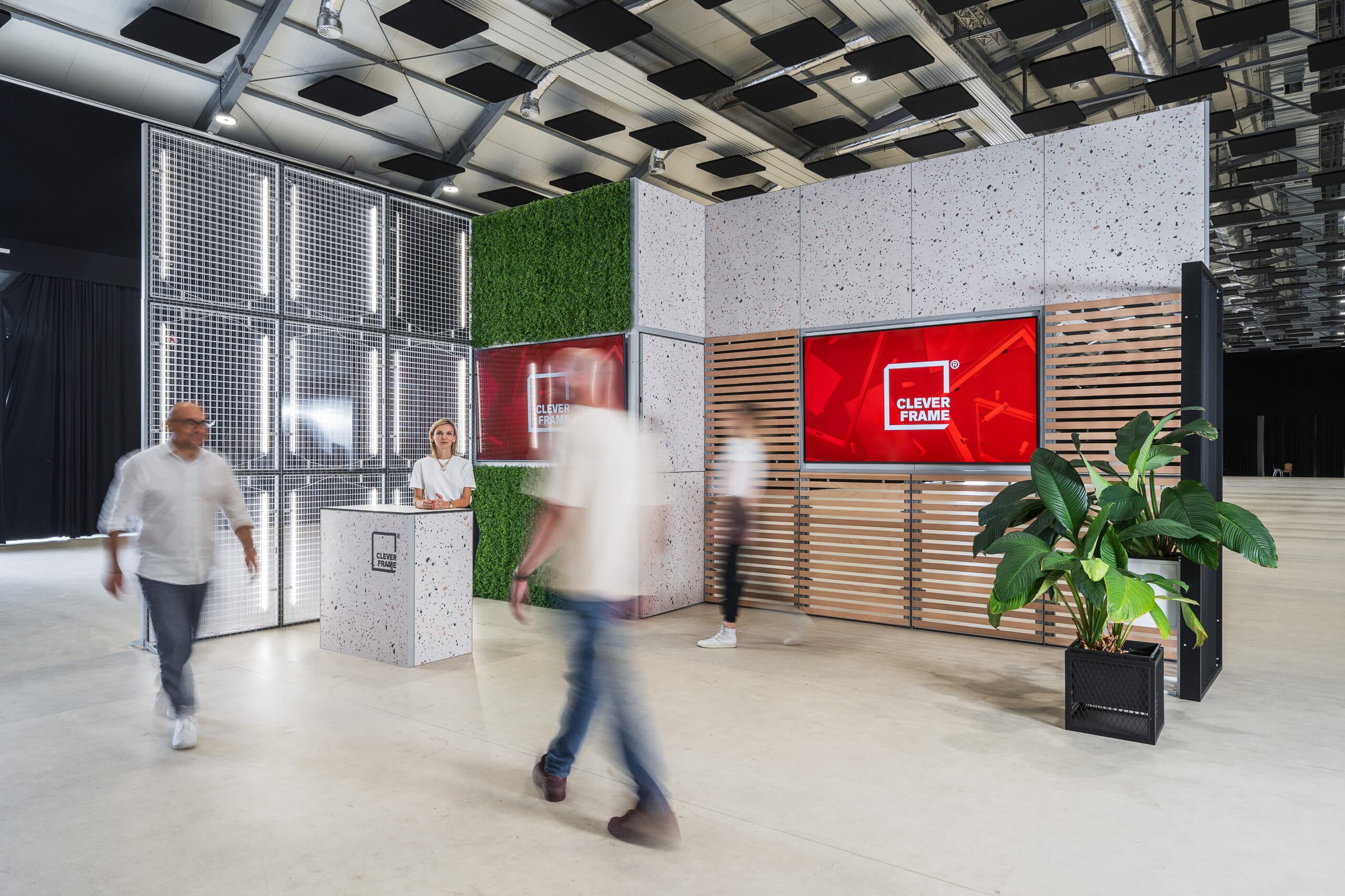
Visual consistency supports attribution indirectly by improving recall. If the same visual language is used across invitations, stand graphics, and follow-up emails, contacts are more likely to recognize the brand and respond. Modular exhibition stands that allow quick graphic swaps (for example via interchangeable graphic panels) can support this consistency across seasonal campaigns, product launches, or different event formats, while keeping the measurement framework stable.
Practical examples of Trade Show Lead Attribution
Attribution models should match the buying cycle and the role of the event. The examples below illustrate common, realistic setups used in B2B and high-consideration categories:
-
zone-based attribution, where each stand area has its own QR code and the lead record stores which zone triggered the capture,
-
content-led attribution, where a downloadable spec sheet or case study is tied to a unique URL and indicates the visitor’s interest category,
-
meeting-to-pipeline attribution, where pre-booked consultations at the booth are logged as meetings and linked to opportunities created within a defined time window,
-
product-demo attribution, where staff tags which demo was attended and later compares conversion rates by demo topic,
-
multi-event attribution, where leads who visit both a trade show and a showroom or roadshow stop receive sequential touchpoint labels to reflect the full journey.
In each case, the goal is not to “prove” that one element single-handedly created revenue, but to build a credible chain of evidence that connects on-site experience design, interaction quality, and subsequent business outcomes.
See also
-
Visitor Flow
-
Modular Exhibition Stand
-
Event Marketing ROI
-
Brand Experience