
What is rebranding?
Rebranding is a deliberate change in how a brand is perceived. It includes refreshing or redesigning brand identity elements (such as the name, logo, tone of voice, and visual identity) as well as how the brand shows up across customer touchpoints. In offline settings, rebranding goes far beyond graphic design – it needs to be visible in the brand experience, including how products and services are presented, how conversations are handled, and how physical spaces are organized.
In the context of trade shows and event marketing, rebranding is particularly demanding because it happens “live.” Attendees immediately judge whether the brand promise matches what they see and experience at the trade show booth, showroom, or during a roadshow. That’s why a rebrand should cover not only visual communication but also booth layout, visitor flow, information materials, and team interaction scenarios.
What are the main goals of rebranding?
Rebranding typically has clearly defined strategic and operational goals that should be translated into concrete actions in physical spaces. Most often, it includes:
- streamlining brand architecture after changes in the offer, company structure, or after mergers,
- boosting awareness and memorability through a consistent visual identity across online and offline channels,
- changing positioning – for example, moving into a premium segment or specializing in a narrower category,
- strengthening credibility and trust through consistent messaging, proof points, and clear value propositions,
- better alignment with audience expectations and new buying contexts – including the brand experience at events.
What are the benefits of rebranding?
A well-planned rebranding strategy can improve communication and sales performance, especially when it’s implemented consistently across customer touchpoints. In practice, benefits include:
- clearer differentiation from competitors in crowded trade show halls and exhibition areas,
- a consistent brand experience – from the meeting invite to the booth conversation and post-event follow-up,
- greater offer clarity thanks to better zoning (e.g., demos, consultations, sales meetings),
- easier message updates for future campaigns when communication is built on clear rules and templates,
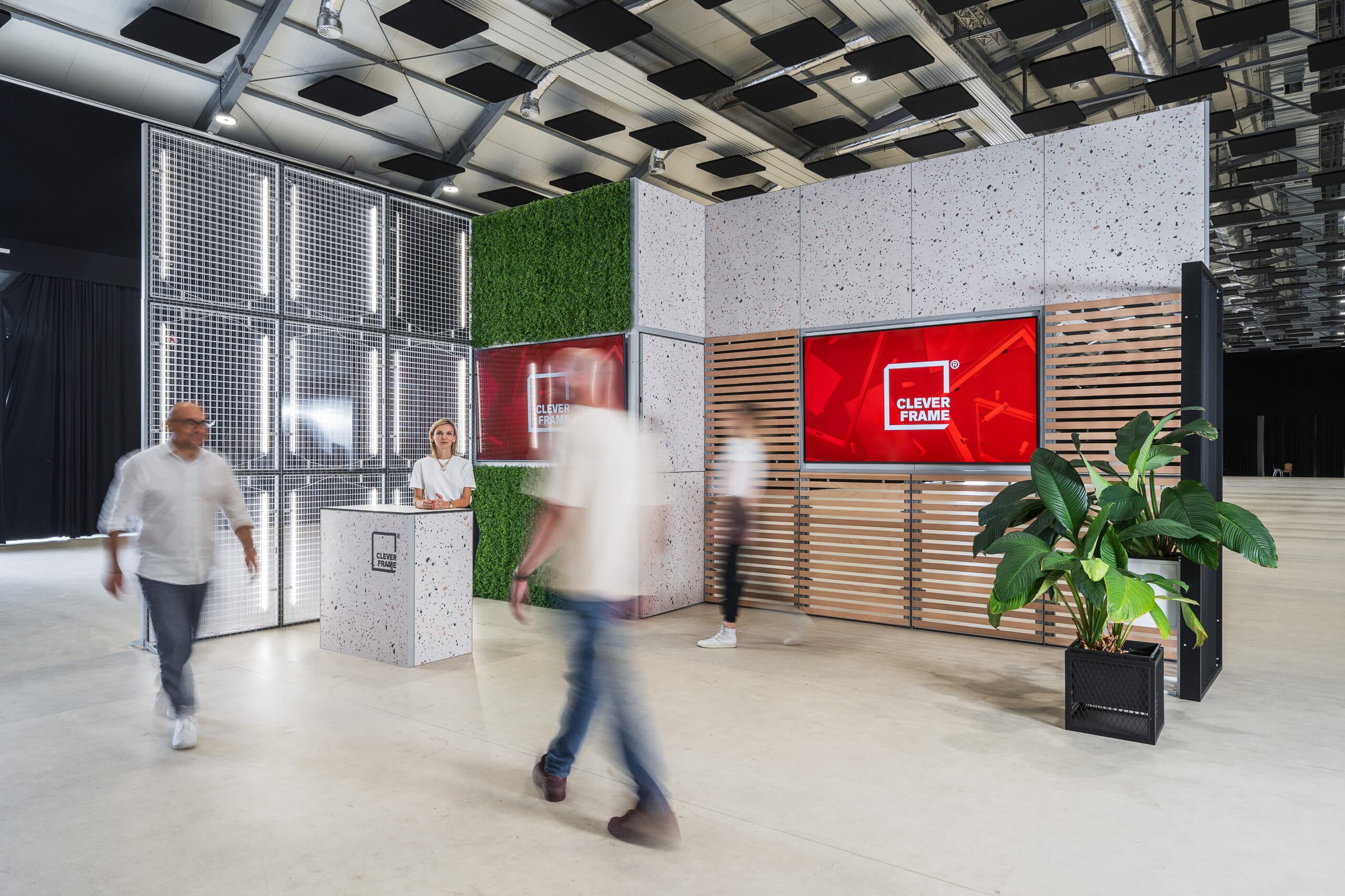
- the ability to roll out visual changes quickly on Clever Frame trade show booths by swapping magnet-mounted graphic panels – without modifying the structure.
What are the challenges and limitations of rebranding?
Rebranding can be costly and risky if it’s treated only as a change to the “visual layer.” Problems often come from underestimating the scale of implementation – especially offline. It’s worth considering:
- the risk of inconsistency between claims and experience – for example, a new look without changing how the offer is presented or how conversations are handled,
- the need to standardize materials across multiple formats (print, digital, spatial signage) and control production quality,
- time constraints – rebrand launches are often tied to trade show dates, product launches, or campaigns,
- team operational challenges – training is needed on the new brand language and visitor engagement standards,
- potential audience resistance if the change is too abrupt or poorly explained through communication.
How is rebranding used at trade shows and events?
Trade shows and events are a natural moment for a rebrand “launch” because they enable intense market contact and fast feedback. The key is translating the new identity into space: the booth layout should support visitor flow, make navigation easy, and guide visitors to the most important points (e.g., new product showcases, consultation conversations, newsletter sign-ups, or demo bookings).
In practice, this means consistent use of new colors and typography, a clear message hierarchy on graphic panels, and a cohesive set of materials for the team. With modular trade show booths (also known as modular exhibition stands), it’s important to quickly adapt the layout to the floor space and event goal, as well as to enable tool-free assembly and disassembly – making logistics easier during a busy event calendar.
What are practical examples of rebranding?
Rebranding can take the form of a full identity overhaul or a gradual refresh. Example offline implementation scenarios include:
- launching new positioning at a key industry trade show, with clear zones for consultations and product presentations,
- a multi-city roadshow where the same set of frames and connectors creates a repeatable setup, while magnet-mounted graphic panels make it easy to swap messages for local themes,
- refreshing a showroom by organizing the product story and applying consistent signage – without rebuilding the entire space,
- a seasonal campaign where the brand keeps the same display structure and updates only the messaging layer and graphic panel content.
See also
- Event marketing
- Modular trade show booth
- Visitor flow
- Visual identity