What is QR lead capture?
QR lead capture is a method of collecting contact and qualification data from visitors by using a QR code placed in a physical touchpoint such as a trade show booth, brand activation area, showroom, or roadshow setup. After scanning the code with a smartphone, the visitor is taken to a mobile-first form, landing page, calendar link, or messaging flow where they can share details (for example, email, company, role, purchase intent) and opt in to further communication.
In event marketing and face-to-face sales, QR lead capture bridges offline attention and digital follow-up. It reduces manual data entry, standardises how information is collected across staff members, and helps link a specific interaction (product demo, consultation, presentation) to measurable outcomes such as qualified leads, meeting bookings, or content downloads.
Main goals of QR lead capture
QR lead capture is typically implemented to make lead collection consistent, fast, and measurable across high-traffic environments where conversations happen in short cycles and visitor attention is limited.
-
to turn booth traffic into permission-based, actionable contacts that can be followed up after the event,
-
to qualify visitors by capturing context such as industry, role, timeline, and interests in a structured format,
-
to support a clear next step, for example booking a meeting, requesting a quote, or receiving a product deck,
-
to connect specific zones of the space (demo area, consultation point) with performance metrics and conversion rates,
-
to improve data hygiene by reducing handwritten notes and inconsistent naming conventions.
Benefits of QR lead capture
When designed as part of the overall booth experience, QR lead capture can improve both visitor convenience and the team’s ability to act on leads quickly.
-
lower friction compared with paper forms, especially when the form is short and mobile-optimised,
-
faster post-event follow-up because lead data can flow directly into a CRM or marketing automation platform,
-
better attribution by linking scans to campaigns, time slots, locations, or specific assets via UTM parameters,
-
more consistent brand experience because the QR destination can match the event’s visual identity and messaging,
-
reusability of booth assets, since QR placements on magnetic graphic panels can be updated by changing the printed artwork for a new campaign.
From a visitor-flow perspective, QR lead capture can also reduce queues at peak times. It allows visitors to self-serve key actions (download information, register interest, request contact) while the on-site team focuses on higher-value conversations.
Challenges and limitations
QR lead capture is effective only when it is planned as a user journey, not treated as a standalone code on a wall. Common limitations are related to usability, privacy, and physical placement within the space.
-
scan friction caused by poor lighting, small QR size, low contrast, or placement outside the natural line of sight,
-
drop-off when the destination page is slow, not mobile-first, or asks for too many fields before value is delivered,
-
privacy and compliance risks if consent, purpose, and data handling are not clearly communicated (for example under GDPR for EU/EEA events),
-
low lead quality when the incentive is misaligned, leading to scans driven by giveaways rather than genuine interest,
-
staff adoption issues when the process is unclear and conversations do not naturally transition into a scan moment.
Good practice is to align the QR flow with the visitor’s intent at that location. A QR code next to a product demo should not point to a generic newsletter sign-up if the immediate expectation is technical documentation, pricing, or a consultation slot.
How QR lead capture is used at trade shows and events
In trade show environments, QR lead capture works best when integrated into the spatial design, signage hierarchy, and conversation scripts. The code should be placed where the visitor already expects the next step, and where staff can guide the action without interrupting the interaction.
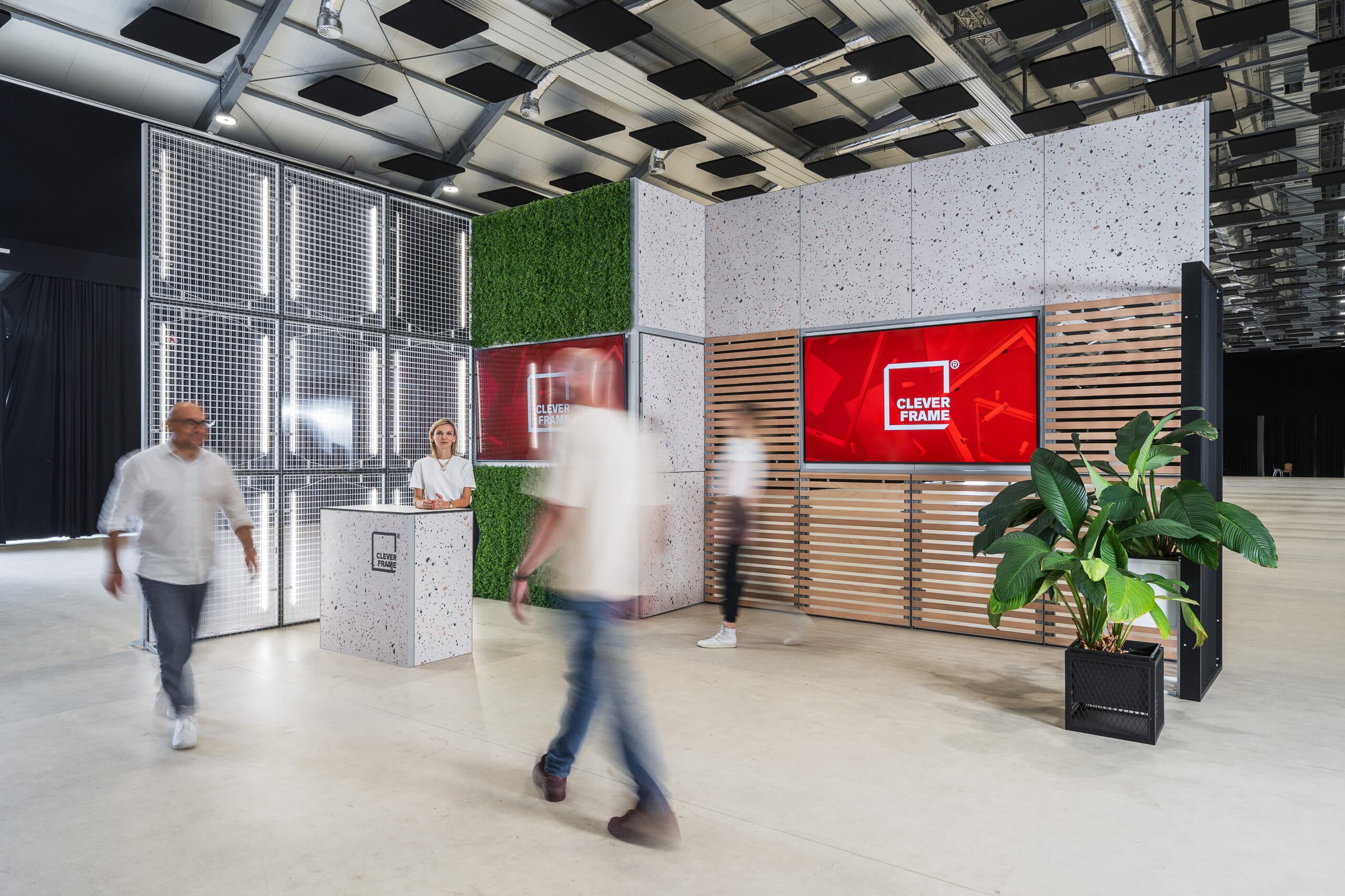
On modular booth structures such as Clever Frame trade show booths, teams often place QR prompts on key graphic surfaces that support the narrative of the stand. Magnetic graphic panels can make it easier to change campaign-specific messages between events, keeping the QR destination aligned with current offers, seasonality, or product priorities. This approach can support operational efficiency because the same frame configuration can be assembled and disassembled without tools, transported to different venues, and refreshed visually without rebuilding the entire booth.
Visitor flow matters. A QR placed at the entry point can support quick opt-in for updates, while a QR placed deeper inside the space can capture higher-intent visitors after a demo. For crowded halls, multiple QR touchpoints can prevent bottlenecks, provided each touchpoint is clearly labelled with a distinct purpose.
Practical examples of QR lead capture
QR lead capture can support different event objectives depending on the format, audience, and stage of the funnel. The examples below show typical applications across trade shows, brand events, showrooms, and roadshows.
-
product information handoff: a QR placed near a product presentation links to a short form and then delivers a tailored PDF bundle based on selected interests,
-
meeting booking: a QR at a consultation point opens a calendar page with event-specific time slots, enabling immediate scheduling while the visitor is on-site,
-
demo follow-up: after a live demonstration, staff share a QR that pre-fills a form with the demo topic so the visitor receives a recap and next-step proposal,
-
showroom qualification: a QR at the entrance to a showroom experience collects role and project stage, routing the lead to the right specialist for follow-up,
-
roadshow continuity: the same QR journey is reused across cities, while UTM tagging distinguishes locations to compare performance and audience fit.
In each case, the physical context should guide the message next to the code, for example “Get the spec sheet,” “Book a consultation,” or “Send the case study.” Clear microcopy increases scan intent and reduces confusion, which is especially important when multiple brands compete for attention in the same hall.
See also
-
Visitor flow
-
Brand experience
-
Event marketing
-
Modular trade show booth