What is Privacy-First Measurement?
Privacy-first measurement is an approach to evaluating marketing performance that prioritizes personal data protection by design. In event marketing, trade fairs, and other in-person brand touchpoints, it means collecting only the information that is necessary to answer defined business questions, using transparent information and a valid legal basis (for example consent where required), and favoring aggregated or anonymized insights over individual-level tracking.
In practice, privacy-first measurement helps teams understand what works on a trade show booth, at a product demo area, during a showroom appointment, or across a roadshow route, without relying on intrusive identifiers. It connects offline engagement to outcomes (for example qualified conversations, booked meetings, or content requests) while respecting legal frameworks such as the GDPR and the ePrivacy Directive (and relevant national implementations), and aligning measurement methods with a trustworthy brand experience.
What are the main goals of Privacy-First Measurement?
Privacy-first measurement starts with clarity on what decisions the data should support, and then designs the measurement plan to minimize data collection. The main goals typically include:
-
reducing reliance on personal data and persistent identifiers while still tracking performance trends,
-
supporting compliant lead capture and follow-up workflows based on clear user expectations and an appropriate legal basis (often consent for electronic marketing),
-
measuring attention, interest, and intent in physical spaces using aggregated signals,
-
improving on-site experience by using insights about layout, visitor flow, and interaction points,
-
maintaining brand trust by avoiding “surprise” data collection that can damage perception at the booth or event.
Benefits of Privacy-First Measurement for trade fairs and event marketing
When measurement respects privacy, it becomes easier to scale across venues, countries, and partners, because the methodology is less dependent on sensitive data. Key benefits include:
-
higher quality insights, because metrics are tied to specific questions (for example “Which zone generates the most product conversations?”) rather than collecting data “just in case”,
-
lower compliance risk, thanks to data minimization, purpose limitation, and appropriate retention periods,
-
more consistent cross-event reporting, since aggregated KPIs can be compared across trade fairs, showroom days, and roadshows,
-
better alignment with brand experience, because visitors engage more freely when interactions feel transparent and respectful,
-
faster creative iteration, because performance can be evaluated through comparisons of messaging and layout without tracking individuals.
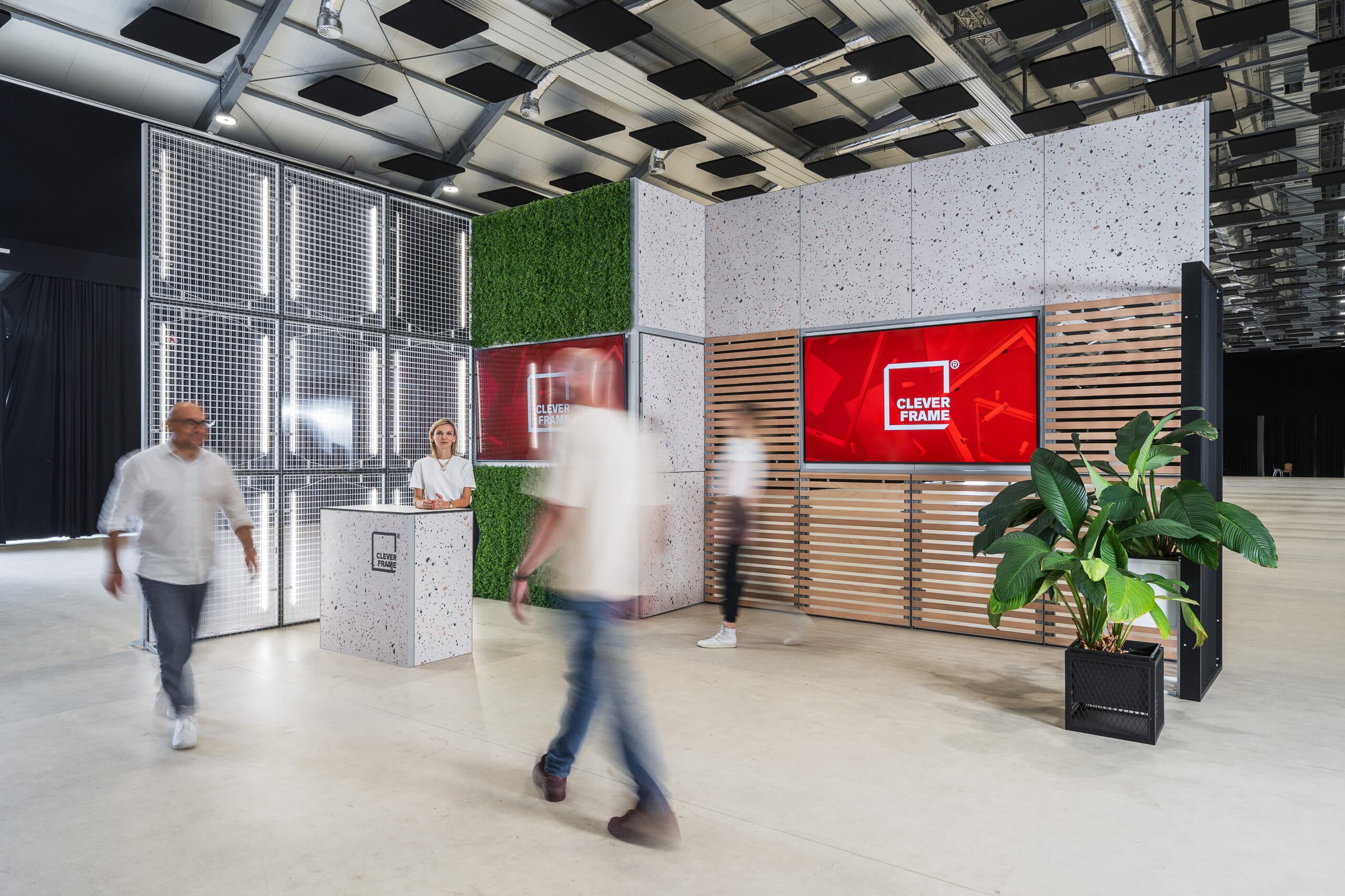
In physical environments, the design of the space matters as much as the message. Clear wayfinding, coherent visual communication, and a layout that supports natural visitor flow make it easier to interpret metrics like dwell time, zone engagement, and conversion to conversations, because the underlying experience is structured rather than chaotic.
Challenges and limitations
Privacy-first measurement is not “measurement-light”. It often requires more planning and stronger coordination between marketing, sales, and event operations. Common challenges include:
-
attribution constraints, because connecting an offline interaction to a later purchase may be limited to consented and/or otherwise lawful first-party pathways,
-
data fragmentation, as event organizers, badge systems, and on-site tools may provide different levels of access and governance,
-
small sample sizes, especially for high-consideration B2B events where a few conversations can be more valuable than hundreds of brief visits,
-
interpretation bias, because aggregated indicators (for example footfall) do not explain “why” without qualitative context,
-
operational complexity, since transparency notices, consent collection (where applicable), data storage, and retention rules must be implemented consistently.
Another limitation is that not every useful metric is appropriate to collect. For example, continuous video-based identification (including facial recognition) or covert device tracking can conflict with privacy expectations and may be unlawful without a valid legal basis and robust safeguards, even if technically feasible. Privacy-first practice favors alternatives such as on-device processing without identification, short-lived session data, and aggregation that prevents re-identification.
How is Privacy-First Measurement used at trade fairs and events?
At a trade fair booth, privacy-first measurement combines spatial planning with intentional data collection points. Instead of trying to track every person, teams define key “moments” in the journey, such as entry, first interaction, product demonstration, and a handover to sales. Measurement is then designed around those moments.
Space and layout influence what can be measured reliably. A modular booth that can be reconfigured across events allows teams to test different visitor flow patterns, such as an open entry that encourages scanning, a defined demo zone that supports longer conversations, or a consultation area that enables qualified lead capture. When graphics are updated via magnetic panels, messaging can be changed between campaigns while keeping the measurement model stable, making comparisons more meaningful across seasons and product launches.
Privacy-first measurement in offline environments often relies on:
-
aggregated footfall and zone counts to understand reach and distribution of attention,
-
interaction metrics tied to explicit actions, such as QR scans, content downloads, or demo sign-ups,
-
lead capture forms that document the purpose of follow-up and the scope of communications, collected on an appropriate legal basis (often consent for marketing),
-
qualitative notes and structured debriefs to capture intent, objections, and product feedback,
-
post-event surveys sent only to opted-in contacts (or otherwise contacted on a lawful basis) to assess brand recall and decision readiness.
Practical examples of Privacy-First Measurement
Effective implementations usually combine multiple signals, because no single metric captures the full value of an in-person experience. Practical examples include:
-
using a short, clearly worded QR-based content request at the booth, where visitors choose what materials to receive and (where required) confirm consent for follow-up,
-
comparing two booth layouts across different event days by tracking aggregated dwell time per zone and the number of completed product demos,
-
running a messaging test by swapping magnetic graphic panels between sessions and analyzing changes in qualified conversations, not individual identities,
-
measuring showroom appointment outcomes by counting booked meetings and completed trials, while storing personal data only for as long as needed to deliver the requested next step and meet applicable legal obligations,
-
evaluating a roadshow by aggregating location-level KPIs (visits, demo completions, meeting requests) and linking outcomes to first-party CRM records only when a lawful basis (such as consent where required) is present.
A useful rule of thumb is that measurement should feel consistent with the intended brand experience. If the booth aims to communicate trust, expertise, and long-term partnership, the data strategy should reflect the same values through transparency, restraint, and secure handling of information.
See also
-
Visitor Flow
-
Lead Capture
-
Brand Experience
-
Modular Trade Show Booth