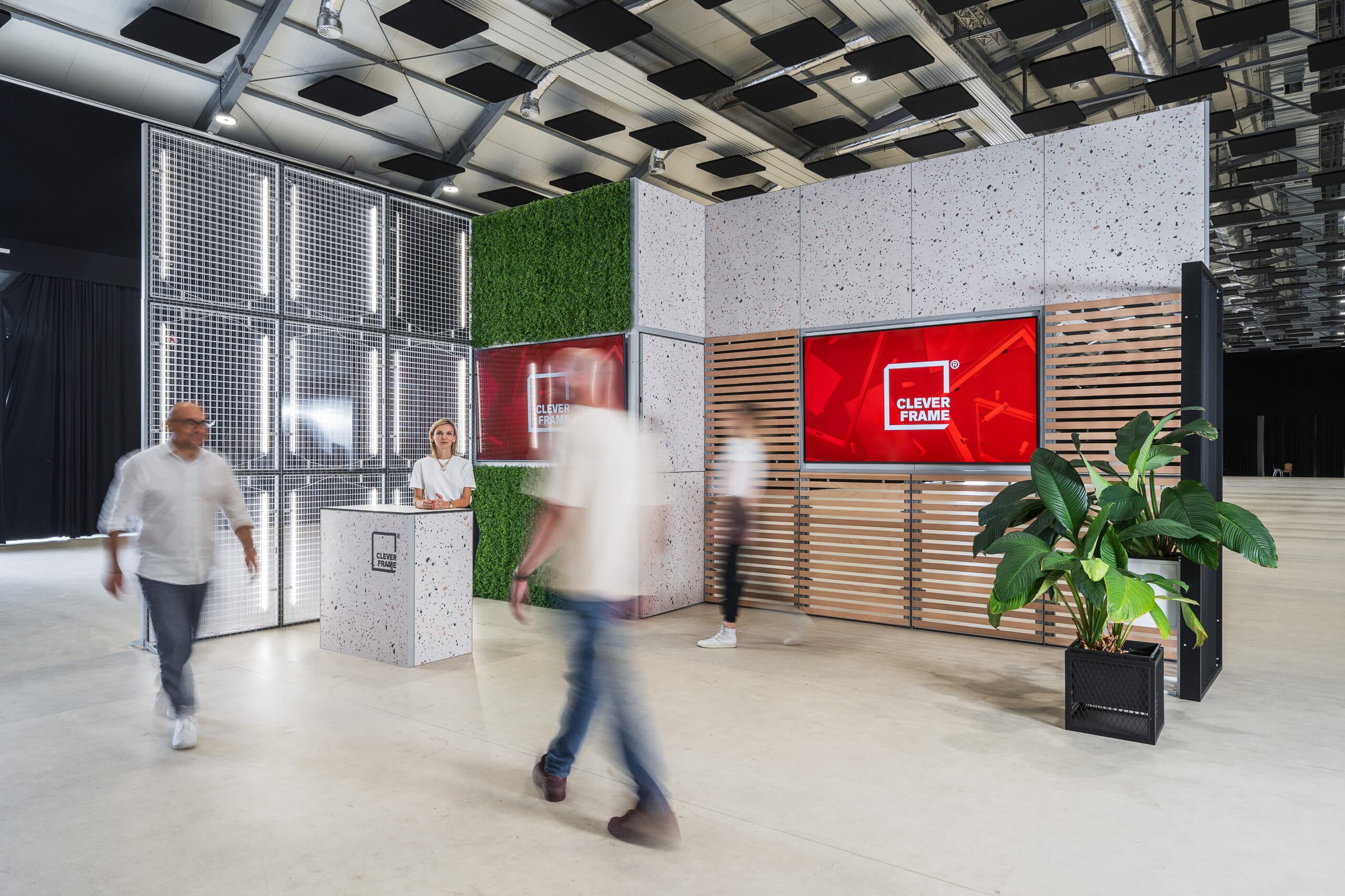

What is a presentation zone?
A presentation zone is a dedicated area within a trade show booth, exhibition stand, or event space where a brand showcases products, services, or key messages in a clear, structured way. Its purpose is to help visitors understand the offer quickly, while enabling the team to guide conversations using a consistent story, supporting materials, and live demonstration.
In event marketing, the presentation zone acts as a physical “touchpoint” within the brand experience: it organizes visitor flow, supports face-to-face communication, and helps translate a campaign promise into real-world interaction. At industry trade shows, it’s often a core element because it combines visibility (first impression) with usability (a focused presentation and sales conversation).
What are the main goals of a presentation zone?
A well-designed presentation zone should deliver communication, sales, and operational goals at the same time. In practice, that means arranging elements so visitors instinctively know where to go, what to look at, and who to speak with.
- Simplify the message – highlight 1-3 key benefits and use cases.
- Support sales conversations – provide space for a quick demo, discussing options, and capturing needs.
- Build brand experience – keep visual language, tone of voice, and the way solutions are presented consistent.
- Manage traffic – reduce bottlenecks on the stand and guide visitors smoothly between touchpoints.
Benefits of a presentation zone
A presentation zone improves the effectiveness of offline activity by making the offer easier to scan and reducing the time needed to bring visitors up to speed. It also gives you more control over how your brand is perceived in a busy trade show environment.
- Stronger message recall thanks to a structured display and consistent visual identity.
- Easier tailoring to the event goal – different emphasis for trade shows, different for a roadshow.
- Faster communication updates – quick graphic swap-outs with magnetic solutions, aligned with seasonal campaigns and current marketing priorities.
- Repeatable display quality across multiple locations, supporting a standardized brand experience.
Presentation zone challenges and limitations
The most common issues don’t come from missing elements, but from missing decisions: what exactly should be shown, to whom, and in what order. A presentation zone that tries to “say everything” usually reduces clarity and disrupts traffic.
- Content overload – too many messages competing for attention and making conversation harder.
- Poor visitor flow – badly positioned elements causing U-turns, queues, or blocked entry.
- Mismatch to context – B2B trade show audiences have different needs than shoppers at a mall event.
- Logistics constraints – setup time, transport, and reuse call for systems that assemble and disassemble without tools.
How is a presentation zone used at trade shows and events?
At industry trade shows, a presentation zone typically works for the “first 10 seconds” (understanding what the company does) and the “next 2 minutes” (clarifying needs and presenting the solution). That’s why clear narrative touchpoints are used: a main message, a quick offer summary, and then specifics-demo, sample, case study, or a comparison of options.
In projects built around Clever Frame trade show booths, the presentation zone can be created using modular frames connected with joiners and rigid graphic panels mounted magnetically. This approach helps maintain a consistent look while allowing fast message refreshes without rebuilding the entire concept-especially useful when attending several events per year.
Real-world examples of presentation zones
It’s best to design a presentation zone like a conversation script with the visitor-from interest, through fit, to the next step. The examples below show how the same goal can be achieved across different formats:
- B2B trade show – showcase 2-3 solutions in a “problem – use case – result” layout, with space for a quick demo.
- Showroom – a permanent area to present the portfolio, where graphic panels can be swapped for new collections or customer segments.
- Roadshow – a mobile configuration that fits limited space and lets you repeat the same presentation standard across multiple cities.
- Corporate event – an educational zone (e.g., product onboarding) combined with a consultation area, while keeping brand visual communication consistent.
See also
- Modular trade show booth
- Visitor flow
- Visual communication
- Graphic panels