What is Pre Event Teaser Campaign?
A Pre Event Teaser Campaign is a planned set of communications released before a trade show, conference, roadshow stop, or showroom launch to build awareness, curiosity, and intent to visit a brand’s physical presence. It connects marketing and sales objectives with the realities of on-site engagement by setting expectations about what visitors will see, experience, and learn at the stand or event space.
In event marketing, a teaser campaign works as a bridge between digital touchpoints (email, social, landing pages, partner channels) and direct, in-person interactions. It is designed to influence attendee behavior before they arrive: who they visit first, how much time they allocate, which demos they prioritize, and whether they book a meeting. When aligned with spatial design and brand experience, it supports a consistent message from the first announcement to the moment a visitor steps into the stand and follows the intended visitor flow.
What are the main goals of a Pre Event Teaser Campaign?
The core purpose is to create a measurable lift in qualified footfall and planned conversations, while positioning the brand clearly within a crowded event environment. Typical goals include:
-
building pre-show awareness and recall of the brand’s presence at a specific hall, city, or time slot,
-
communicating a focused value proposition that can be delivered live through demos, consultations, or product exploration,
-
increasing meeting bookings and improving show calendar utilization for sales and technical teams,
-
setting expectations for the on-site experience so visitors know what they will gain by stopping by,
-
supporting partner, distributor, or media engagement by providing shareable pre-event talking points.
What are the benefits of a Pre Event Teaser Campaign?
When executed with clear messaging and operational readiness, teasers reduce reliance on walk-by traffic and help teams prioritize the right conversations. Key benefits include:
-
higher quality interactions, because visitors arrive informed and with a reason to engage,
-
more predictable staffing needs, since pre-booked meetings and time windows can be planned,
-
stronger brand consistency, when the teaser visuals match on-site graphics, product narratives, and tone of voice,
-
better visitor flow management, as the campaign can steer different audience segments to different moments or zones,
-
more reliable measurement, because tracking links (e.g., UTM parameters), registration questions, and QR scans can be mapped to on-site outcomes.
What are the challenges and limitations of a Pre Event Teaser Campaign?
Teasers can underperform when they promise an experience that the stand cannot deliver, or when they ignore the constraints of the event venue and attendee journey. Common limitations include:
-
message overload, when too many announcements dilute the primary reason to visit,
-
operational gaps, when the on-site team is not briefed to deliver the promised demo, offer, or consultation,
-
visual inconsistency, when teaser assets do not match the final stand graphics or product positioning,
-
timing issues, when messages are launched too late to influence travel plans and meeting calendars,
-
channel mismatch, when the campaign does not reach the audiences that actually attend or decide on meetings.
A practical constraint in trade show environments is that attention is scarce. A teaser should therefore be specific and credible, and it should reflect what can be delivered within the physical space, the available staff, and the real time a visitor is willing to invest.
How is a Pre Event Teaser Campaign used at trade shows and events?
A strong teaser campaign is planned together with the event presence concept, including how the stand will look, how people will move through it, and what interaction formats will be offered. In practice, this means the pre-event narrative should map to the on-site journey:
-
an entry message that is recognizable from a distance and matches the campaign promise,
-
a clear path that supports visitor flow, reducing bottlenecks and making it easy to start a conversation,
-
visual cues that reinforce key claims, such as use cases, proof points, or customer outcomes,
-
interactive touchpoints that turn curiosity into dialogue, for example guided demos or expert Q&A slots,
-
follow-up mechanics that connect pre-event sign-ups with on-site lead capture and post-event nurturing.
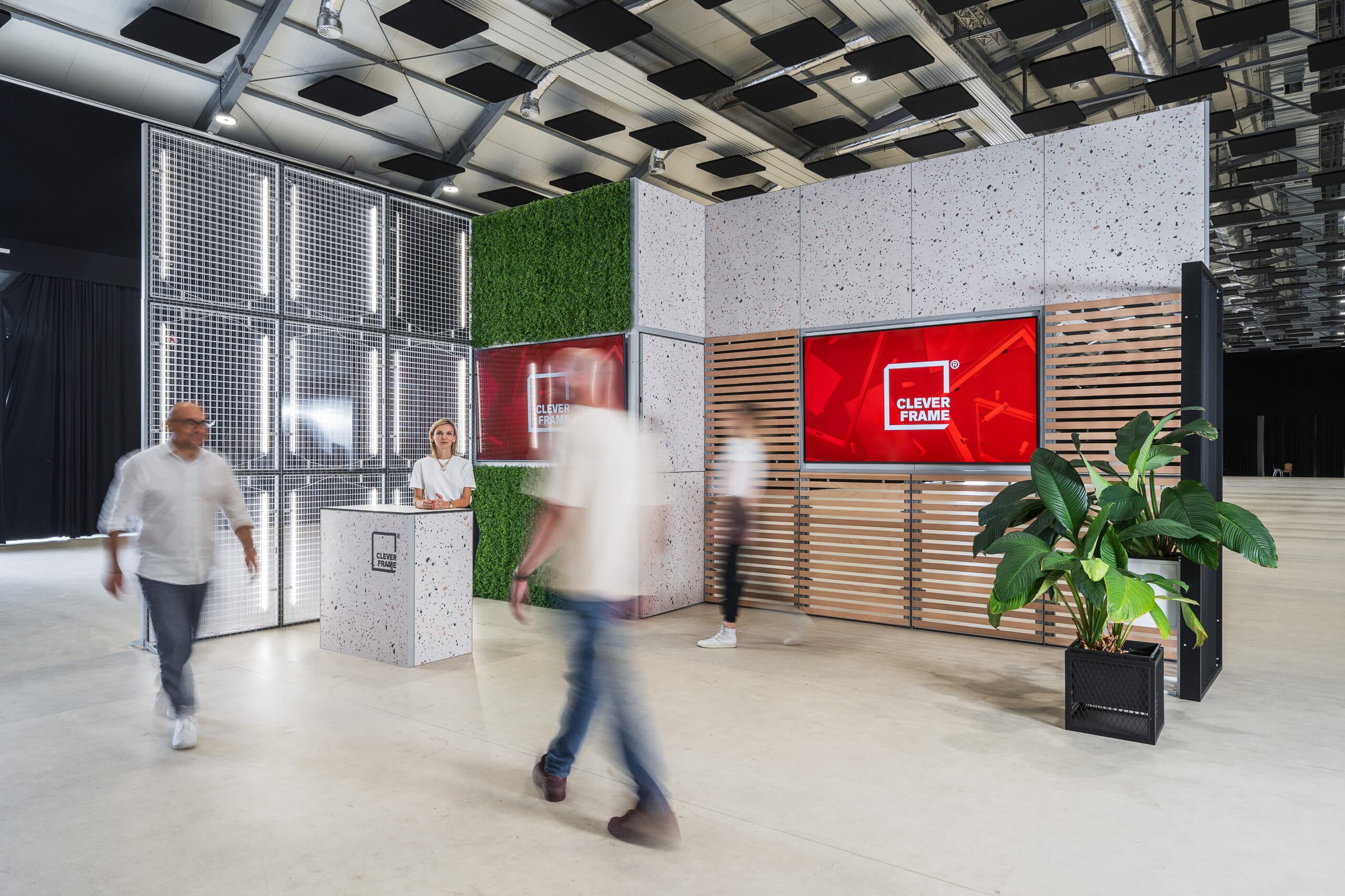
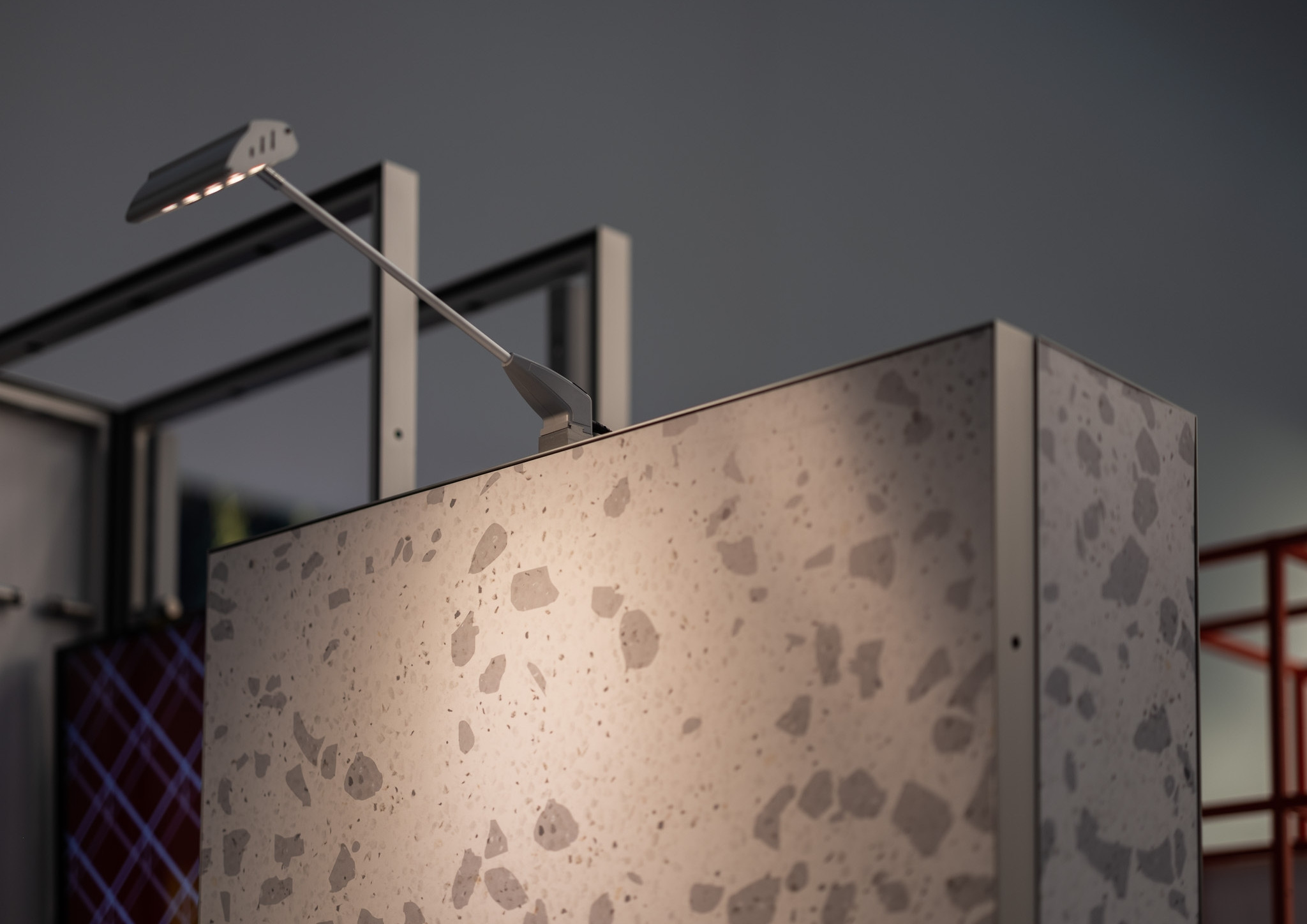
In modular trade show environments, consistency and speed matter. Clever Frame trade show stands are designed (depending on the specific system configuration) to support fast assembly and disassembly and to allow graphics to be exchanged efficiently (for example via interchangeable panels or magnet-based mounting solutions where applicable). This can make it easier to align the pre-event message with the on-site visuals and to adapt creative to different stops of a roadshow or to multiple shows in a season.
Examples of Pre Event Teaser Campaign use in practice
Teaser campaigns can be executed in many formats, but the most effective ones connect a single, specific promise with an on-site experience that is easy to access and easy to understand. Examples include:
-
a “book a 15-minute diagnostic” teaser targeted at existing leads, supported on-site by a defined consultation area and a clear meeting schedule,
-
a product launch countdown that reveals one feature at a time, paired with an on-stand demo sequence that mirrors the reveal order,
-
a partner co-marketing teaser that drives attendees to a shared session, supported by coordinated signage and a scripted handover between teams,
-
a roadshow teaser that announces city-by-city dates, with interchangeable graphic panels swapped to match each location’s language, sector focus, or offer,
-
a showroom invitation sequence that highlights limited appointment slots, supported by a guided visitor path and curated product stations.
How to align teaser content with stand design and brand experience
Alignment is less about adding more content and more about reducing friction between what is promised and what is delivered. A few practical alignment principles are:
-
use the same key visual, headline structure, and product naming across teaser assets and stand graphics,
-
design for scanning, because most visitors will decide within seconds whether to enter,
-
plan visitor flow intentionally, so the first interaction point is obvious and staff can engage without blocking movement,
-
prepare modular graphics so campaign variations can be implemented without redesigning the entire stand concept,
-
brief staff with a shared narrative and a consistent qualification script, so the live conversation matches the teaser message.
From a measurement perspective, it is useful to connect pre-event intent signals (clicks, bookings, RSVP lists) with on-site actions (badge scans, meeting attendance, demo participation). This improves learning cycles and helps refine both the campaign and the physical experience at the next event.
See also
-
Visitor Flow
-
Brand Experience
-
Modular Trade Show Stand
-
Roadshow