What is Pre Event Engagement Strategy?
Pre Event Engagement Strategy is a structured plan for building interest and commitment before a trade show, conference, showroom event, or roadshow appearance, so that the right people arrive with a clear reason to engage. It combines audience targeting, messaging, content, and outreach workflows (for marketing and sales teams) with practical decisions about how the brand will be experienced in a physical space.
In the context of exhibition marketing, the strategy connects pre-event communication with what attendees will see, do, and remember at the stand. It ensures that invitations, teasers, and meeting scheduling are consistent with the on-site narrative, the visual identity, and the planned visitor flow, so that the experience feels coherent from the first touchpoint to the final conversation.
What are the main goals of a Pre Event Engagement Strategy?
A strong pre-event engagement plan starts with clear objectives that can be supported by both communication and spatial design. Typical goals include:
-
increasing qualified footfall by attracting predefined segments rather than relying on random traffic,
-
securing meetings in advance to reduce on-site uncertainty and improve sales productivity,
-
setting expectations for what will happen at the stand (demo, consultation, launch, sampling) to shorten the time needed to start meaningful conversations,
-
reinforcing brand positioning by aligning promises made before the event with the visuals and interactions delivered on-site,
-
creating measurable engagement signals (registrations, booked slots, content downloads) to evaluate event ROI.
What are the benefits of a Pre Event Engagement Strategy?
When pre-event engagement is planned as part of the entire brand experience – not as a standalone campaign – it improves both marketing outcomes and operational efficiency. Key benefits are:
-
higher relevance of conversations, because attendees arrive already primed with context and intent,
-
more consistent brand recognition, as the same key visual and messages appear across invitations, landing pages, and the stand’s graphics,
-
better use of space, because expected visitor types (decision-makers, technical evaluators, partners) can be mapped to zones and touchpoints,
-
shorter time to value on-site, as staff can move faster from introductions to qualification and next steps,
-
lower material waste over time when reusable, modular display constructions are planned for multiple campaigns and refreshed via exchangeable graphic panels.
Challenges and limitations
Pre Event Engagement Strategy can underperform when it is treated as “more promotion” instead of a coordinated experience. Common limitations to address early include:
-
data protection and consent constraints (including GDPR) that affect targeting, invitation lists, and follow-up automation,
-
misalignment between marketing and sales on who should be invited, what counts as a qualified meeting, and how leads are routed,
-
overpromising in pre-event messages, which can create a credibility gap if the on-site experience does not match the claim,
-
unclear visitor journey, where the stand layout does not support the expected actions (watch a demo, ask questions, compare options),
-
operational constraints such as staffing, peak-time crowding, and limited time slots for demos or consultations.
How it is used at trade shows and events
At trade shows, pre-event engagement works best when it is designed backwards from the on-site scenario: who arrives, where they go first, what they should notice, and what action should follow. This is where spatial decisions and communication choices meet.
Space and visitor flow as part of the strategy
The stand is a conversion environment in a physical setting. A Pre Event Engagement Strategy should therefore anticipate visitor flow and translate it into an easy-to-navigate layout, including clear entry points, visible cues for “what happens here,” and defined areas for different interaction depths (quick orientation vs. longer meetings). Modular construction helps when the same brand needs different footprints across venues or event formats.
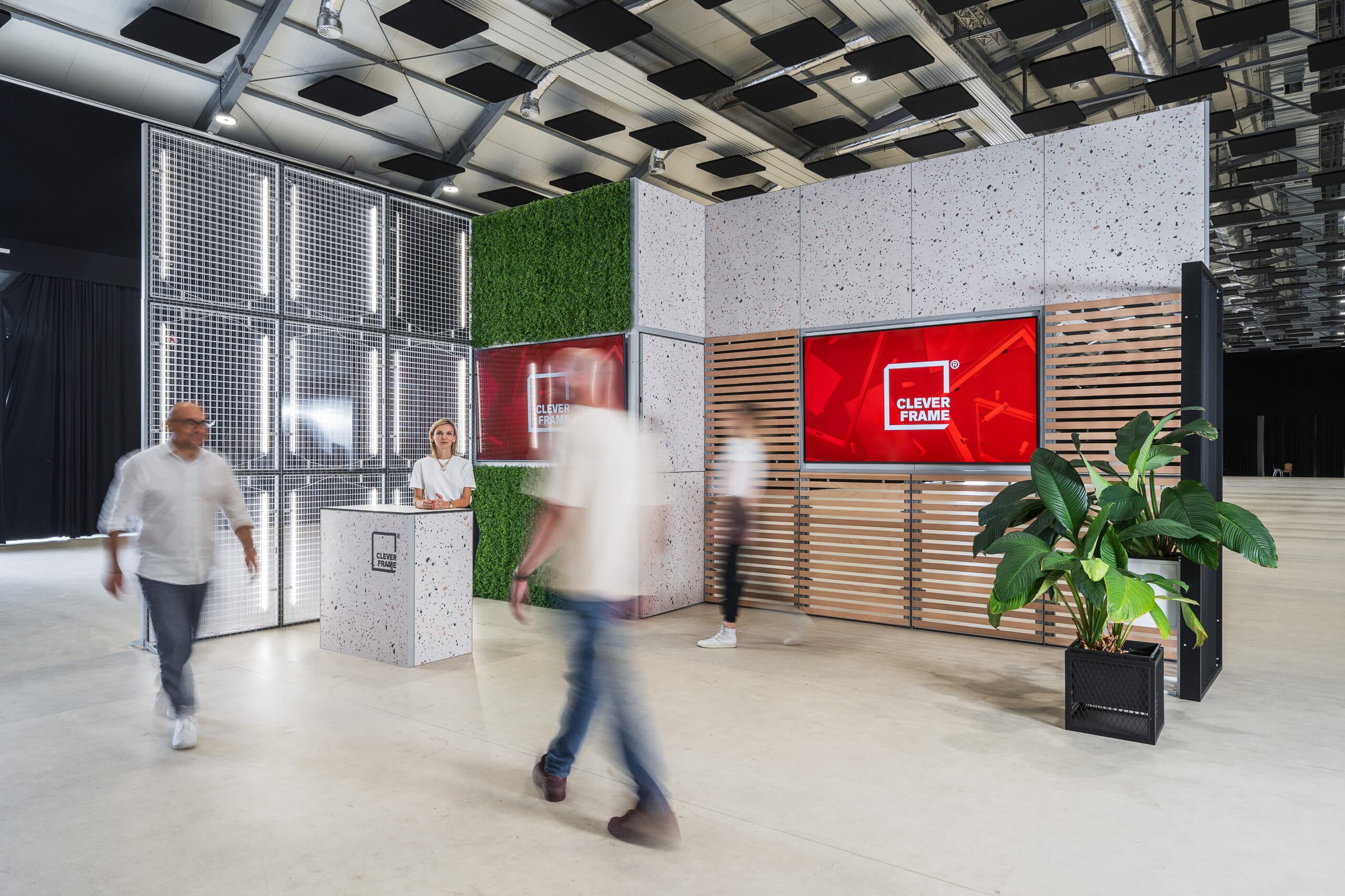
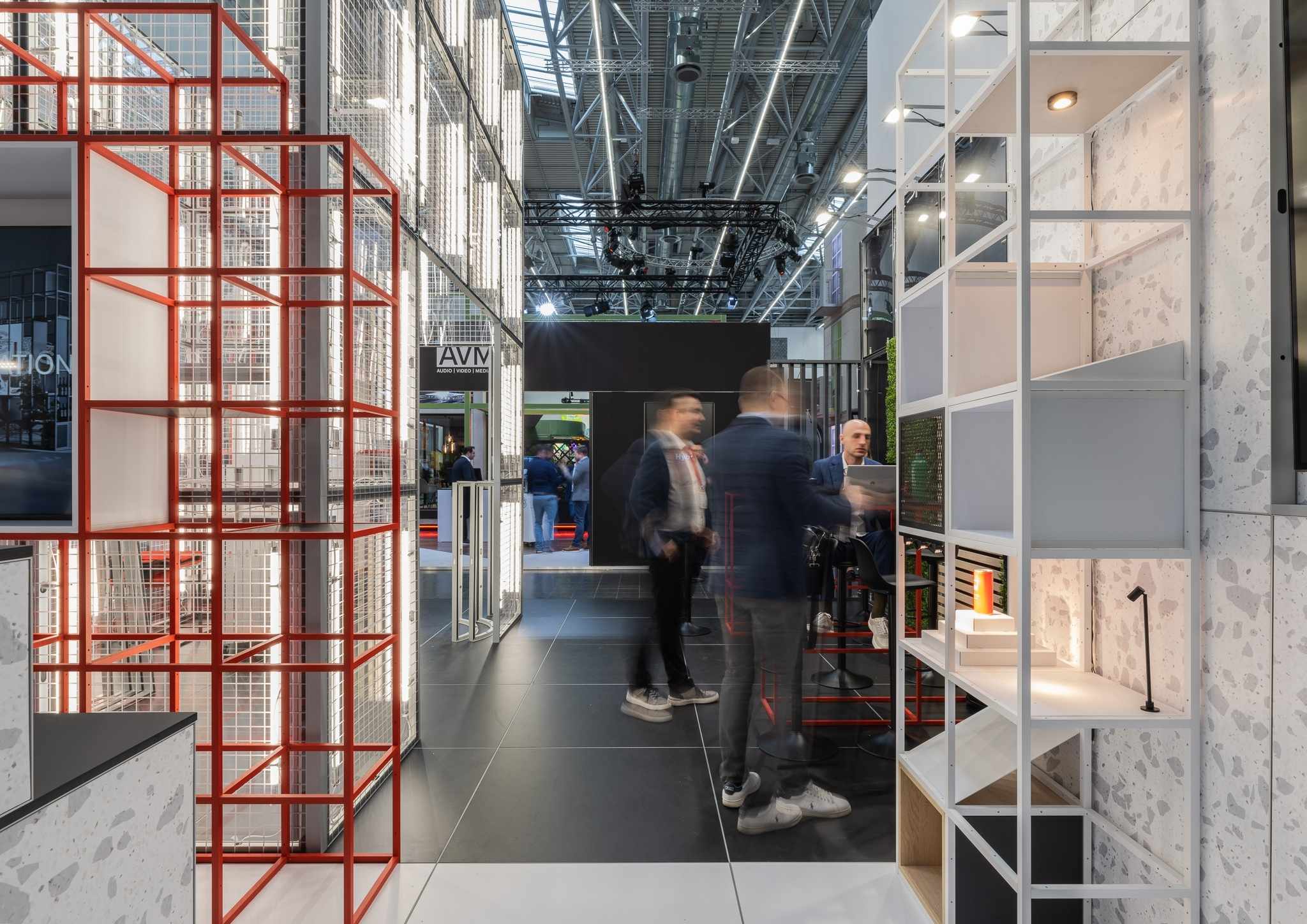
In Clever Frame trade show stands, the stand’s structure can be reconfigured between events, while graphic panels enable fast exchange of visual messages to match seasonal campaigns, product releases, or shifting marketing priorities – without changing the whole build. This supports consistency: the pre-event promise can be mirrored on-site through a matching key visual and concise value statements placed where visitors naturally pause.
Coherent visual communication
Pre-event messaging should not stop at the inbox or social feed. The same hierarchy of information (brand, problem, solution, proof, next step) needs to be visible on-site in a way that supports scanning from a distance and deeper reading up close. Clear typography, constrained message count, and purposeful placement are essential, because attention at events is fragmented and time-limited.
Examples of Pre Event Engagement Strategy in practice
The most effective programs combine multiple touchpoints, each designed to reduce friction and increase intent before the event day. Practical examples include:
-
account-based invitations for priority companies, with personalized meeting proposals and a defined agenda,
-
a pre-event landing page that mirrors on-stand messaging and offers a simple meeting booking flow,
-
teaser content that previews a live demo scenario and clarifies what attendees will be able to compare or test,
-
partner co-marketing (for shared audiences) that synchronizes timing, messaging, and on-site handoffs,
-
an internal enablement pack for staff, aligning talk tracks, qualification questions, and follow-up standards.
How to connect pre-event engagement with modular stands
Modular exhibition stands are particularly compatible with pre-event engagement because they support repeatable campaigns and controlled updates. Instead of rebuilding from scratch, teams can plan a core brand narrative and then adapt it to each event’s audience and goal. This approach also supports more sustainable event participation through reuse and reduced one-off production.
From an operational perspective, modular builds that allow quick assembly and disassembly without tools make it easier to execute multi-event calendars and roadshow schedules. From a communication perspective, the ability to exchange graphic panels supports versioning: the same stand footprint can switch from “book a consultation” messaging to “see the new release” messaging, while staying visually consistent with pre-event assets.
How to measure effectiveness
Measurement should combine marketing indicators with on-site outcomes, because engagement is ultimately validated in physical interactions. Useful metrics include meeting show-up rate, ratio of qualified conversations to total visitors, content downloads tied to event messaging, and lead-to-opportunity progression after the event. Qualitative feedback also matters, especially whether visitors describe the experience as consistent with what they were promised beforehand.
See also
-
Visitor Flow
-
Modular Exhibition Stand
-
Sustainable Exhibition Design
-
Event Branding