What is Offline-to-Online Attribution?
Offline-to-online attribution is a measurement approach used to identify how physical touchpoints – such as trade show booths, conferences, roadshows, pop-up showrooms, or in-person product demonstrations – contribute to digital outcomes. These outcomes can include website visits, content downloads, account sign-ups, demo requests, e-commerce purchases, or pipeline influence recorded in a CRM.
In event marketing and trade show contexts, offline-to-online attribution connects what happens in a physical space (brand exposure, conversations, product handling, and guided visitor journeys) with subsequent online behavior. It supports evidence-based decisions about event strategy, booth design, messaging, and follow-up, while aligning sales and marketing around shared definitions of what “impact” means.
Main goals of Offline-to-Online Attribution
Offline-to-online attribution is typically used to make event activity measurable and comparable with other channels, while preserving the context of human, face-to-face interactions.
-
linking booth and event engagement to digital actions that matter for revenue and retention,
-
improving lead quality by distinguishing casual interest from high-intent behavior after the event,
-
optimizing content and messaging by tracking which themes, offers, or product categories drive online follow-up,
-
supporting budget allocation decisions across trade shows, roadshows, partner events, and always-on digital campaigns,
-
creating a feedback loop for experiential design, so layout, signage, and visitor flow are evaluated against measurable outcomes.
Benefits for event marketing, trade shows, and brand experience
When implemented consistently, offline-to-online attribution improves both reporting accuracy and execution quality. It also helps teams treat the physical environment as a strategic part of the customer journey, not only as a presence requirement.
-
clearer ROI narratives by tying offline engagement to online conversion steps and downstream CRM stages,
-
more effective post-event follow-up because outreach is informed by what visitors actually interacted with,
-
better brand consistency by testing which visual cues and messages create recognizable pathways from booth to website,
-
faster iteration of booth communication because measurable results reduce reliance on subjective impressions alone,
-
stronger internal alignment between marketing and sales on what constitutes an event-driven lead and how to qualify it.
Challenges and limitations
Attribution across physical and digital environments is inherently imperfect. The goal is not “perfect tracking,” but a defensible method that is transparent about assumptions, respects privacy, and is stable enough to guide decisions.
-
identity resolution issues, because visitors may engage in-person but convert online later using a different device or email,
-
data gaps caused by low scan rates, missing consent, or inconsistent event staffing and process discipline,
-
attribution bias, because last-click models can undervalue the in-person touchpoint that initiated intent,
-
noise from external factors such as concurrent campaigns, PR coverage, partner referrals, or seasonality,
-
privacy and compliance requirements, including informed consent and careful handling of personal data under frameworks such as GDPR and (where applicable) the ePrivacy Directive and other local marketing/communications laws.
How Offline-to-Online Attribution is used at trade shows and events
Effective attribution starts with designing the physical space to make the next digital step intuitive. The booth layout, visitor flow, and visual hierarchy influence whether visitors notice calls-to-action, remember the brand, and take a trackable next step after the conversation ends.
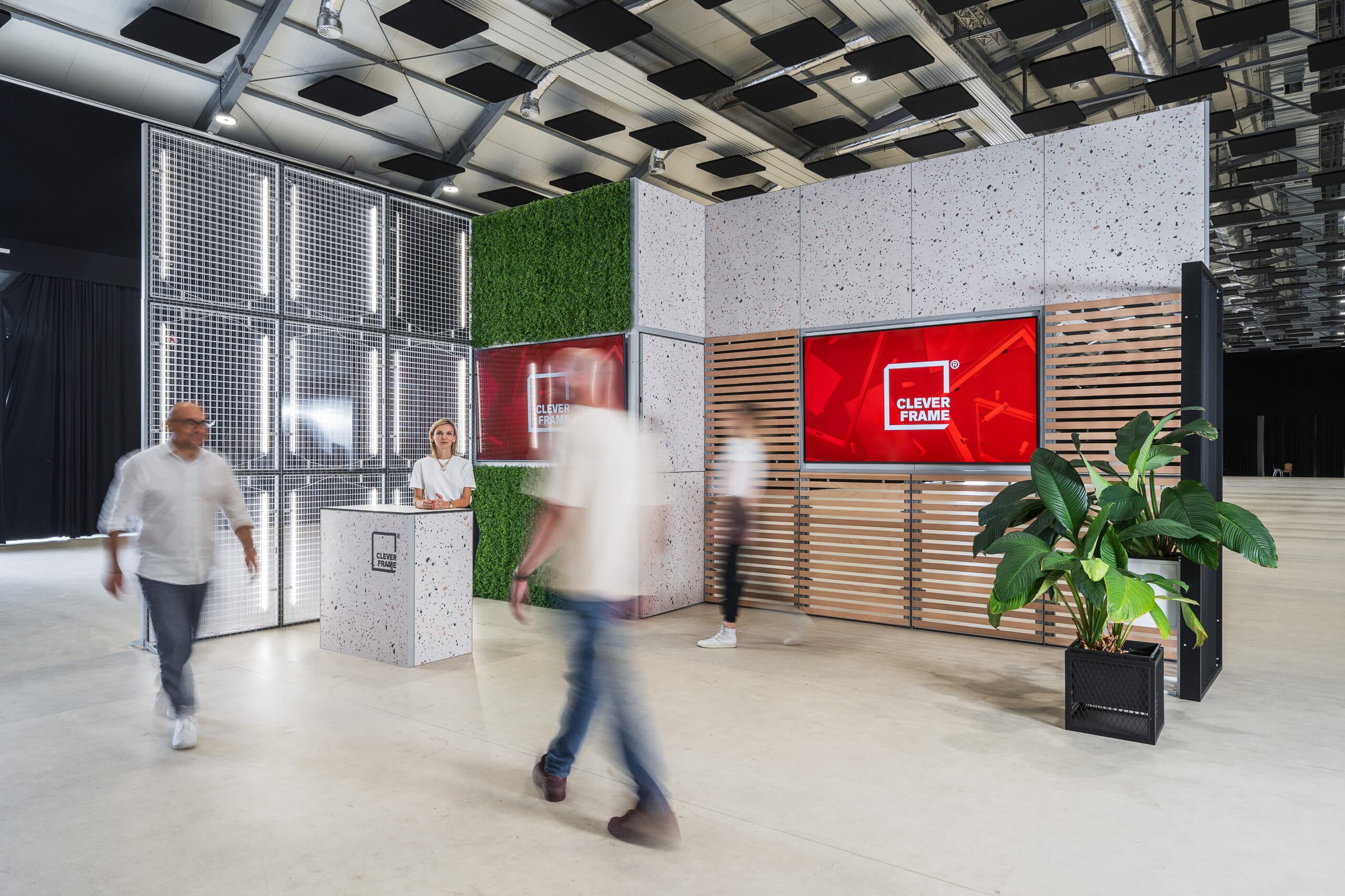
Trade show booths built with a modular approach can support this because communication can be adapted to the event objective. For example, Clever Frame trade show booths are described as using a frame-based construction with rigid graphic panels that attach magnetically. This allows teams to swap graphics quickly between events or campaigns, keeping visual messaging consistent with the landing pages, email sequences, and paid retargeting creatives used after the show.
Visitor flow matters because attribution relies on touchpoints being seen and understood. Clear zoning (welcome, product exploration, consultation) and legible signposting help visitors self-select based on intent, while giving staff a structure for qualifying conversations. Tool-free assembly and disassembly can also reduce operational complexity, increasing the likelihood that key assets (such as scannable CTAs and product-specific messaging) are deployed correctly and consistently across multiple locations.
Offline-to-online attribution is strongest when interaction design is deliberate. A brief, meaningful exchange with a product specialist paired with a relevant next-step CTA (for example, “download the spec sheet for the configuration you saw”) tends to outperform generic messaging, because it matches intent and reduces friction.
Practical examples of Offline-to-Online Attribution
In practice, event teams combine several methods to reduce uncertainty and cross-check results. The examples below illustrate common patterns used across trade shows, roadshows, and showroom environments.
-
QR codes on product-zone graphics that lead to dedicated landing pages with UTM parameters, enabling analytics platforms to record event-driven sessions and conversions,
-
badge scanning or lead forms that trigger a personalized follow-up email, with engagement tracked via email analytics and mapped back to the original booth interaction,
-
campaign-specific URLs or short links used only at one event, allowing a clean match between offline exposure and online visits without relying on personal data,
-
unique offer codes distributed during consultations, used later in an online checkout or inquiry form to attribute revenue influence to the offline touchpoint,
-
post-event retargeting audiences built from landing-page visits (subject to consent and platform policies), then evaluated using incrementality-oriented analysis to estimate how much the event initiated digital intent.
For higher confidence, teams often combine quantitative attribution (tracked visits, conversions, and CRM outcomes) with qualitative signals (sales notes, visitor questions, and content requested). This pairing helps interpret what the numbers mean and highlights which parts of the physical experience should be refined: the messaging, the product narrative, or the path visitors take through the space.
See also
-
Event marketing
-
Visitor flow
-
Roadshow
-
Showroom