What is Multi-Touch Attribution?
Multi-touch attribution (MTA) is a measurement approach that assigns value to multiple interactions a person has with a brand before converting, instead of crediting only the first or last touchpoint. In event marketing and trade show contexts, it helps teams understand how onsite moments (for example, a product demo, a conversation at a stand, scanning a QR code, or attending a talk) combine with pre-event and post-event marketing (such as invitations, landing pages, retargeting, and sales follow-ups) to influence pipeline and revenue.
For trade shows, showrooms, and roadshows, MTA connects physical experience and direct communication with digital traces and CRM data. This makes it possible to evaluate how spatial design, messaging, and visitor interactions contribute to outcomes such as qualified leads, booked meetings, trials, or purchases – and to optimize future activations based on evidence rather than assumptions.
What are the main goals of Multi-Touch Attribution?
Multi-touch attribution is used to clarify which touchpoints meaningfully contribute to conversion and which ones mainly create awareness without moving prospects forward. In offline marketing, this is especially important because a single “conversion event” (for example, a signed contract) is often preceded by several in-person and digital interactions spread across weeks or months.
In practice, MTA supports goals such as:
-
improving marketing and sales alignment around what “influenced” a lead,
-
optimizing budget allocation across event formats, channels, and audience segments,
-
validating which onsite experiences (demos, consultations, sampling, presentations) correlate with higher-quality opportunities,
-
strengthening consistency between stand communication, sales narrative, and post-event nurturing,
-
building a repeatable measurement framework for trade shows, showrooms, and roadshows.
What are the benefits of Multi-Touch Attribution?
When implemented with realistic assumptions and clean data, MTA improves decision-making for teams that invest in physical brand presence. It replaces simplistic reporting (for example, “the trade show generated X leads”) with a more accurate view of how interactions work together across the journey.
The most common benefits include:
-
more credible ROI and pipeline impact reporting for events and trade show participation,
-
better prioritization of experiential elements that truly change intent, not only those that attract traffic,
-
improved targeting for invitations and meeting scheduling based on touchpoint patterns,
-
faster learning cycles for stand iterations, messaging tests, and team scripts,
-
higher efficiency in post-event follow-up by tailoring next steps to what a visitor already engaged with.
What are the challenges and limitations of Multi-Touch Attribution?
MTA is not a single “correct” number. It is a model-based interpretation of reality, and event environments introduce additional complexity because many impactful moments are human and non-digital. The quality of attribution depends on instrumentation, process discipline, and the ability to connect identities across touchpoints.
The most frequent constraints are:
-
identity resolution issues, where an onsite interaction cannot be reliably linked to a known contact record,
-
incomplete capture of offline touchpoints, especially informal conversations and spontaneous visits,
-
model choice bias, as different rules (linear, time-decay, position-based, data-driven) can produce different conclusions,
-
long B2B cycles, where conversion happens months after the event and attribution windows may undercount influence,
-
data governance and privacy requirements, including consent, retention, and access control.
How is Multi-Touch Attribution used at trade shows and events?
In event settings, MTA becomes actionable when physical touchpoints are intentionally designed to be both engaging and measurable. This does not mean reducing experience to tracking, but rather making it possible to understand which interactions drive meaningful next steps.
Key areas where MTA connects directly to event execution include:
-
space planning that supports a logical visitor flow, enabling progressive engagement from awareness to conversation to qualification,
-
clear visual communication that signals propositions quickly and consistently across zones, reducing friction in the first seconds of contact,
-
interaction design that encourages measurable actions, such as booking a demo slot, scanning a QR code to access specs, or requesting a quote,
-
staff workflows that standardize lead capture, tagging, and notes, improving downstream attribution quality,
-
post-event sequencing that matches follow-up content to what a visitor actually experienced onsite.
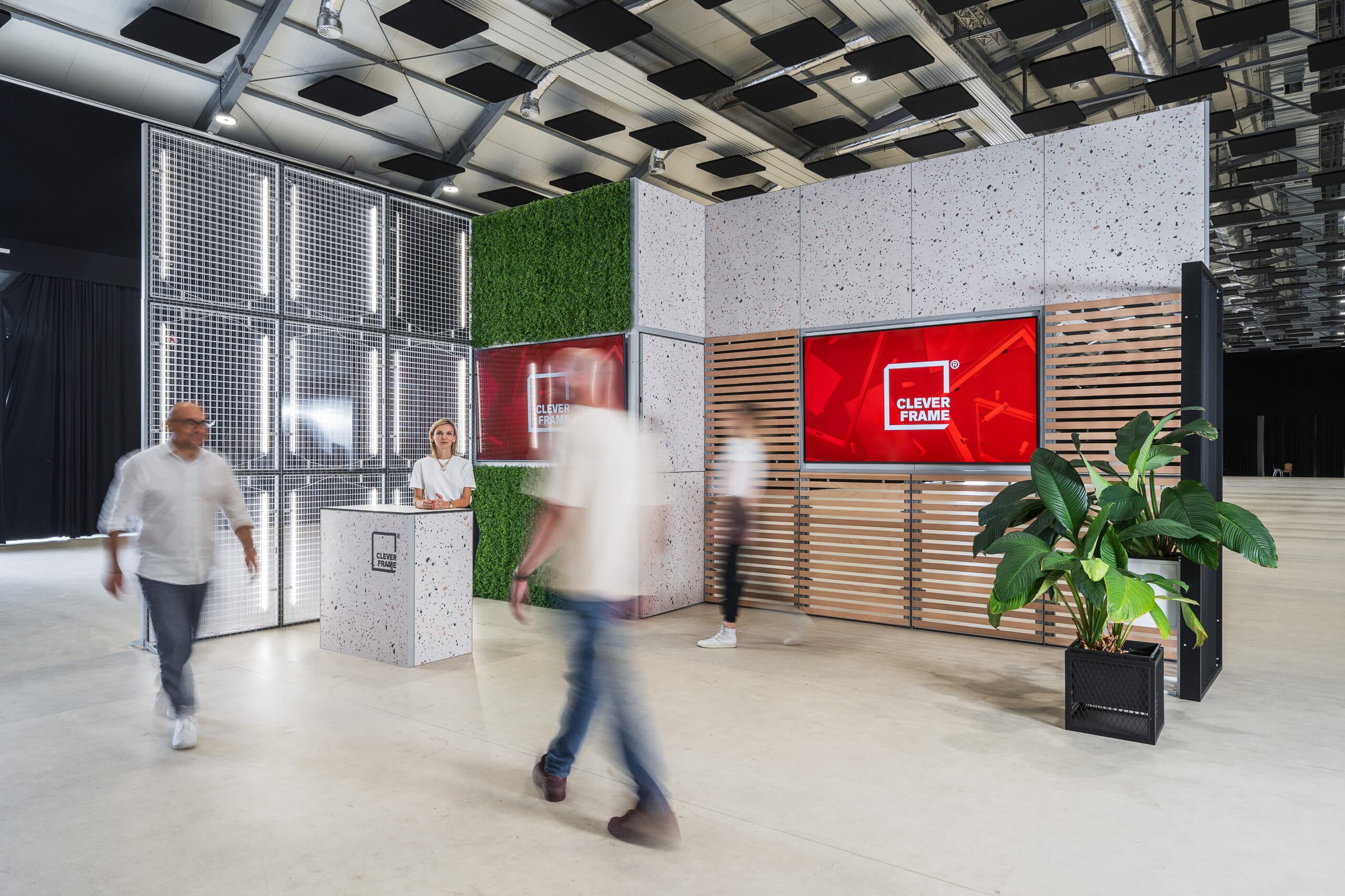
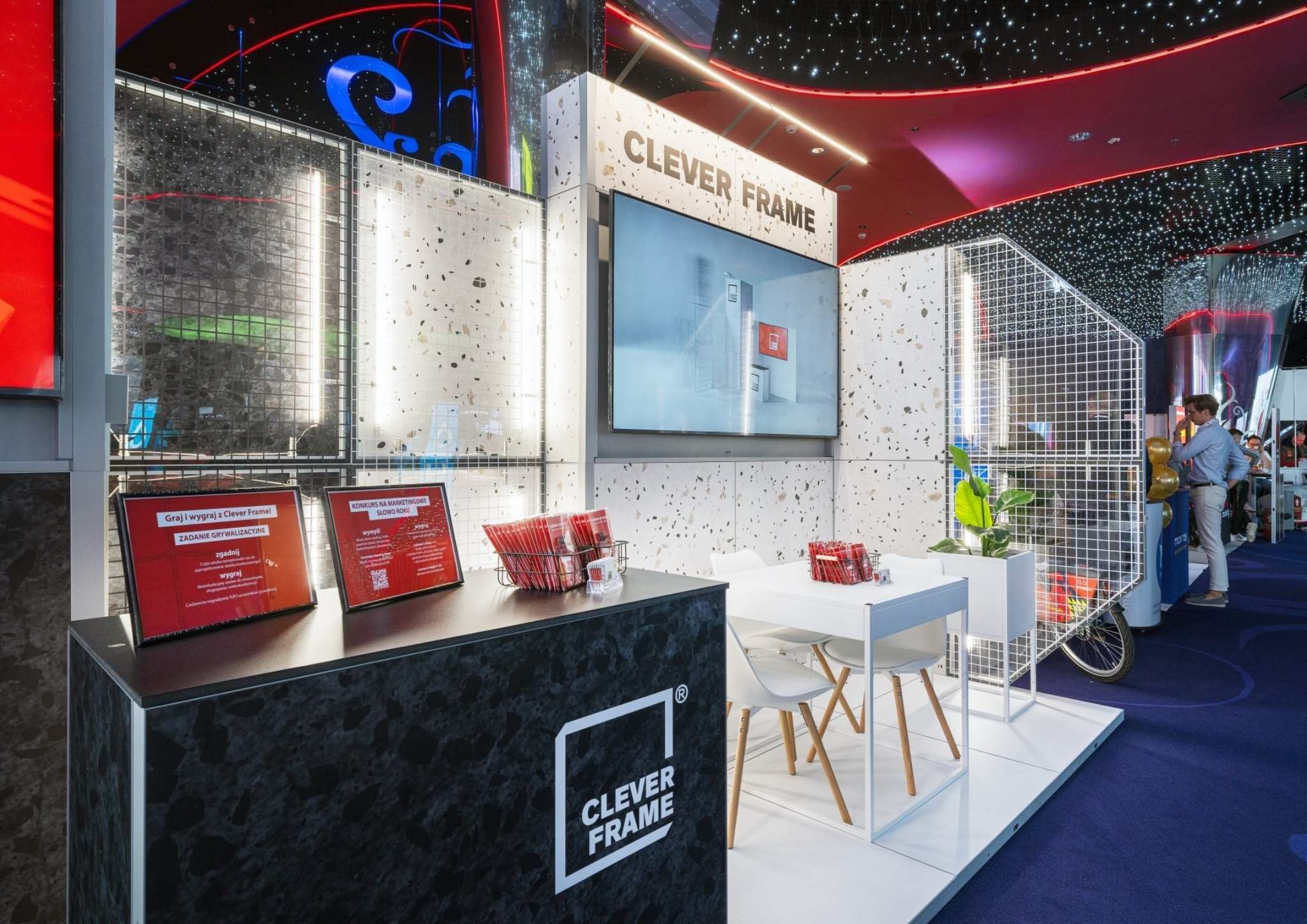
Stand design matters because it shapes behavior. If the layout funnels everyone into one crowded point, interactions become short and superficial, and attribution will over-credit “traffic” rather than meaningful engagement. When the space supports distinct engagement zones, it becomes easier to connect touchpoints to intent (for example, “watched demo” versus “requested consultation”).
For brands using modular exhibition stands, modular structures can support repeatable measurement because the same core stand can be reconfigured across events while keeping consistent visual communication. Fast-change graphic panel mounting solutions (the exact mechanism depends on the supplier and system) can enable quick replacement of campaign visuals between events, aligning onsite messaging with seasonal launches, account-based targets, or changing marketing priorities without rebuilding the entire stand.
What are practical examples of Multi-Touch Attribution?
MTA scenarios are easiest to understand as journeys that combine multiple physical and digital actions. The goal is to interpret contribution across touches, not to force every interaction into a single “winner” channel.
Examples of how MTA can be applied include:
-
a visitor clicks a pre-event email invitation, books a meeting slot, attends a stand demo, and later converts after a sales call,
-
a prospect discovers the brand at a roadshow, scans a QR code to download a product sheet, revisits via retargeting, and requests pricing,
-
a returning customer stops by a showroom, discusses an upgrade path, receives a follow-up sequence, and expands the contract,
-
a decision-maker watches a live presentation at the stand, delegates technical evaluation to a colleague, and the combined touches lead to a trial,
-
an attendee interacts briefly onsite, but repeated post-event content and a webinar ultimately drive the opportunity, indicating the event’s assist value.
In all cases, reliable attribution depends on consistent touchpoint tagging and disciplined lead management. Typical building blocks are UTM governance for event links, QR codes mapped to content themes, badge or form capture that includes consent and context, and CRM fields that record interaction types. Over time, this allows teams to compare events not only by lead volume, but by touchpoint patterns associated with progression and closed-won outcomes.
See also
-
event marketing
-
visitor flow
-
brand experience
-
lead generation