What is Marketing Operations?
Marketing Operations (often shortened to MOPs or MOps) is the discipline that turns marketing strategy into repeatable, measurable execution. It covers the processes, people, data, governance and technology that keep campaigns running consistently across channels – including offline touchpoints such as trade fairs, brand events, showrooms and roadshows.
In the context of physical brand experiences, Marketing Operations connects planning and production (timelines, assets, budgets, supplier coordination) with on-site delivery (brand consistency, visitor flow, lead capture) and post-event measurement (pipeline impact, cost per lead, learnings). It helps marketing and sales teams treat each event not as a one-off project, but as an optimised program that improves from one activation to the next.
Main goals of Marketing Operations
The core purpose of Marketing Operations is operational clarity – so teams can scale event marketing without losing quality, brand control or accountability. In practice, common goals include:
-
standardising workflows for planning, producing and delivering trade fair presence and brand events,
-
ensuring consistent brand identity across physical spaces, printed assets and digital follow-up,
-
improving time-to-launch by reusing proven layouts, checklists and asset libraries,
-
aligning marketing and sales on lead definitions, handover rules and follow-up SLAs,
-
creating transparent budgeting and cost tracking across multiple events and locations,
-
building reliable reporting that links event activity to pipeline and revenue outcomes.
Benefits of Marketing Operations for event marketing
Well-designed Marketing Operations strengthens both the visitor experience and internal efficiency. It reduces friction between creative intent and logistical reality, which is especially important when a brand must deliver a consistent presence across different venues and audiences.
-
stronger brand consistency through controlled templates, approved messaging and versioning of graphics,
-
more predictable outcomes thanks to repeatable event playbooks and defined responsibilities,
-
higher team productivity by reducing last-minute changes, duplicated work and unclear approvals,
-
better visitor experience when layout, wayfinding and conversation zones are planned around visitor flow,
-
improved measurement via clean data capture, unified UTM and QR conventions, and structured debriefs,
-
lower total cost of ownership through asset reuse and smarter logistics planning.
From an exhibition-stand perspective, Marketing Operations supports decisions that affect both cost and impact, such as how a modular stand should be configured for different booth sizes, how many graphic variants are needed, and how to schedule installation and dismantling with minimal downtime.
Challenges and limitations
Marketing Operations often fails not because the concept is wrong, but because the operating model is incomplete. Offline activations introduce additional constraints: venue rules, transport, safety requirements, and the need to deliver a premium brand experience in a limited time window.
-
data quality issues when leads are captured inconsistently across teams, devices or forms,
-
over-standardisation that limits creative flexibility and reduces relevance for specific audiences,
-
stakeholder misalignment on event objectives, which leads to unclear KPIs and mixed messaging,
-
timeline risk caused by late approvals for artwork, translations or compliance checks,
-
operational dependencies on suppliers and venue schedules that are difficult to control,
-
measurement gaps when offline touchpoints are not connected to CRM and attribution logic.
A practical way to reduce risk is to treat the physical environment as part of the operating model: the space, the layout and the branded surfaces should be documented, versioned and reviewed with the same discipline as campaign assets.
How Marketing Operations is used at trade fairs and events
At trade fairs and brand events, Marketing Operations connects brand storytelling with the realities of space design and on-site execution. That includes planning how visitors enter, where conversations happen, how product information is presented, and how the team captures qualified leads without disrupting the experience.
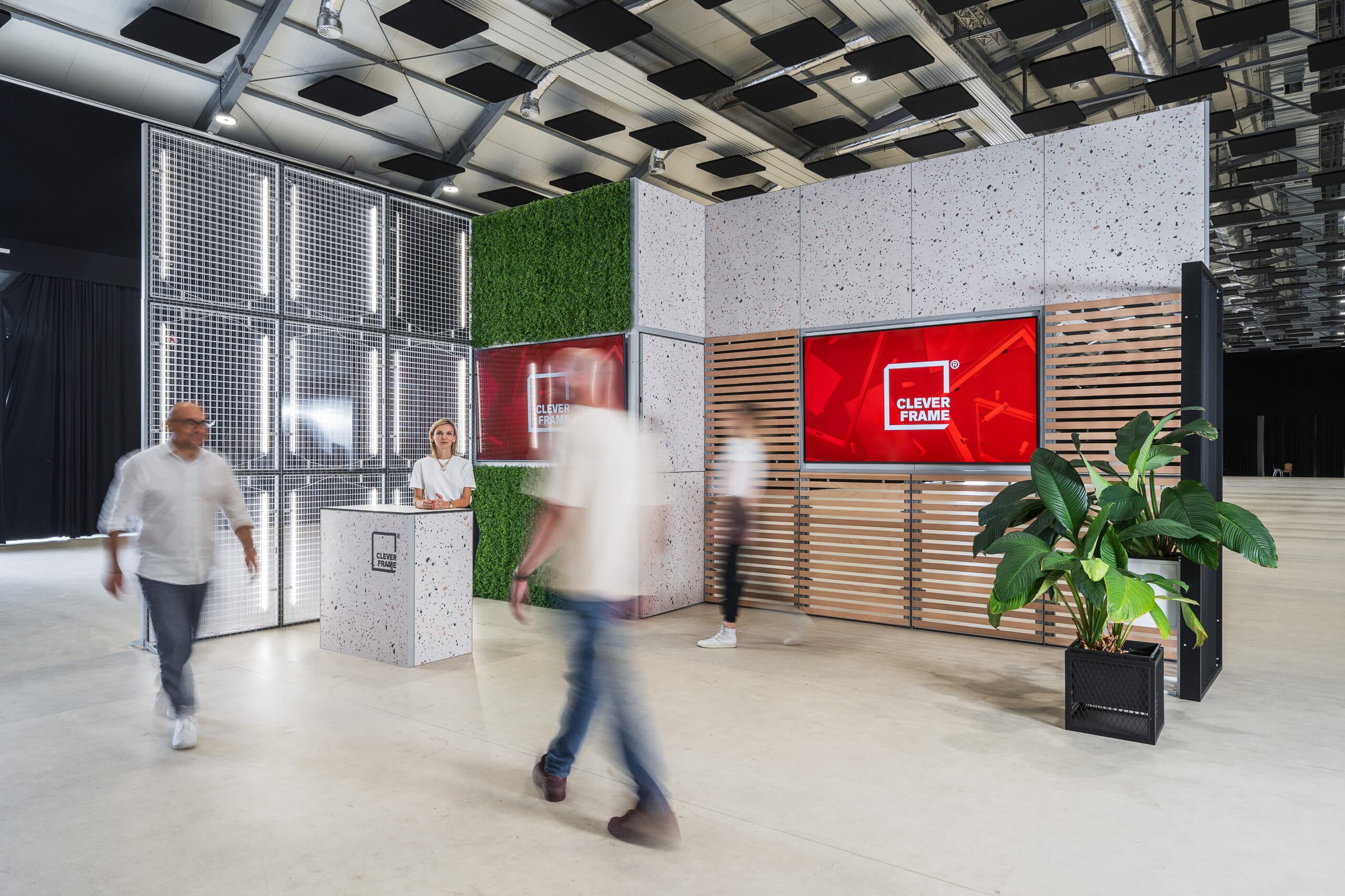
When a brand uses modular exhibition stands, Marketing Operations can standardise stand “building blocks” across markets while leaving room for local adaptation. For example, some modular exhibition systems use magnetic or tool-less solutions that enable quick replacement of graphic panels, making it easier to adapt messaging to seasonal campaigns, new product launches or changing marketing priorities. This supports brand consistency while keeping production cycles shorter and reducing waste from one-time prints.
Operationally, modular stands can also support repeatable deployment because many systems are designed for straightforward installation and dismantling without specialised tools, which can improve schedule reliability and reduce the need for complex on-site coordination. Marketing Operations then documents what worked: preferred layouts for different floor plans, staffing ratios by traffic level, and the best-performing messages for specific audience segments.
Examples of Marketing Operations in practice
Marketing Operations becomes visible through concrete routines and artefacts that make execution easier and performance more transparent. Examples relevant to offline marketing include:
-
an event brief template that defines audience, offer, key messages, success metrics and lead qualification rules,
-
a content and artwork workflow with clear owners for copy, design, legal review and translations,
-
a library of approved visual assets mapped to stand surfaces and customer journey stages,
-
a modular stand configuration guide that pairs booth size with recommended layout and visitor flow assumptions,
-
an on-site playbook for staff that covers conversation structure, demos, and data capture standards,
-
a post-event debrief framework that links event spend to outcomes and creates an improvement backlog.
In a showroom or roadshow setting, the same discipline applies: Marketing Operations defines how the physical environment communicates value, how visitors move through the space, and how the brand collects insights. The goal is not only operational efficiency, but also a consistent, high-quality experience that supports reputation and trust over repeated interactions.
From a sustainability perspective, Marketing Operations can also formalise practices aligned with sustainable event management principles (for example, ISO 20121), such as minimising single-use materials, reusing modular structures across multiple activations, and tracking transport and production decisions as part of event planning.
See also
-
Modular exhibition stands
-
Event marketing
-
Visitor flow
-
Brand experience