What is Event Wayfinding?
Event wayfinding is the set of visual, spatial, and informational cues that help attendees orient themselves and move efficiently through an event environment – from arrival and registration to session rooms, brand activations, and exhibition stands. It combines signage, layout logic, and consistent visual communication to reduce confusion, support accessibility, and shape the overall visitor experience.
In trade shows and brand events, wayfinding is also a communication tool. It influences how people discover exhibitors, how long they stay in specific zones, and how they perceive the professionalism and trustworthiness of an event or brand presence. For marketing and sales teams, well-designed wayfinding helps guide qualified traffic to key touchpoints such as product demos, consultation areas, lead capture points, and meeting spaces.
What are the main goals of Event Wayfinding?
Effective event wayfinding aligns operational clarity with brand and experience goals. It should work at multiple scales: the venue level (macro navigation), the hall level (zoning and routing), and the stand level (micro navigation and visitor flow).
-
help attendees find destinations quickly, reducing cognitive load and frustration,
-
support predictable visitor flow and minimize bottlenecks near entrances, corridors, and high-interest activations,
-
increase discoverability of exhibitors and content by making zones and categories easy to scan,
-
enable safer movement by keeping routes legible and supporting crowd management,
-
reinforce consistent visual communication through typography, color, iconography, and naming conventions.
Benefits of Event Wayfinding for exhibitors and organizers
Wayfinding can have measurable effects on experience, engagement, and conversion opportunities. When people spend less time searching, they have more capacity to interact, ask questions, and compare solutions – which is the core value of in-person marketing.
-
higher quality booth traffic by guiding visitors to relevant brand touchpoints rather than creating random footfall,
-
better on-stand engagement because visitors understand where to go for demos, consultations, or specific product categories,
-
stronger brand recall thanks to repeated, consistent visual markers that connect directions with brand identity,
-
reduced staff workload spent on giving directions, allowing teams to focus on conversations and lead qualification,
-
improved inclusivity by supporting clear navigation for first-time attendees, international guests, and people with different accessibility needs.
Challenges and limitations
Wayfinding fails most often due to inconsistent communication, overly complex layouts, or a mismatch between signage and real movement patterns. At trade shows, additional constraints can include venue rules, limited sightlines, and changing floor plans.
-
visual noise caused by competing exhibitor messages, which can reduce sign legibility and attention,
-
line-of-sight limitations created by tall structures, crowded aisles, and corner configurations,
-
inconsistent terminology (for example, zone names that differ between maps, apps, and physical signage),
-
accessibility gaps such as small font sizes, low contrast, or unclear iconography for multilingual audiences,
-
organizational constraints, including late changes to exhibitor placement or schedule updates that require fast content adjustments.
How Event Wayfinding is used at trade shows and events
Event wayfinding is usually designed as a layered system. Organizers provide the macro-level structure (hall plans, entrances, session rooms), while exhibitors build micro-level guidance at their stand to support product discovery and conversation flow. The best results come from aligning both layers visually and logically.
Venue and hall level
At the venue scale, wayfinding typically includes entry sequences, registration guidance, category zoning, and navigation to key services. Maps, overhead signs, and consistent zone labeling help people create a mental model of the event. This is also where visitor flow is shaped by aisle width, placement of high-demand zones, and the positioning of key anchors such as stages or featured areas.
Exhibition stand level
At the stand level, wayfinding translates brand priorities into a clear path. Visitors should instantly understand what the brand offers, where to start, and how to move through the space without blocking others. This is where modular exhibition architecture can support clarity by creating repeatable, structured visual landmarks.
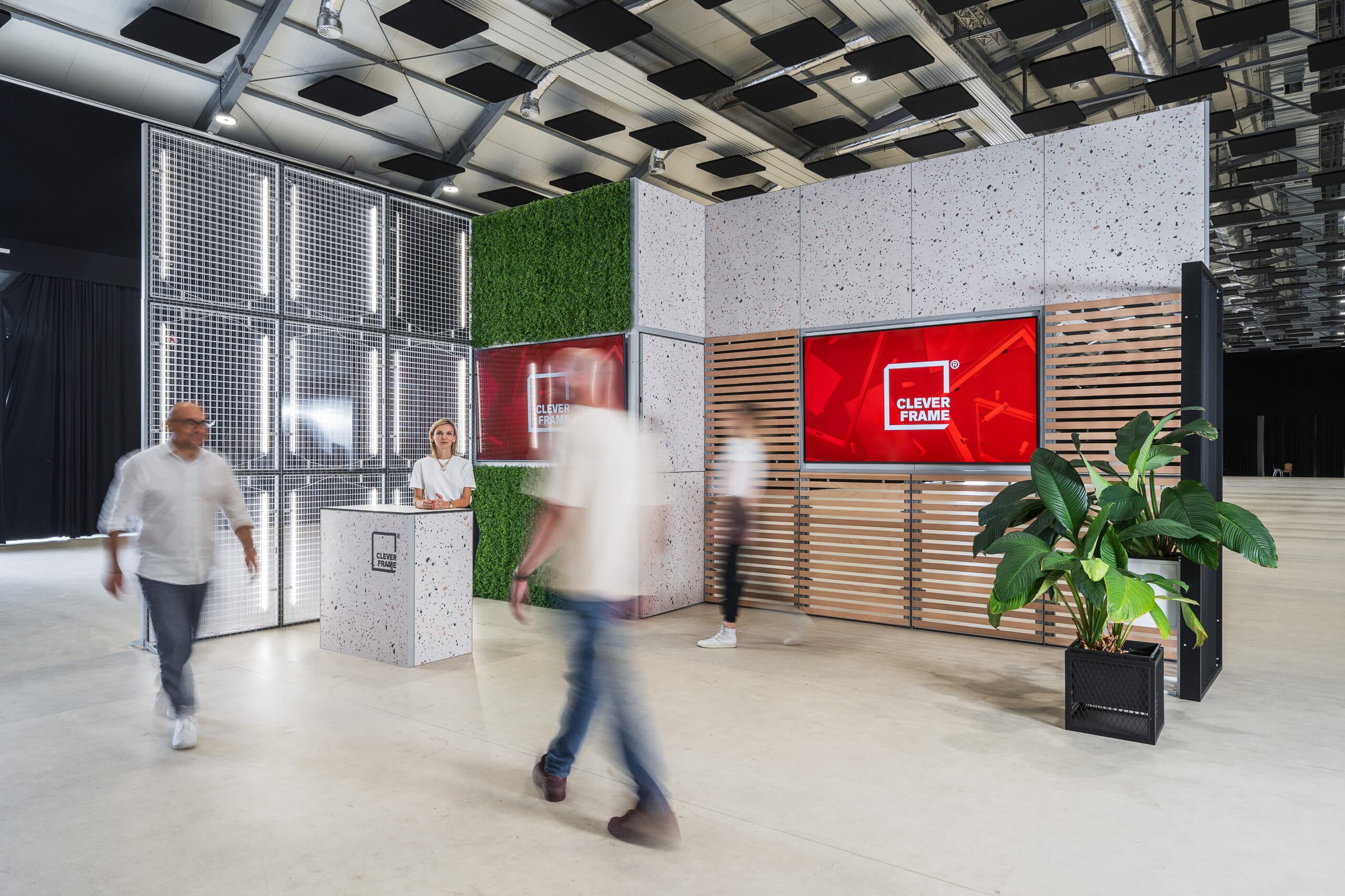
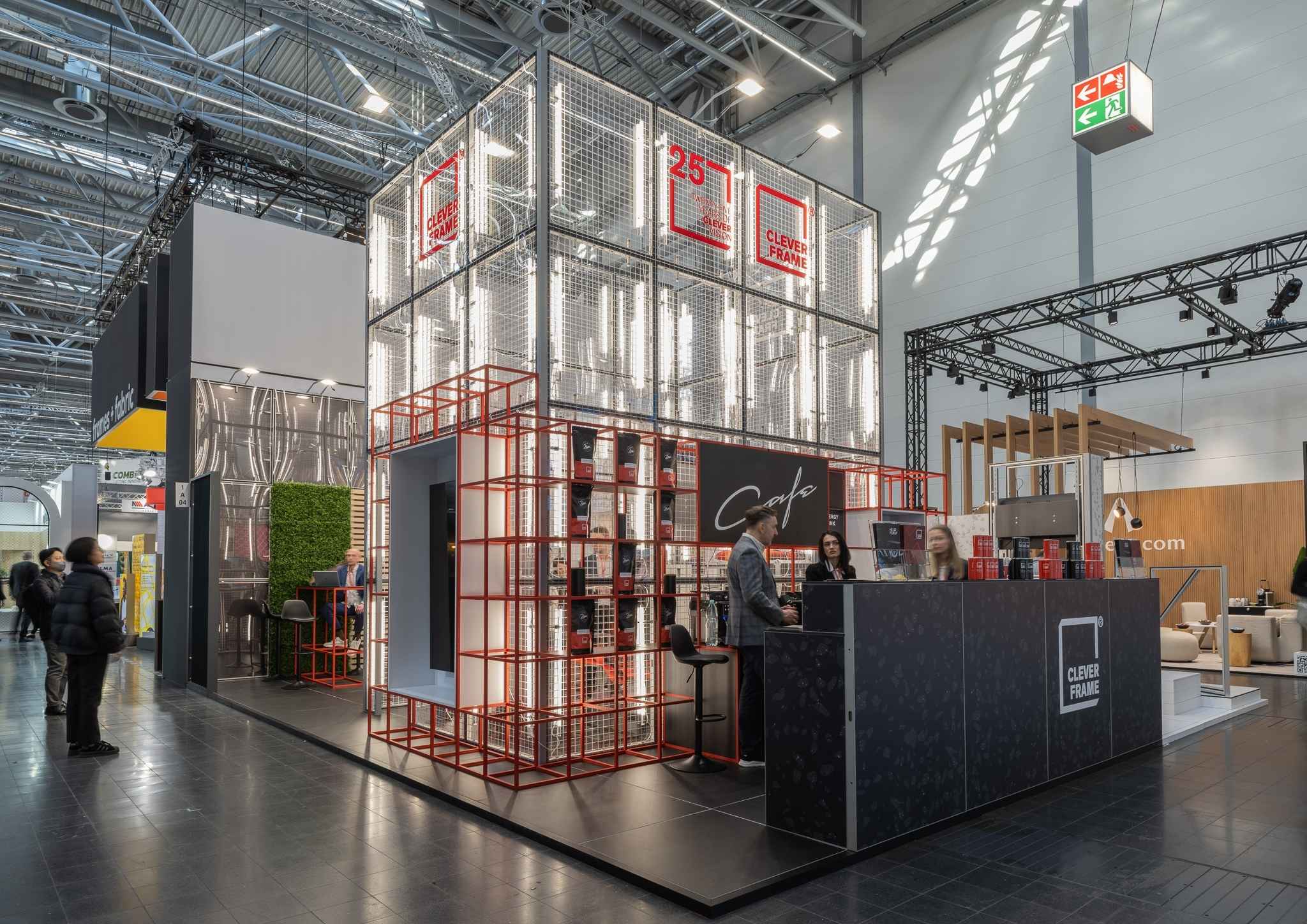
Clever Frame modular exhibition stands support visitor orientation through graphic panels that clearly define communication zones and show where demo, meeting, or product presentation areas are located. The construction is based on reusable aluminum frames connected with precision connectors, designed for tool-free assembly and dismantling. Brand communication is carried by rigid graphic panels mounted with magnetic fixation, which allows fast replacement of graphics for seasonal campaigns or changing marketing messages without rebuilding the entire structure.
Practical examples of Event Wayfinding
Wayfinding can be subtle or explicit, but it should always be intentional. In practice, it often blends physical guidance with brand storytelling so that navigation and communication support each other.
-
color-coded product zones within a stand, where each category has a consistent color and icon used on panels and directional prompts,
-
a clear “start here” entry point that leads to a short demo route, ending at a consultation area for qualified conversations,
-
multi-brand or multi-division stands where each business unit has a dedicated, labeled area, reducing confusion and improving lead attribution,
-
showrooms and roadshows using the same spatial logic across locations, so returning visitors instantly recognize where to find key content,
-
event-wide consistency, where an exhibitor aligns naming conventions and visual style with organizer categories to improve discoverability in halls and maps.
How to evaluate whether wayfinding works?
Wayfinding quality can be assessed through observation and simple event metrics. Common indicators include repeated “where is…?” questions to staff, visible congestion in front of key zones, and uneven visitor distribution. A practical approach is to map visitor movement during peak hours, check whether key messages are readable from primary sightlines, and validate that navigation still works when the stand is busy.
For exhibitors, the benchmark is not only footfall but also the ratio of meaningful interactions to passers-by. When navigation is clear, staff can focus on conversations, and visitors can self-direct toward the content most relevant to their needs.
See also
-
Visitor Flow
-
Modular Exhibition Stand
-
Brand Experience
-
Sustainable Event Design