
What is an event schedule?
An event schedule is a structured, time-based plan for how an event will run, covering the key operational and communication activities – from deliveries, setup, and technical sign-off, to attendee engagement moments, sales meetings, product presentations, and teardown. In event marketing, it serves as an “operational map” that aligns teams (marketing, sales, booth staff, logistics) and reduces the risk of last-minute improvisation when time and space are limited.
In the context of trade shows and face-to-face marketing, the schedule connects brand objectives with on-site realities: hall opening hours, venue access rules, visitor flow, and technical constraints. A well-built plan also accounts for consistent booth visuals and touchpoints throughout the day, so the brand experience stays coherent, measurable, and repeatable across future editions of the event.
What are the main goals of an event schedule?
An event schedule is more than a timetable. It’s a tool for managing both the attendee experience and team execution, helping maintain the quality of brand interactions in a physical environment. Most often, it supports goals such as:
- ensuring the booth is ready on time, taking into account venue logistics windows and safety procedures,
- planning attention-building activities (e.g., demos, consultations, presentations) during peak traffic periods,
- coordinating booth team roles (shifts, conversation handling, lead qualification, post-meeting notes),
- maintaining messaging consistency – what is communicated, to whom, in what order, and with which materials,
- capturing data to evaluate performance (e.g., number of conversations, lead quality, presentation attendance).
What are the benefits of an event schedule?
The benefits span both operational efficiency and the quality of the brand experience. An event schedule supports real-time decision-making when conversations, presentations, and brand-building activities happen simultaneously at the booth.
- better control of visitor flow – it’s easier to predict when to run a crowd-pulling activation and when to focus on calmer B2B conversations,
- greater brand experience consistency – repeatable interaction flow, clear touchpoints, and a unified message across different team members,
- less downtime and chaos – faster response to delivery delays, stage program changes, or meeting reschedules,
- more predictable booth work – team rotation reduces fatigue, which typically improves conversation quality and note-taking,
- easier post-event evaluation – the schedule becomes a reference point for insights and optimization for the next edition.
What are the challenges and limitations of an event schedule?
An event schedule should be realistic and resilient to change. In practice, constraints come from venue regulations, dependencies between subcontractors, and unpredictable attendance. Common challenges include:
- an overly “rigid” plan that doesn’t include buffers for delays and fluctuating hall traffic,
- underestimating time needed for logistics and technical checks, especially with limited access and unloading hours,
- a program that isn’t aligned with the space layout – activities conflict with walkways or block conversation areas,
- unclear team roles, leading to poor follow-through (e.g., no lead handover or missing CRM notes),
- no contingency plan when, for example, the conference agenda shifts and booth traffic changes the day’s rhythm.
How is an event schedule used at trade shows and events?
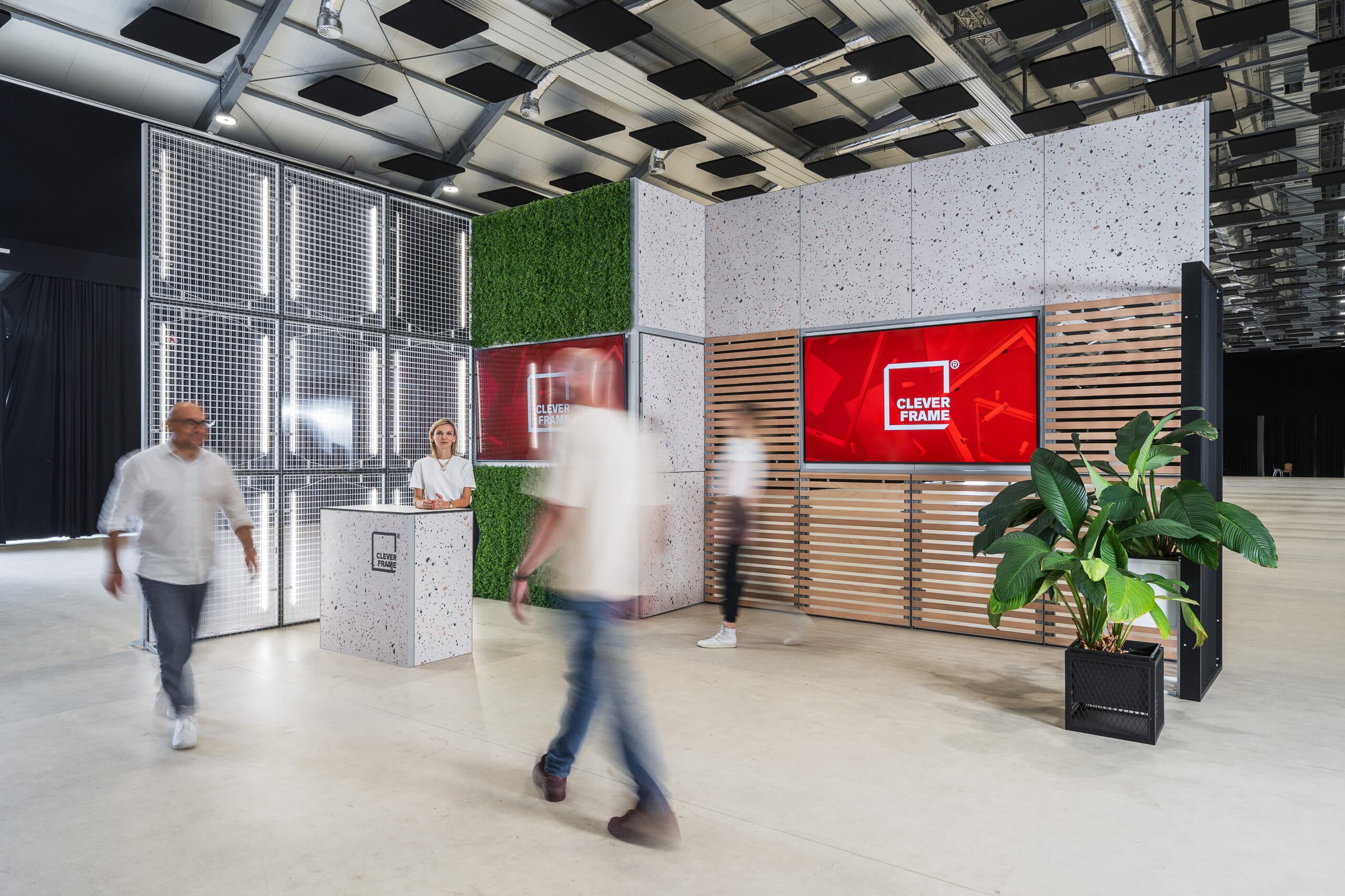
At trade shows, an event schedule connects three layers: logistics, team execution, and the visitor experience. For Clever Frame trade show booths, a key part of the plan can also be managing exhibit preparation. Modular construction and tool-free setup and teardown make it easier to plan precise time windows and reduce the risk of delays on opening day.
If an event has multiple stops or formats (e.g., a roadshow, a series of showroom presentations, partner events), the schedule helps standardize rollouts. The magnetic system also enables quick graphic panel swaps, allowing messaging to be tailored to different audience segments, seasonal campaigns, or changing marketing trends – without rebuilding the entire display.
Examples of event schedule use in practice
In practice, it’s worth preparing an event schedule in two versions: a detailed “operations” version and a shortened “booth team” version. Typical use cases include:
- B2B trade show: time slots for pre-booked meetings, alternating with blocks for walk-up conversations, plus time for lead qualification and completing lead data,
- product launch: short demos every 30–60 minutes, synced with peak traffic, with clear roles (host, Q&A lead, follow-up owner),
- showroom: a schedule for group visits with space prep and messaging cues so the viewing path supports the product story and key value propositions,
- roadshow: a repeatable plan for setup, display checks, and swapping graphic panels depending on the city and attendee profile.
See also
- modular trade show booth
- visitor flow
- key visual
- graphic panels