
What is an event run of show?
An event run of show is a structured plan for how an event unfolds, connecting marketing objectives with logistics, communication, and the attendee experience in a physical space. It lays out the sequence of actions over time (from preparation through follow-up), team roles, audience touchpoints, and interaction guidelines – so that every brand–participant interaction is consistent, measurable, and operationally safe.
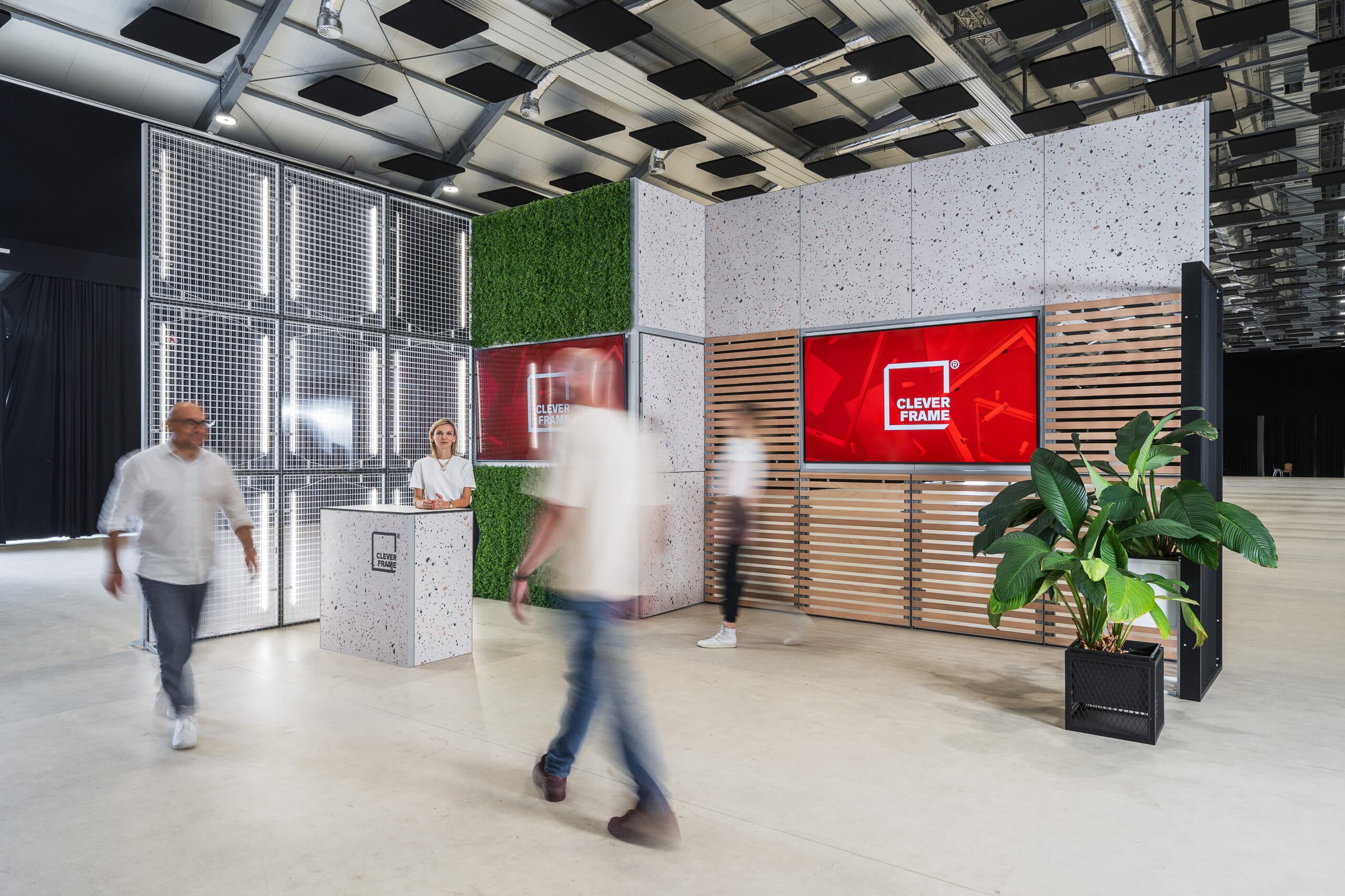
In the context of industry trade shows and exhibition stands, an event run of show also covers how you use the floor space: booth layout, visitor flow, product display, visual messaging, and the moments when sales conversations happen. A well-prepared run of show helps guide visitors through the brand’s key messages and makes it easier for the team to deliver in a fast-paced trade show, showroom, or roadshow environment.
What are the main goals of an event run of show?
A run of show sets priorities and protects a consistent brand experience – especially when an event runs for multiple days and is staffed by many people. Most often, it’s used to:
- translate business goals into specific actions across time and space,
- plan direct communication – from the greeting to handing a lead over to sales,
- keep the key message consistent with the visual identity and booth materials,
- design visitor flow, i.e., the order of contact with the display, demo, and conversation,
- define KPIs (e.g., number of conversations, lead quality, number of demos) and how to measure them.
What are the benefits of an event run of show?
The biggest value of a run of show is predictability: attendees receive a clear message, and the team knows exactly what to do at any given moment. In practice, this leads to:
- better attention management through planned interaction points and brand micro-stories,
- higher-quality sales conversations because the team follows shared needs-qualification standards,
- a more consistent presentation of products and services – regardless of who is leading the meeting,
- greater cost control, since content production and logistics follow a plan rather than improvisation,
- easier optimization in future editions, because the run of show becomes a baseline for analysis and improvement.
Challenges and limitations of an event run of show
A run of show doesn’t remove uncertainty – it helps you manage it. Limitations usually come from venue realities, time constraints, and visitor behavior. It’s worth accounting for the fact that:
- trade show traffic is uneven, so the plan should include variations for peak times and quieter hours,
- too many program elements can dilute focus on lead generation or brand objectives,
- consistent visual communication requires discipline in content selection to avoid overloading the booth with information,
- the team needs short instructions and checklists – an overly long document often isn’t operationally useful,
- last-minute changes (e.g., delays, technical issues) call for a contingency plan and clear decision-making.
How is an event run of show used at trade shows and events?
At trade shows, a run of show connects the booth design with the team’s actions. If the trade show booth has zones with different functions (e.g., demos, consultations, new-product highlights), the run of show indicates how attendees should move between them and where the key conversation should happen. With Clever Frame exhibition stands, it also matters that the modular design makes it faster to adjust the layout to hall conditions and the day’s objective – and setup and teardown happen without tools.
A key part of the run of show is the visual communication plan. Magnetic graphic panels make it easy to swap content, so messaging can be tailored to a specific show day, audience segment, or seasonal campaign – without rebuilding the entire stand. This supports consistent branding while also making it easier to test different messages in real conditions.
Practical examples of an event run of show
The run of show should match the event format and the booth’s role in the marketing-to-sales funnel. In practice, it can look like this:
- B2B trade shows: staffing schedules, fast lead qualification, a path from the display to a 1:1 meeting, plus a standard for logging needs in the CRM,
- Showroom: a guided-tour script with the order of solution presentations, comparison points, and space for a client workshop,
- Roadshow: a plan for repeatable modular booth setup across locations, communication consistency checks, and a transport checklist,
- Product launch event: a cadence for group entries, product demos at set times, and a photo/video content plan aligned with the visual identity.
See also
- modular trade show booth
- visitor flow
- visual identity
- eco-design