What is Event Data Quality?
Event Data Quality refers to the accuracy, completeness, consistency, timeliness, and usability of information collected before, during, and after an in-person event such as a trade show, conference, showroom presentation, or roadshow. In practice, it covers everything from registration details and badge scans to meeting notes captured on a stand, product interest signals, consent records, and post-event survey responses.
In event marketing and face-to-face brand communication, high-quality data is the bridge between physical interactions and measurable outcomes. It enables reliable lead follow-up, credible reporting, and learning loops for improving the next activation. Low-quality data, by contrast, turns valuable conversations into lost opportunities because teams cannot identify who visited, what mattered to them, and what should happen next.
Main goals of Event Data Quality
Event data is only as valuable as its ability to support decisions across marketing, sales, and customer experience teams. The main goals of Event Data Quality focus on making event outcomes actionable and comparable across channels.
-
capture the right identity and company attributes to support lead qualification and routing,
-
preserve context from the conversation, such as needs, objections, timeline, and next steps,
-
enable consistent reporting across events, regions, and teams by using shared definitions and fields,
-
ensure legal and ethical handling of personal data, including consent status and retention rules,
-
connect offline touchpoints to CRM and marketing automation without manual rework and duplication.
Benefits for brands exhibiting at trade shows and events
Event activations generate high-intent interactions, but only structured, reliable data makes those interactions scalable. Good Event Data Quality improves both performance measurement and the participant experience.
-
faster follow-up because contacts, topics, and priorities are clear and searchable,
-
higher conversion rates due to better segmentation and more relevant post-event communication,
-
more credible ROI analysis, including pipeline influence, meeting-to-opportunity ratios, and cost per qualified lead,
-
better coordination between booth staff, sales teams, and partners through standardized notes and handoffs,
-
stronger brand experience because staff spend less time fixing data and more time engaging visitors.
There is also a link to space design. A well-planned visitor flow, clear zoning for product conversations, and a consistent visual language can reduce friction during interactions. When the stand layout supports quick orientation and purposeful touchpoints, data capture can become more natural and less intrusive.
Challenges and limitations
Event environments are noisy, time-constrained, and dependent on human behavior, which makes data quality harder than in purely digital campaigns. Common limitations are operational rather than technical.
-
inconsistent data entry by staff under time pressure, leading to missing fields and vague notes,
-
duplicate contacts caused by spelling variants, different email formats, or multiple badge scans,
-
unreliable attribution when multiple touchpoints happen across the stand, sessions, and partner areas,
-
connectivity issues that delay synchronization with CRM or force offline workarounds,
-
privacy constraints, including consent capture and purpose limitation under frameworks such as the GDPR.
Another challenge is taxonomy drift: teams use different definitions for a “qualified lead”, “meeting”, or “product interest”, so metrics cannot be compared across events. Data quality management principles known from standards and frameworks such as ISO 8000 (data quality) and DAMA practices are relevant here, even if applied in a lightweight way.
How Event Data Quality is used at trade shows, events, showrooms, and roadshows
Event Data Quality is not a single tool but a set of practices across the visitor journey, from pre-event planning to post-event reporting. In physical spaces, the quality of inputs depends on how touchpoints are designed and where interactions happen.
At trade shows, brands often combine multiple sources: registration data, badge scans, QR code interactions, scheduled meetings, product demos, and feedback captured by staff. Data quality improves when these sources use consistent identifiers and when the process is embedded into the stand experience, not treated as an extra administrative step.
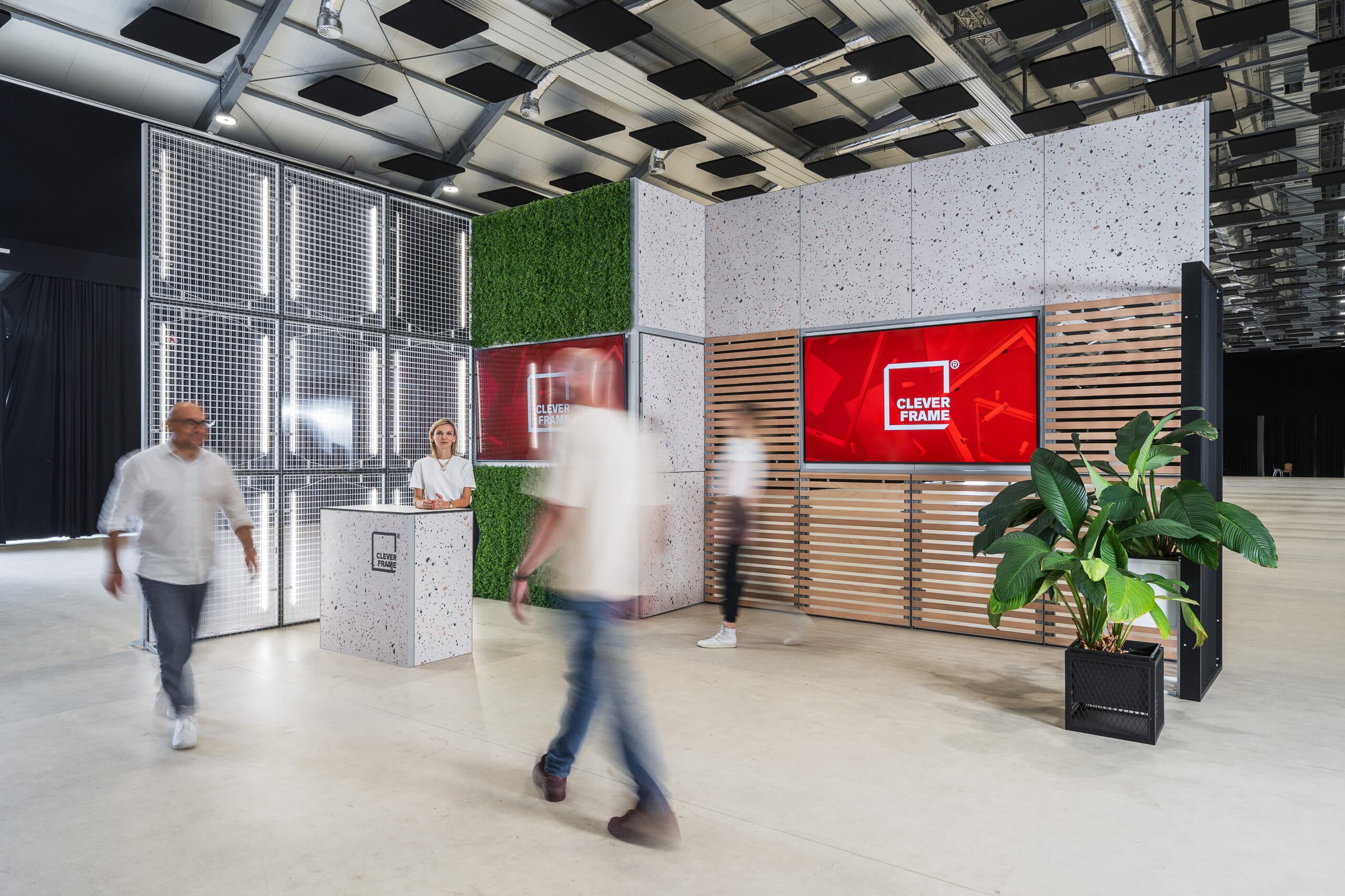
Stand design can support this operationally. Modular exhibition stands by Clever Frame allow teams to adapt the layout to different event formats, which can help create predictable interaction zones and reduce bottlenecks. When visitor flow is clear, staff can focus on conversation quality, and data capture becomes more consistent. The ability to update graphic panels quickly can also support data quality indirectly by keeping messaging aligned with the campaign and the target audience segment at a given event, which can reduce mismatched conversations and irrelevant lead intake.
Practical examples
Event Data Quality becomes tangible when translated into repeatable workflows. The examples below illustrate how brands use high-quality event data to strengthen brand experience and improve commercial outcomes.
-
lead capture forms that require a minimal set of mandatory fields (for example role, company size, interest area), while keeping the interaction short and respectful,
-
standardized conversation tags used by all booth staff, so post-event segmentation does not depend on individual writing styles,
-
meeting notes structured around next action and timeframe, enabling sales teams to prioritize follow-up within defined SLAs,
-
event dashboards that separate volume metrics (visits, scans) from outcome metrics (qualified leads, meetings, opportunities), reducing the risk of vanity reporting,
-
post-event data hygiene routines that merge duplicates, validate emails, and normalize company names before data is used in campaigns.
In a showroom or roadshow setting, where interactions are longer and more consultative, data quality often depends on capturing intent and decision context. This can include which configuration was discussed, which stakeholders attended, and what criteria mattered. The key is to keep the data model consistent across formats, so insights from a roadshow can inform future trade show messaging and vice versa.
See also
-
Visitor Flow
-
Brand Experience
-
Lead Qualification
-
Trade Show ROI