What is Event Conversion Tracking?
Event conversion tracking is the practice of measuring which actions taken by visitors during or after an event can be attributed to specific event touchpoints, such as a trade fair stand, a product demo, a meeting booked on-site, or a QR code scanned at a showroom. In event marketing, it connects offline interactions to measurable outcomes in digital analytics and CRM systems, so teams can evaluate performance beyond footfall and impressions.
In the context of trade fairs and direct brand communication, event conversion tracking helps identify what actually drives qualified leads, sales conversations, and follow-up engagement. It is especially relevant when a brand uses a physical space to guide visitor flow, deliver consistent visual communication, and create a structured path from attention to action, for example from a welcoming front area to demo zones and a meeting point.
Main goals of Event Conversion Tracking
Event conversion tracking is built around defining conversions that reflect business objectives and mapping them to specific moments in the visitor journey. In practice, the goals typically include:
-
linking booth and event interactions to measurable outcomes, such as lead submissions, meeting requests, or trial sign-ups,
-
understanding which messages, zones, or product themes generate the highest quality engagement,
-
improving sales and marketing alignment by standardising what a “qualified lead” means at the event,
-
supporting post-event follow-up by capturing context, for example interests, pain points, and decision timeframes,
-
optimising the physical experience (layout and visitor flow) based on evidence, not assumptions.
Benefits of Event Conversion Tracking
When tracking is planned together with the event concept and space design, it becomes a tool for improving both experience and efficiency. Key benefits include:
-
more reliable ROI analysis by connecting event costs to downstream pipeline and revenue,
-
faster learning loops for booth communication, allowing teams to test messaging and iterate between events,
-
better resource allocation, for example scheduling demos or staffing busy zones based on observed conversion patterns,
-
clearer reporting for stakeholders, including comparisons across events, formats, and locations,
-
stronger brand consistency, because tracking encourages disciplined use of calls to action and consistent touchpoints.
For brands using modular trade fair stands, the benefits can extend to operational planning. A modular layout can be reconfigured for different venues and audience sizes, enabling quick graphic swaps to match product launches, seasonal campaigns, or updated positioning, while maintaining a consistent structure for comparable measurement.
Challenges and limitations
Event conversion tracking is more complex than website analytics because real-world interactions are not inherently logged. Common challenges and limitations include:
-
attribution uncertainty, because a visitor may see the stand, attend a talk, and convert later via another channel,
-
data quality issues, for example inconsistent lead notes, duplicates, or missing consent,
-
fragmented tooling, when badge scanning, forms, and CRM fields are not aligned,
-
measurement bias introduced by stand design, such as bottlenecks that inflate dwell time without increasing lead quality,
-
privacy and compliance constraints, especially when collecting personal data at a public event.
Another limitation is comparability. If the stand layout, messaging hierarchy, or offer changes significantly between events, performance differences may reflect creative changes rather than improvements. Modular configurations can help standardise key zones while still allowing adaptation to venue constraints.
How Event Conversion Tracking is used at trade fairs and events
Effective tracking starts before the event, when conversions and data fields are defined, and continues on-site through structured touchpoints. Typical use cases in trade fairs, roadshows, and showrooms include:
-
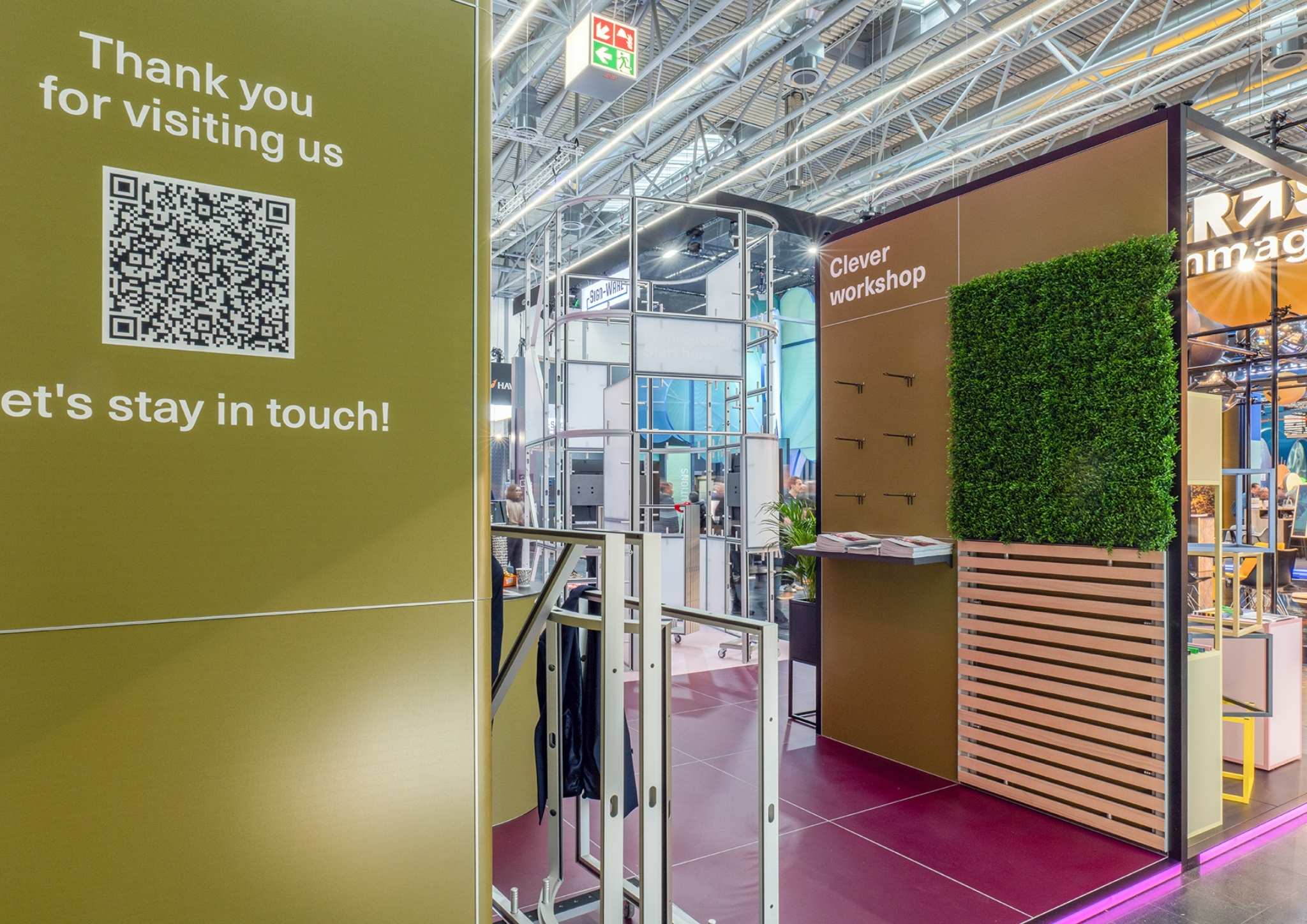
tracking QR code scans that lead to a landing page with a specific call to action, using UTM parameters and campaign tagging,
-
capturing leads via on-site forms (tablet or mobile) connected to a CRM, with mandatory qualification fields,
-
logging product demo attendance and outcomes, such as “requested quote” or “booked technical call”,
-
measuring meeting bookings generated at the stand and verifying show rates and post-event progression,
-
segmenting conversions by stand zone, for example demo area versus consultation area, based on where the interaction occurred.
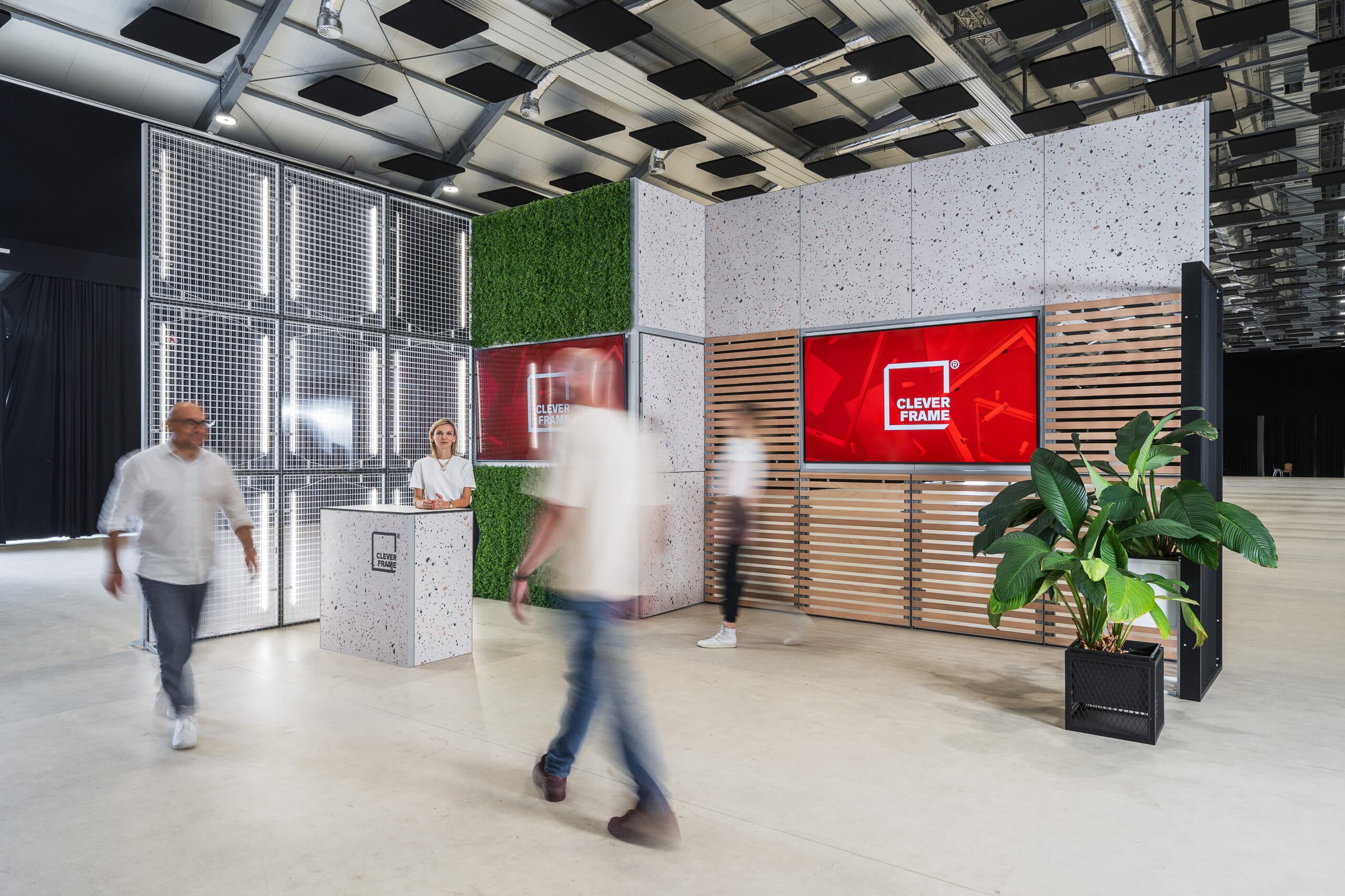
Space plays a measurable role. A well-defined visitor path makes conversion points easier to place and evaluate, for example a clear entry zone that sets expectations, a central demo area that concentrates attention, and a quieter meeting corner where qualification and next steps can be agreed. Consistent visual communication supports this flow by reducing friction: visitors should recognise the brand, understand the offer, and find the next action without needing a long explanation.
With Clever Frame trade fair stands, teams often standardise structural elements across events and adjust messaging through interchangeable graphic panels. This can support tracking because the conversion mechanics can remain stable while visuals and offers are updated to fit the audience and market context.
Examples of Event Conversion Tracking in practice
Event conversion tracking becomes actionable when it is tied to specific decisions. Practical examples include:
-
a B2B brand defines “qualified lead” as a contact with a verified role and project timeline, then tracks how many are generated per product demo topic,
-
a company running a roadshow uses unique QR codes per city to compare conversion rates to “book a consultation” and adjust staffing,
-
a showroom team measures conversions from guided tours to follow-up calls and identifies which room sequence produces the best outcomes,
-
a trade fair exhibitor tests two value propositions across different days by swapping interchangeable graphic panels and compares lead quality, not just volume,
-
a brand analyses visitor flow and discovers that a congested entry reduces completed forms, then redesigns the layout to create a clearer path to the action point.
In each scenario, the focus is not simply on collecting more contacts, but on linking interactions to outcomes that matter for sales and brand objectives. Good tracking also improves the visitor experience: fewer unclear conversations, clearer next steps, and better continuity between what is promised on the stand and what happens after the event.
See also
-
Lead Generation
-
Visitor Flow
-
Brand Experience
-
Modular Exhibition Stand