What is employer branding?
Employer branding is the discipline of shaping and communicating an organisation’s identity as an employer – the set of promises, experiences, and proof points that influence how current employees and potential candidates perceive the workplace. It combines strategic messaging (what the organisation stands for), experience design (how people actually experience the organisation), and consistency across touchpoints where employment-related decisions are made.
In event marketing, trade fairs, and other offline formats, employer branding becomes tangible. A physical presence such as a trade show booth, a recruitment zone at an industry event, a showroom open day, or a roadshow stop can translate values into space, visitor flow, and interaction. The goal is not only to inform, but to let candidates and industry peers experience the organisation’s culture through direct communication, product and service context, and the behaviour of the team on-site.
What are the main goals of employer branding?
Employer branding helps align hiring needs with long-term reputation building by defining what the organisation offers as an employer and making this credible in real-life interactions. In offline settings, the objectives can be evaluated through measurable actions such as conversations, meetings, and follow-up applications.
-
increase awareness among relevant talent segments,
-
clarify the employee value proposition (EVP) and differentiate it from competitors,
-
improve the quality of applicants by setting accurate expectations,
-
support retention by reinforcing internal identity and pride,
-
strengthen trust through transparent, human-to-human communication at events.
What are the benefits of employer branding?
Effective employer branding reduces friction across the recruitment funnel and supports brand equity beyond HR. In trade fair environments, it can also create synergy between sales, partnerships, and recruitment, because the same physical experience shapes perception across multiple stakeholder groups.
-
higher relevance in candidate decision-making by making culture and work context visible,
-
lower recruitment costs over time by improving organic interest and referrals,
-
better conversion from event interactions to applications when the next step is clear and timely,
-
more consistent stakeholder experience when employer and corporate branding share visual and verbal standards,
-
stronger credibility when employees represent the brand and can answer role-specific questions on-site.
Offline formats add a unique benefit: they allow the organisation to demonstrate how it collaborates, how it communicates, and how it responds to questions in real time. These signals are difficult to replicate in purely digital campaigns.
What are the challenges and limitations of employer branding?
Employer branding can fail when the promise is stronger than the reality, when ownership is unclear, or when event execution is not integrated with HR and marketing processes. Offline activations also introduce operational constraints that need planning, especially when the same brand presence is used across multiple locations and teams.
-
misalignment between EVP messaging and day-to-day employee experience,
-
inconsistent execution across events due to different teams, venues, and timelines,
-
limited attention in busy trade fair halls, which requires clear wayfinding and concise messaging,
-
weak follow-up processes that cause qualified leads to go cold after an event,
-
privacy and compliance considerations when collecting candidate data in-person.
A frequent limitation in event contexts is treating the booth as a static backdrop rather than a structured experience. If visitor flow is unclear, staff roles are undefined, and key messages are not visible at the right distance, the activation becomes less effective even with strong creative assets.
How is employer branding used at trade fairs and events?
At trade fairs and industry events, employer branding is often integrated into a broader brand presence. A well-planned space makes it easy for different visitor types to self-navigate: candidates can quickly identify where to ask about roles, while customers or partners can move toward product and business conversations. The layout and visitor flow should support short, high-quality interactions and reduce barriers to entry, such as unclear signage or crowded meeting points.
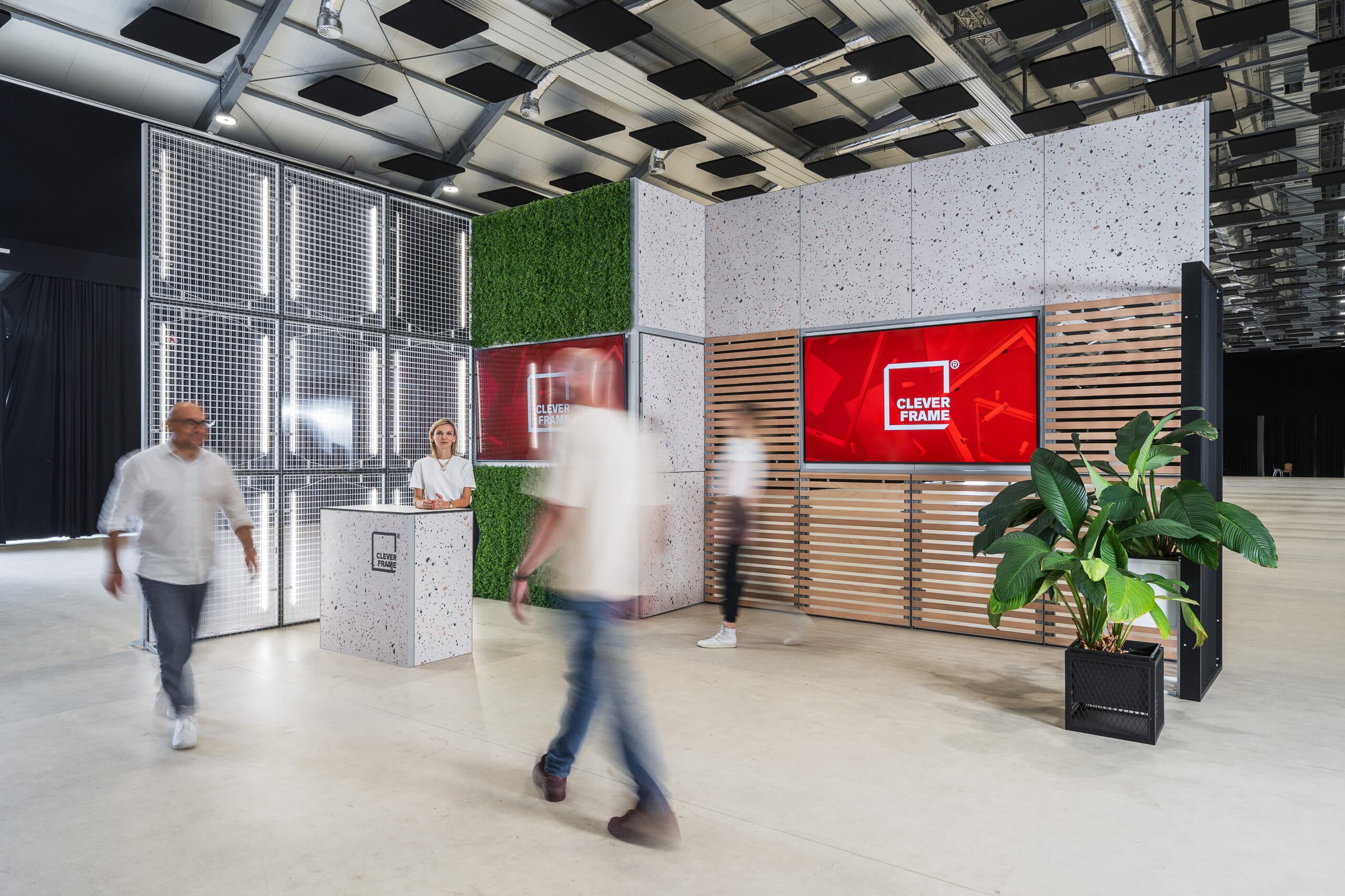
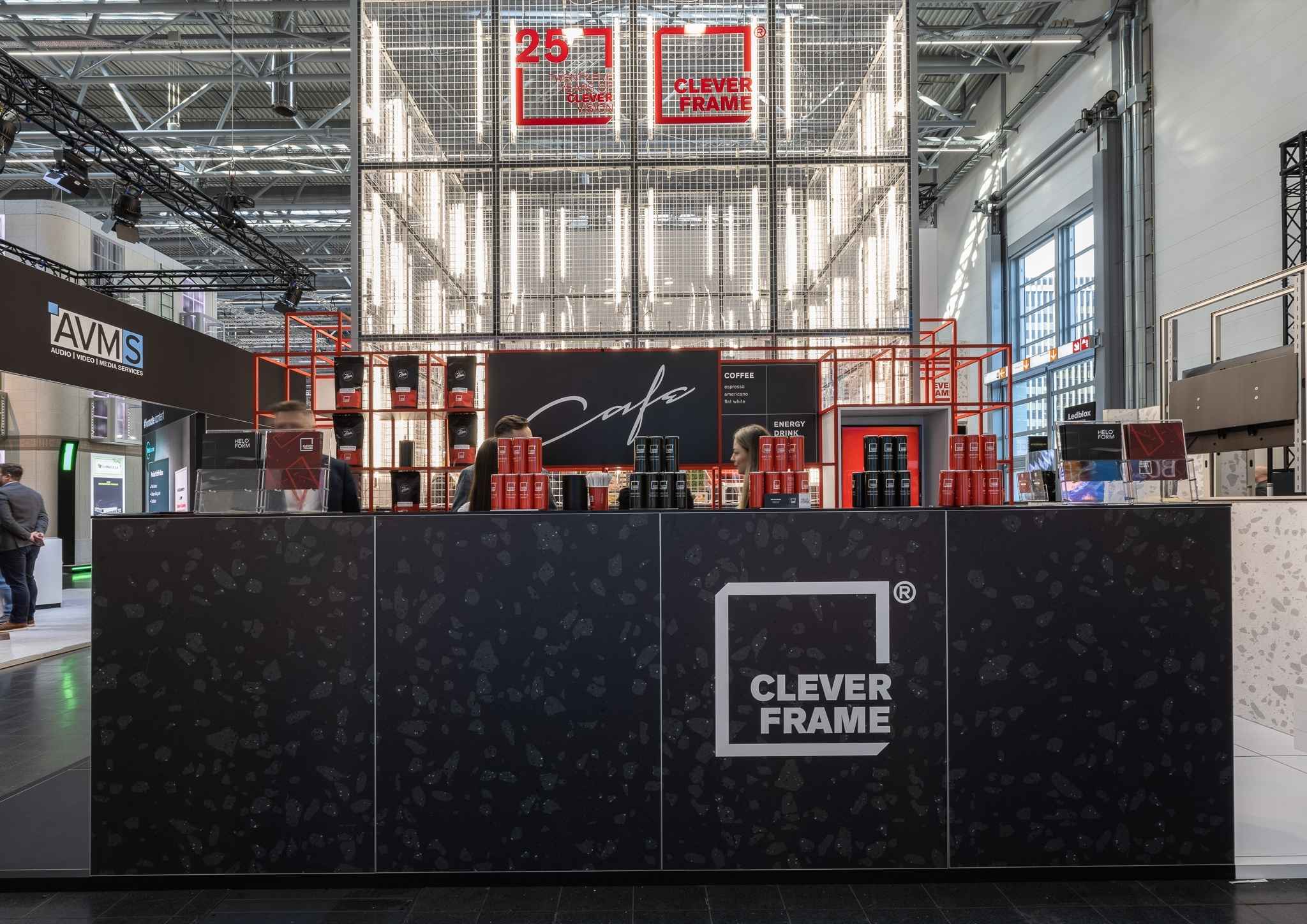
Visual consistency matters because it anchors recognition across touchpoints: online job posts, social content, and onsite materials should share the same core identity. In a physical setting, this includes typography, tone of voice, and the hierarchy of information across walls and panels. With Clever Frame trade show booths, teams can use modular frames and graphic panels to update messaging efficiently between events or campaigns, keeping employer brand communication aligned with seasonal hiring priorities and evolving marketing themes. Tool-free assembly and disassembly supports operational repeatability, especially when multiple events are scheduled close together.
Interaction design is equally important. Employer branding at events works best when people can ask questions, meet real employees, and connect the organisation’s work to tangible outcomes. Demonstrations, short talks, portfolio reviews, and curated conversation prompts can convert passive visitors into engaged candidates without turning the space into a purely promotional environment.
What are practical examples of employer branding in action?
Employer branding becomes measurable when it is tied to a specific audience, message, and next step. Examples below show how offline presence can be structured to support recruitment outcomes and brand trust while remaining consistent with broader event marketing goals.
-
a trade fair booth zone dedicated to careers, with clear role categories and a defined path from first question to scheduled follow-up,
-
a showroom open day that combines product context with behind-the-scenes stories, such as team workflows, quality standards, or customer impact,
-
a roadshow format where the same modular stand is reconfigured for different venues, enabling consistent branding while adapting the footprint and visitor flow,
-
an employee-led micro-session programme at an event, supported by a space layout that prevents crowding and allows natural conversation after the talk,
-
a hiring campaign refresh between events by swapping graphic panels to update EVP messages and role priorities without changing the core booth structure.
In each case, credibility depends on coherence: what the space communicates visually should match what employees say and what candidates later experience in interviews and onboarding. When those elements reinforce each other, employer branding supports both recruitment performance and long-term reputation.
See also
-
Event marketing
-
Brand experience
-
Visitor flow
-
Sustainable exhibition design