What is direct communication?
Direct communication refers to personal, immediate and two-way contact between a brand and its audience. It takes place in conversations at trade fairs, events, roadshows, showrooms or in sales spaces, where questions can be answered on the spot and information is exchanged in real time. Unlike mass communication, direct communication focuses on individual needs, dialogue and building trust through authentic interaction.
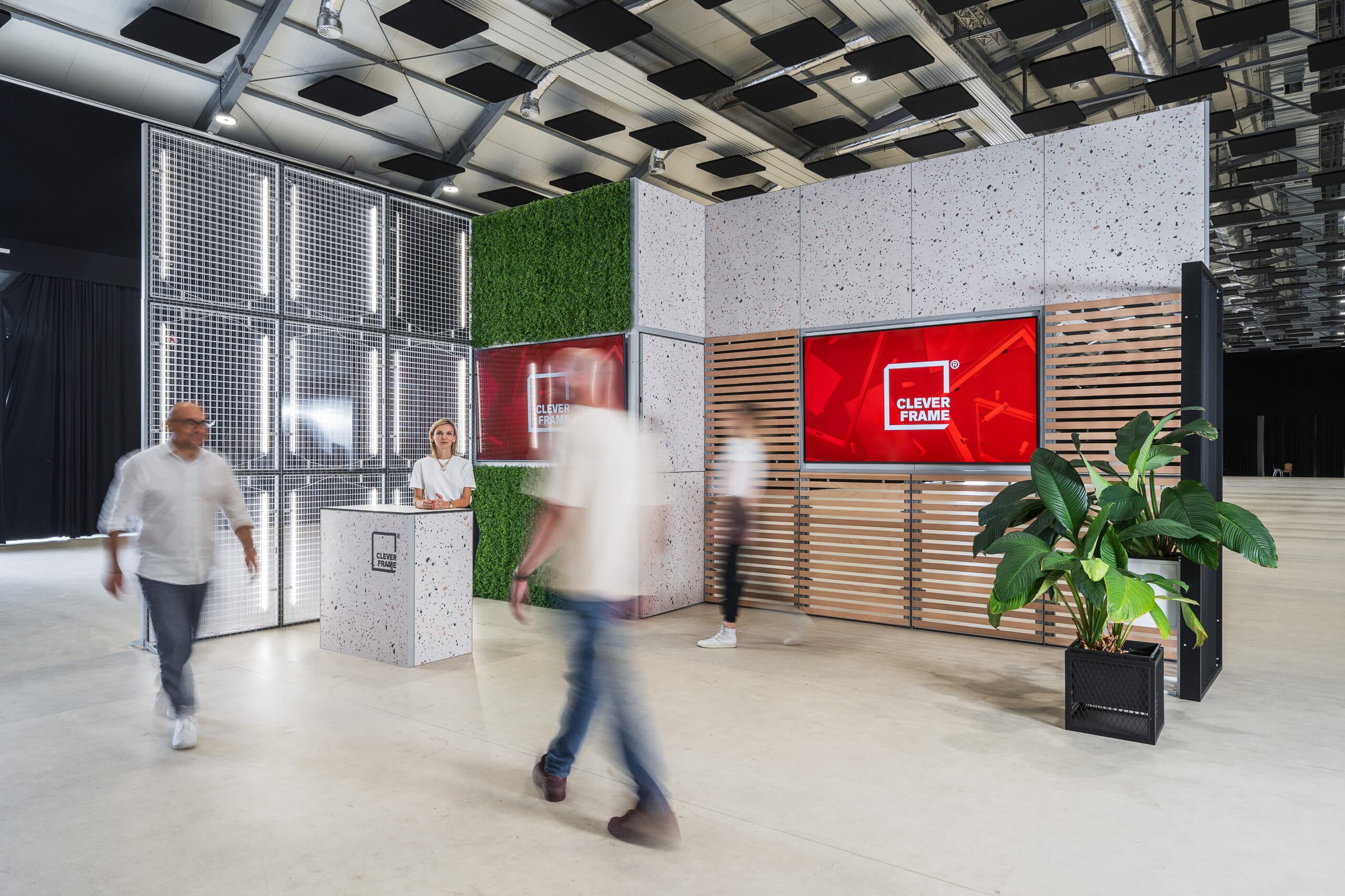
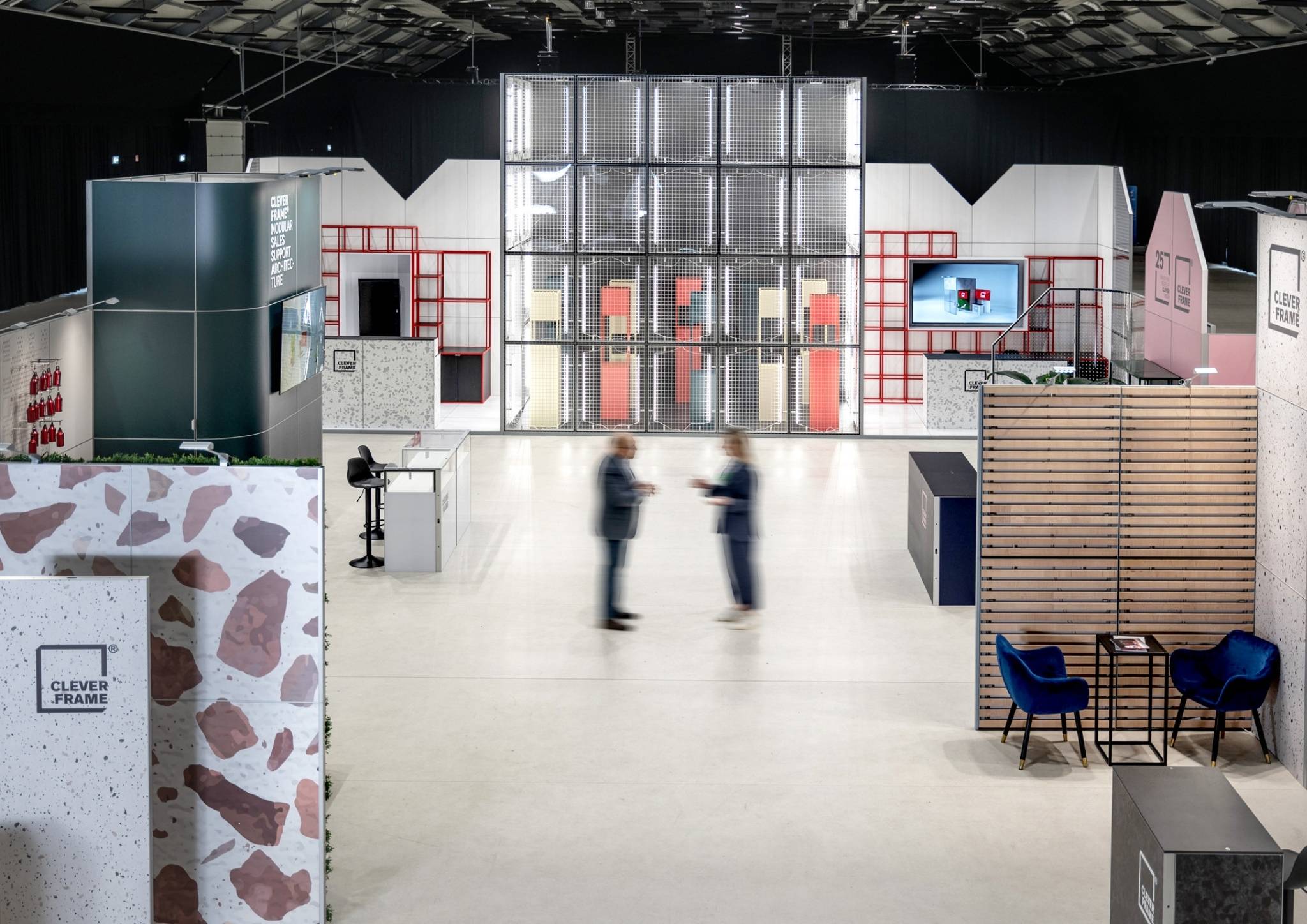
For Clever Frame, direct communication is supported by carefully designed presentation areas. Modular structures, magnetically mounted graphic panels and clearly defined meeting zones help create an environment where conversations can take place comfortably and professionally. This makes it easier for brand representatives to explain product benefits, respond to specific requirements and develop stronger business relationships.
What are the characteristics of direct communication?
Direct communication is characterised by several key elements:
- personal, face-to-face contact between the brand and the customer,
- real-time exchange of information and feedback,
- the ability to adapt the message to each conversation,
- a focus on dialogue rather than one-way messaging,
- a strong human aspect that supports trust and credibility.
What are the benefits of direct communication?
When used effectively, direct communication offers multiple benefits:
- stronger relationships with customers built on personal contact,
- better understanding of needs and expectations,
- greater impact of product presentations in a live setting,
- the ability to address objections and questions immediately,
- higher quality leads generated during events and meetings.
What are the challenges of direct communication?
Direct communication requires preparation and consistent execution:
- ensuring that staff are well trained and confident in product knowledge,
- providing spaces that support focused conversations,
- maintaining a consistent brand message across different team members,
- adapting communication style to different audience types,
- managing time and visitor flow during busy events.
What are examples of direct communication?
Direct communication appears in many event and sales scenarios. Examples include:
- conversations at Clever Frame exhibition stands during trade fairs,
- meetings in showrooms where products are presented in detail,
- discussions with visitors in promotional zones and demo areas,
- roadshow events with scheduled one-to-one or small group meetings,
- follow-up talks initiated during events and continued in a sales context.