
What is a brand visibility strategy?
A brand visibility strategy is a structured plan designed to increase brand awareness and make your brand easier to notice and remember at specific audience touchpoints. In event marketing and at trade shows, it means intentionally designing how the brand shows up in a physical space – from choosing the right visual communication formats, to the trade show booth layout and visitor flow, to interaction scenarios that strengthen the overall brand experience.
In the context of trade show booths, a brand visibility strategy covers the consistent use of visual identity, product messaging, and wayfinding elements (e.g., entry points, meeting zones, demo areas). The goal is not only to capture attention, but also to guide visitors toward meaningful sales and communication touchpoints – without information overload.
What are the main goals of a brand visibility strategy?
A well-designed brand visibility strategy clarifies display priorities and helps translate marketing goals into spatial and communication decisions. Most often, it includes:
- increasing brand noticeability within a trade show hall or event venue (visibility from key traffic directions),
- improving brand recognition through a consistent key visual, typography, color palette, and message tone,
- shortening the time it takes to understand the offer (clear information hierarchy and concise headlines),
- directing visitor traffic to support conversations and presentations (visitor flow aligned with the objective),
- generating more high-quality leads through clear contact points and interaction triggers.
What are the benefits of a brand visibility strategy?
A brand visibility strategy improves the effectiveness of offline activities by reducing guesswork in display decisions and making it easier to compare outcomes across events. In practice, it delivers benefits such as:
- a more consistent brand experience, where every communication element reinforces one promise and one set of differentiators,
- better booth clarity, which supports faster visitor qualification (who should approach, why, and where),
- greater repeatability and quality control – especially when the brand exhibits at multiple events per year,
- time savings for the team, because conversation scripts, demos, and materials are planned in advance,
- easier cost optimization thanks to reusable display components and the ability to update messaging without rebuilding the entire booth.
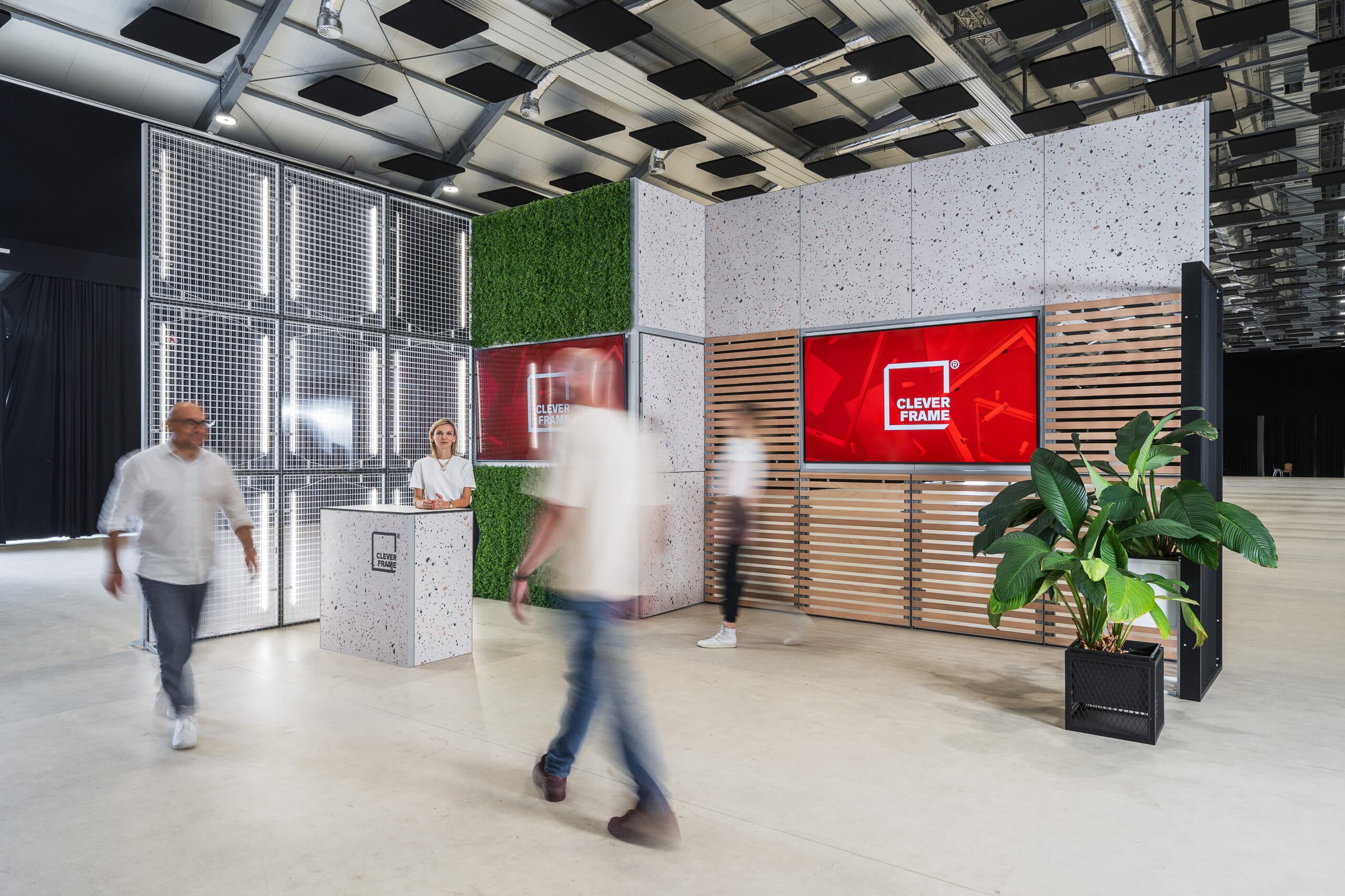
With modular solutions, flexibility is also key: Clever Frame trade show booths let you reconfigure the layout depending on floor space and objectives, while magnetic mounting makes it easy to swap graphic panels – adapting to seasonal campaigns or changing marketing trends. Setup and dismantling require no tools, supporting team mobility and faster event readiness.
What are the challenges and limitations of a brand visibility strategy?
Brand visibility in a physical space is constrained by the environment, organizer rules, and visitor behavior. The most common challenges include:
- communication noise in trade show halls (heavy visual stimulus and competing messages),
- booth architecture limits and neighboring exhibitors affecting sightlines,
- the risk of message overload when a brand tries to present too many products at once,
- inconsistency between events due to a lack of standards for layouts, content, and language versions,
- difficulty measuring results without predefined KPIs (e.g., number of conversations, interaction time, meetings booked).
Another limitation can be visitor flow that doesn’t match the goal. A booth designed for fast lead capture needs a different layout than a product showcase built around longer demonstrations. A visibility strategy should also account for conversation ergonomics, visitor comfort, and accessibility (e.g., aisle width and clearly marked entrances to each zone).
How is a brand visibility strategy used at trade shows and events?
At trade shows, a brand visibility strategy starts with deciding what the audience should read as the “first message” from a distance – and what should stop them once they’re closer. Landmarks, contrast, and information order matter, as does guiding visitors from noticing, to interest, to conversation and action.
In practice, the plan typically includes zoning the space (e.g., entry, presentation, meeting areas), designing walking paths, and placing messages so they don’t compete with each other. With modular systems, the booth layout can be adapted to different event formats, and swapping graphic panels helps maintain a consistent key visual while updating the offer or case studies.
What are practical examples of a brand visibility strategy?
It’s helpful to describe a brand visibility strategy through use-case scenarios, because that makes it easier to translate into design and operational decisions. Examples include:
- Product launch at a trade show: one core message visible from a distance, simplified information hierarchy, and a demo zone as the main visitor-flow destination,
- Sales roadshow: a repeatable display layout and quick adaptation to different venues thanks to a modular structure and swappable graphic panels for local messaging,
- Pop-up showroom at an industry event: a strong focus on consistent visual identity and brand experience, with clearly separated meeting and presentation zones,
- Participation in a conference series: standardized visuals and messaging so the audience recognizes the brand regardless of the event format.
In each of the above cases, the visibility strategy should be tied to success metrics – such as the number of sales conversations, meetings booked, post-event inquiries, or short brand-recall survey results. This helps treat the booth as a communication and sales tool, not just a design feature.
See also
- Brand Presence Strategy
- Brand awareness
- Brand positioning
- Brand consistency