
What is a brand archetype?
A brand archetype is a consistent pattern of personality and the role a brand takes in its relationship with the audience. In event marketing, it helps bring order to communication – from the language and tone used at a booth, through the selection of presentation content, to how the team behaves during conversations with visitors. A brand archetype works like a “compass” for creative and operational decisions, making the brand recognizable and consistent across different touchpoints.
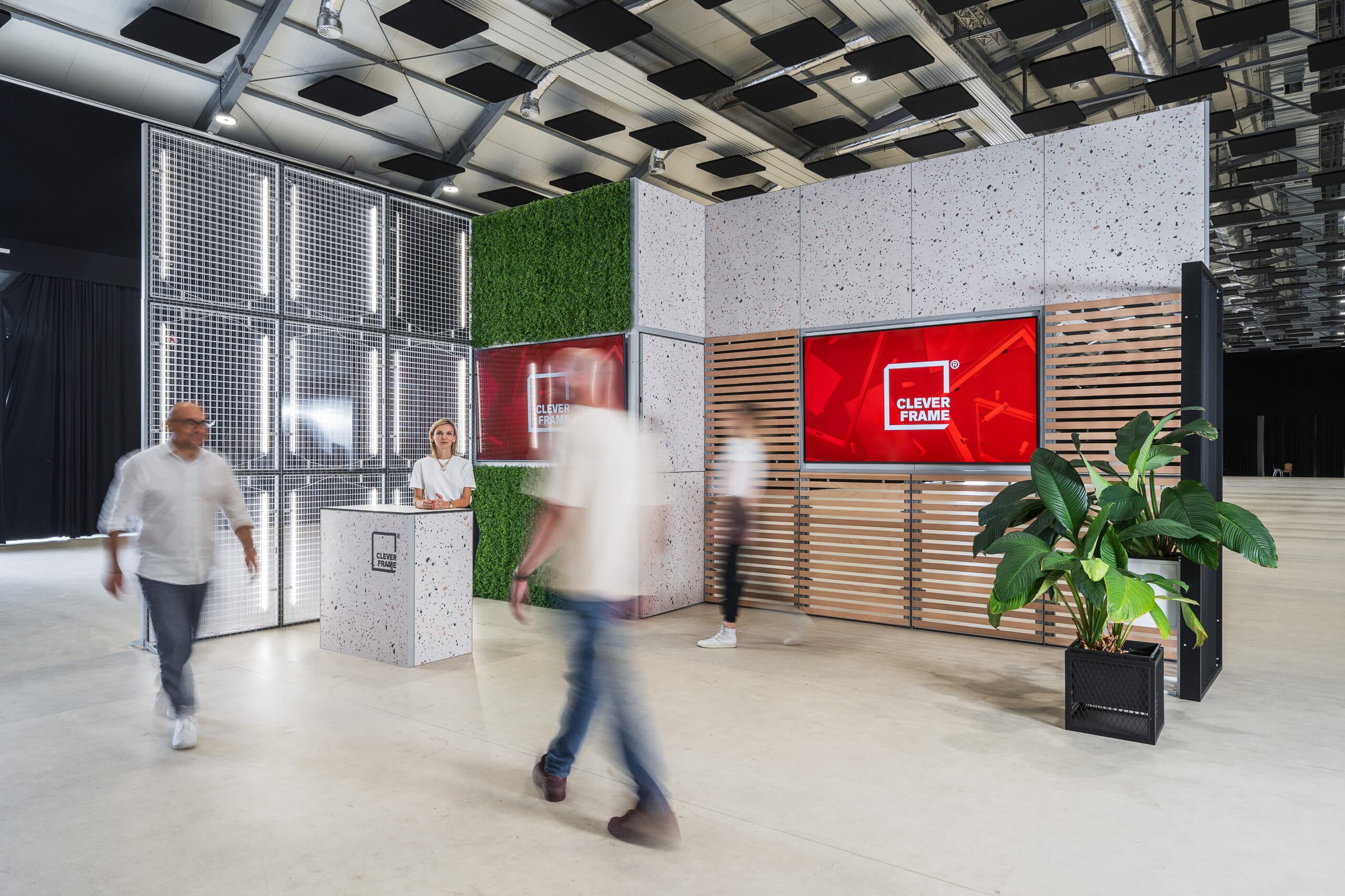
In the context of trade shows, events, showrooms, and roadshows, a brand archetype translates into a real-world, physical experience. It’s not only “what the stand looks like,” but also how conversations are led, how the visitor flow is planned, and how product and service presentations connect to the brand promise. With Clever Frame trade show booths (exhibition stands), the archetype can be reinforced through modular booth design and a consistent visual identity, as well as fast graphic updates tailored to the event’s goals.
What are the main goals of a brand archetype?
A brand archetype plays a strategic, organizing role. It makes decision-making easier when a brand communicates in the fast-moving event environment – where time, attention, and the quality of face-to-face contact matter.
- Ensuring consistent messaging across online and offline channels,
- Making it easier to design the in-person brand experience, including booth layout and conversation areas,
- Defining how the team interacts with visitors so the experience is predictable and aligned with the brand identity,
- Strengthening recognition through consistent use of visual identity elements and storytelling,
- Guiding the selection of product content and demos toward audience needs typical for the brand’s role.
What are the benefits of a brand archetype?
A well-chosen brand archetype increases clarity and reduces randomness in event execution. In trade show marketing, that translates into higher-quality conversations, stronger recall, and easier collaboration between marketing and sales teams.
- A more consistent brand experience regardless of format – trade show, conference, showroom, or roadshow,
- Faster preparation of materials and conversation scripts because it’s clear upfront “how the brand speaks and acts,”
- Better alignment of messages with visitor expectations in a physical space, where decisions are made quickly,
- Clearer priorities in booth design – what should be visible from afar, what supports conversation, and what is unnecessary noise,
- Easier maintenance of visual quality despite frequent creative changes – for example, when a magnetic system allows quick swapping of graphic panels to match seasonal campaigns or shifting marketing trends.
What are the challenges and limitations of a brand archetype?
A brand archetype is a tool, not a ready-made “recipe” for a booth or an event campaign. The most common issues come from oversimplification or a lack of consistency in executing the concept during the event.
- The risk of stereotyping if the archetype is taken too literally and the brand loses nuance and authenticity,
- A gap between promise and experience when the booth design is consistent but the team’s conversation style contradicts it,
- Definitions that are too broad and provide no guidance for space design, visitor flow, and how to present the offer,
- Poor fit with the trade show context – the archetype should reflect business goals, visitor profile, and space constraints,
- Difficulty measuring impact if KPIs aren’t defined – for example, the number of qualified conversations, lead quality, or time spent in demo zones.
How is a brand archetype used at trade shows and events?
At events, the archetype should be “visible” both in the space layout and in team behavior. Booth design supports the archetype through a clear hierarchy of messages, logical transitions between zones, and elements that make interaction easier – from first contact to deeper conversations. Consistent visual communication also matters: the key visual, typography, colors, and content should form one coherent system of meaning, not a collection of unrelated graphics.
Clever Frame modular trade show booths make this approach easier thanks to a modular structure that allows the layout to be adapted to floor space and event objectives. Just as important is the ability to update messaging quickly – graphic panels mounted magnetically to the frames make it easy to swap content with no downtime and no tools, helping maintain archetype consistency across campaigns and from one event to the next.
What are practical examples of using a brand archetype?
A brand archetype works best when it’s translated into concrete decisions: what we show, how we speak, and how we direct visitor traffic. The examples below illustrate how to connect an archetype with offline experience design.
- “Caregiver” – emphasis on education and support: a consultation area, clear pathways, product comparison materials,
- “Sage” – focus on proof and credibility: data-driven presentations, fact-based demos, messages that reduce decision risk,
- “Creator” – showcasing prototypes and process: flexible modular arrangements, frequent graphic updates for different product lines, conversation scripts oriented toward co-creation,
- “Hero” – a promise of performance: simple benefit-led messaging, clear navigation to demos, touchpoints that lead from problem to solution.
See also
- Key visual
- Visual identity
- Visitor flow
- Modular trade show booth