
A company’s first trade show appearance is often a major milestone. On the one hand, there is excitement: finally, the brand can be presented “live,” customers can be met face to face, market reactions can be tested, and the company can move beyond purely digital activities. On the other hand, a trade show debut often comes with uncertainty. What size trade show booth should you choose? How much do you really need to invest? Is it better to focus on visual impact or prioritize functionality? And most importantly: how do you avoid overspending at the start while still looking like a brand that came to the event with a clear plan?
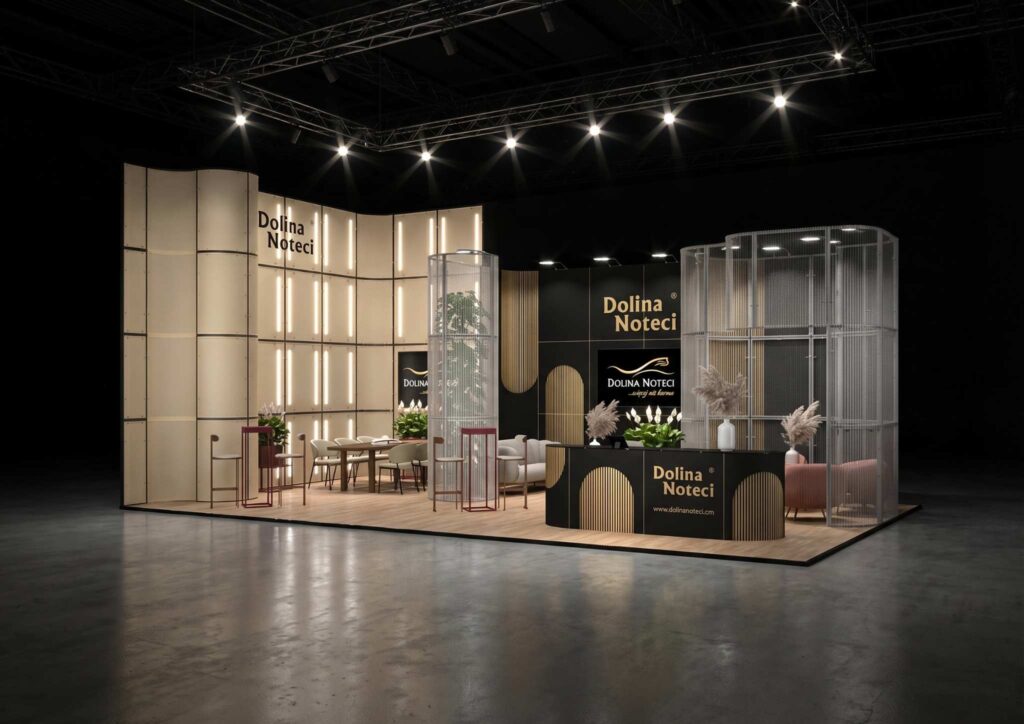
It is precisely at a first trade show that costly mistakes are easiest to make. Some companies invest too much in a one-off booth build that looks good at only a single event. Others go in the opposite direction and choose a setup so temporary that the booth supports neither conversations nor brand recognition. The problem is that a trade show debut is very rarely just “one event.” If a brand wants to grow its event marketing activities, the first trade show booth should be designed not only for today, but with future events in mind as well.
That is why the safest and most sensible approach for first-time exhibitors is to think of the booth as an asset that can be expanded, modified, and reused. In this context, Clever Frame trade show booths give brands a major advantage: they combine modular construction, flexible layouts, easy transport, and the ability to update messaging without rebuilding everything from scratch. For a company just starting out with trade shows, that means lower risk, greater predictability, and more business value from the first investment.
A trade show debut is unique because decisions are usually made under pressure, with limited time and a lot of emotion involved. A brand wants to make a strong impression, so it is easy to fall into the trap of thinking that the first trade show booth has to be spectacular right away. As a result, the budget starts growing because of elements that do not always have a real impact on performance: an overly complex structure, too many custom-made components, one-off graphics, or a layout that cannot be sensibly reused later.
Overspending rarely comes from one big decision. Most often, it is the result of several assumptions that seem logical on their own but together lead to unnecessary costs. Typical examples include:
At a first trade show, what matters far more than spectacle is whether the trade show booth helps the brand start conversations, organize its messaging, and evolve in a sensible way. That mindset is what reduces the risk of burning through the budget right from the start.
Many companies treat their trade show debut as an experiment, which in itself is reasonable. The problem appears when that experiment means choosing a random solution that cannot be expanded or adapted for future events. A booth like that may help a company simply “show up,” but it does not create long-term structure in event marketing activities.
A much better approach is to make even the first execution part of a bigger strategy. The brand does not need to invest in a large-scale display right away. It is enough to choose a foundation that can later be developed: a booth whose layout can be changed, adapted to different floor spaces, expanded with additional modules, and visually updated as the brand’s messaging evolves.
This approach aligns well with what Clever Frame also discusses in the context of booth planning and booth functionality at events. From the very beginning, it is worth treating trade show participation as a process rather than a one-off project. A well-planned trade show booth design starts with defining the goal, not choosing the decoration. Likewise, a well-designed trade show booth should not only look attractive, but above all be functional and suited to how the team actually works.
The first step is not the structure – it is the goal. A lack of clearly defined objectives is one of the main reasons first-time exhibitors overspend or design their booth too chaotically. If a company does not know why it is attending a trade show, it becomes very difficult to decide what really needs to be included in the booth and which functions it should support.
At the beginning, it is worth answering a few basic questions:
Only after organizing these points does it make sense to move on to decisions about booth size, zone layout, and how the messaging should be displayed. This is very important, because a first trade show appearance often creates the temptation to “show everything.” In reality, for a debut, a simpler and more readable space usually works better than an overly elaborate display with no clear focal point.
One of the most common mistakes at a trade show debut is the belief that a larger booth automatically delivers better results. In practice, square footage does not sell by itself. If the team has no clear idea of how to use the space, a bigger booth only increases costs and amplifies the impression of emptiness or chaos.
At a first trade show, the best solution is usually a booth that is proportionate to the goal and to the scale of the brand’s activities. It should enable three things: attracting attention, holding comfortable conversations, and providing basic operational support. Nothing more is essential at the start unless it directly results from the nature of the event.
Modularity offers a major advantage here, because it allows a brand to start with a compact layout and expand it later – including toward larger, more advanced booth builds as the company begins participating in bigger events. Instead of ordering a completely new booth for the next event, the brand can reconfigure the setup, adapt the booth to a different floor plan, and maintain a consistent presence. This also ties in well with the topics of flexibility and fast booth preparation that Clever Frame explores in more detail in the article Fast Trade Show Booth Build: How to Prepare an Exhibit Stand in a Short Time.
Your first trade show booth does not need complicated architecture. It does, however, need a clear division of functions. This reduces chaos, makes the team’s work easier, and helps visitors quickly understand how to engage with the brand.
For a debut, four basic zones are usually enough:
What is not worth doing at the beginning is over-dividing the space. Too many micro-zones in a small footprint can only make movement more difficult and weaken the communication effect. For a first appearance, clarity works better than an overly ambitious layout.
A trade show debut has its own dynamics, and certain mistakes happen again and again. The good news is that most of them can be easily avoided if, already at the planning stage, the brand takes a more strategic perspective.
If a brand does not know why it is attending the event, the booth becomes a mix of random elements. At one moment it is supposed to sell, then build awareness, then present the offer, then serve as a backdrop for meetings. As a result, nothing is strong enough to truly work.
At the beginning, it is easy to give in to the temptation to create “something special.” The problem is that if that uniqueness is based on one-time solutions, the brand has to start from zero again at the next event. This is exactly where modular thinking offers a major advantage: it makes it possible to create a professional effect without locking the company into a single-use execution.
First-time exhibitors often assume that one version of the graphics will last for a long time. In reality, messaging usually develops quickly: new products appear, new sales arguments emerge, stronger taglines are created, and lessons are learned from the first trade show. If the graphics cannot be easily replaced, the booth becomes outdated very quickly.
That is why solutions that allow easy replacement of the visual layer are so important. In Clever Frame trade show booths, graphic panels mounted with magnetic tape can be changed quickly, making it easy to adapt the messaging to future events, campaigns, and marketing needs. As a result, the brand keeps a consistent structural base while updating its communication flexibly – without rebuilding the entire booth.
A first trade show is often a brand’s first encounter with the realities of transport, storage, and installation. Only then does it become clear that a booth is not just a design project, but also a logistics operation. That is exactly why it is worth thinking from the start about issues such as ease of transport, storage of the components, and the time needed to prepare the booth for the show floor.
This is also an important topic after the event. A brand planning future events should know not only how to order the booth structure, but also how to store a trade show booth to avoid chaos and unnecessary organizational costs.
For a company just entering event marketing, investment security is extremely important. This is not only about financial security, but also organizational and brand security. A company needs a solution that allows it to launch professionally without locking itself into a rigid model for the future.
Modular booth construction responds well to these needs because it:
This also fits perfectly with the broader logic of working with Clever Frame trade show booths. For a debuting brand, what matters is not only how the booth performs at one trade show, but also whether the same base can later support a showroom, roadshow, conference, or product presentation.
One of the biggest mistakes at a first event is looking only at the cost of the booth structure itself. In reality, the true cost of exhibiting at a trade show includes much more: floor space, logistics, transport, printed materials, team time, messaging preparation, post-event storage, and any future modifications.
This means that a “cheaper” one-off solution is not necessarily more cost-effective than a modular solution that can be reused. In practice, the better business approach is the one that reduces costs over the longer term: shortening preparation for future events, simplifying logistics, and allowing the brand to work from the same structural base for several seasons.
This approach also aligns with current trends in trade show booth design. More and more brands are moving away from thinking of booth construction as a one-time decoration and are looking for solutions that are more flexible, practical, and long-term. That direction is also well illustrated in the article Trade Show Booth Design Across the Brand Lifecycle: How to Plan an Exhibit for More Than One Event.
For a first appearance, a simple action plan is extremely helpful. Instead of starting with visualizations, it is better to move through several logical stages that organize decisions and reduce the risk of unnecessary spending.
This order is especially important for first-time exhibitors because it helps maintain control over the budget and prevents decisions from being driven purely by visual pressure or emotion.
A brand’s first trade show appearance does not require the biggest booth or the most spectacular booth build. It requires good decisions. The most cost-effective first investment is one that gives the brand a professional start while still leaving room to grow its event marketing activities in the future.
The key takeaways are simple:
If you are planning your brand’s trade show debut and want to prepare your first trade show booth in a way that is safe, flexible, and ready to grow with future events, it is worth choosing a solution that combines consistency with scalability. Clever Frame trade show booths provide a modular foundation that can be adapted to the functional zones of a first event and then expanded and updated for future trade shows – without unnecessary costs and without mistakes that are difficult to reverse after the first event.