
At first glance, a trade show stand designed for B2B and one created for B2C may look similar: branding, graphics, a conversation area, and a product or service display. In practice, however, the difference runs much deeper. It is not just about a different target audience, but about a completely different purchase decision-making process, a different pace of interaction with the brand, and different goals the brand wants to achieve during the event.
At B2B trade shows, the focus is usually on the quality of conversations, generating sales leads, presenting expertise, and creating the right conditions for calm, substantive discussions. At B2C trade shows, the first few seconds of contact matter much more, along with broad brand visibility, quickly capturing interest in the offer, and turning visitor traffic into short interactions, demos, or direct sales. This means that the same floor space may require two completely different exhibition stand layouts.
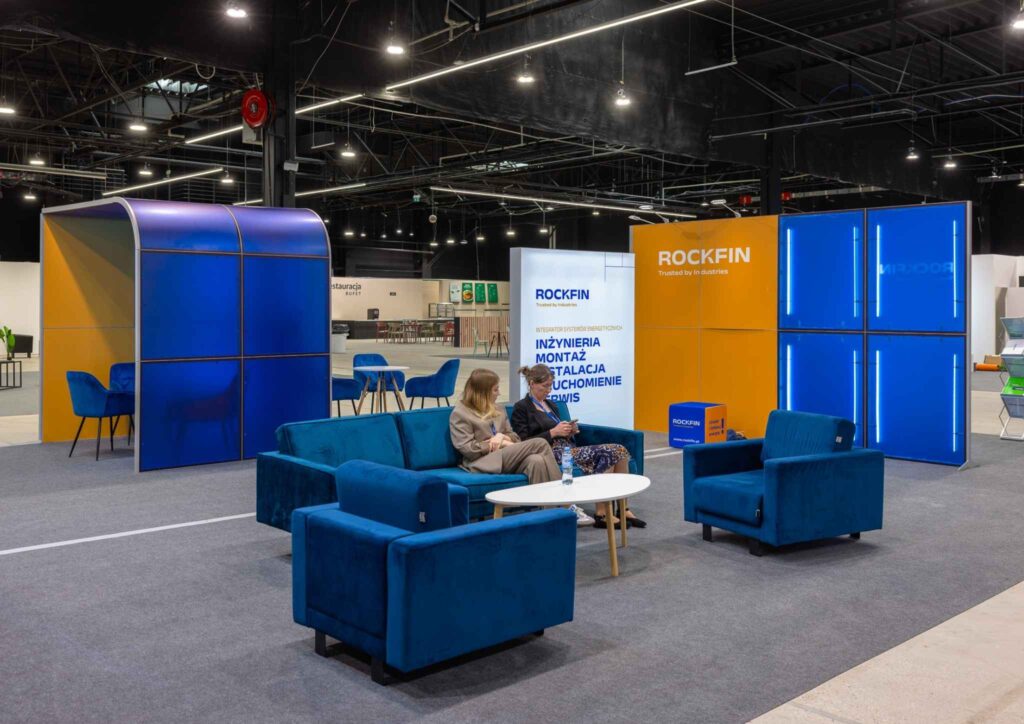
That is why exhibition stand design should begin not with the question, “What should the stand look like?” but rather, “What should happen at the stand?” This way of thinking is especially important when a brand sometimes operates in a B2B model and at other times exhibits at events aimed at end consumers. In this scenario, Clever Frame exhibition stands offer a major advantage: they make it possible to create different layouts from the same base, expand and modify configurations, and still maintain a consistent brand identity across different events.
Although both types of events share a common purpose – brand promotion and sales support – the path to that goal looks completely different. In B2B, the exhibition stand is often the place where a longer sales process begins. A trade show conversation does not have to end in a sale the same day, but it should lead to the next step: a presentation, a quote, a post-event meeting, or further lead qualification.
In B2C, speed of response is often more important. The visitor has less time, compares many stimuli at once, makes more impulse-driven decisions, and is less willing to engage in a long conversation at the start of contact. The stand therefore needs to explain immediately what the brand does, who the offer is for, and what the visitor should do next: stop, enter the demo area, speak to someone, test the product, or buy.
This is exactly why, in practice, there is no single “universal” exhibition stand design that works equally well in every situation. Even if a brand uses the same exhibition system base, it should place different spatial, visual, and organisational emphasis on B2B events and B2C events.
In the B2B model, the exhibition stand should primarily support the quality of interaction. It is less about a “wow” effect understood as a quick visual impulse, and more about structuring the conversation and showing that the brand operates professionally. A B2B visitor is usually looking for specifics: a solution to a problem, operational advantages, business arguments, implementation examples, and confidence that the brand is worth spending more time with.
This means a B2B exhibition stand should be designed around functions such as:
At B2B trade shows, layouts that are not excessively open on every side tend to work very well, while still not closing the brand off. Balance is key: the stand should feel inviting, but it should also provide the right conditions for meaningful conversations. In many cases, clearly separating a welcome area, a presentation area, and a meeting area works better than one fully open space with no logical division.
The length of interaction also matters. If a conversation is meant to last several minutes – or longer – the team needs a space where it can take place in an organised way. This is where ergonomics, support space, and overall functionality come back into focus. If you would like to explore this aspect in more detail, it is also worth reading Trade Show Booth Ergonomics: The Back-of-House Space Everyone Forgets.
At B2C events, the winning stand is usually not the one that explains the most, but the one that communicates most clearly. The end consumer moves faster, has less patience for long descriptions, and is more likely to respond to a simple message: what it is, what benefit it offers, and why it is worth stopping here.
This means that B2C exhibition stand design should place stronger emphasis on:
In B2C, the architecture of the message becomes especially important. Instead of many equally weighted pieces of information, one core communication axis works better, supported by strong graphics and well-placed interaction points. The end user does not want to “figure out” the stand first. They should immediately know where to go, what they will see, and what they can gain from the interaction.
That is why a B2C layout is often more open, dynamic, and designed around visitor flow. There is less space reserved for “later” and more emphasis on elements that work here and now: product display, quick contact, short explanation, demo, and a clear path to action. This is also why welcome zones, highly visible display points, and a clear entrance layout matter more here than at many B2B events.
The biggest difference between a B2B exhibition stand and a B2C exhibition stand usually does not come down to floor space, but to how that space is allocated. In practice, four areas change most significantly.
In B2B, the entrance should lead naturally into conversation and needs qualification. In B2C, the entrance should primarily reduce distance and encourage people to stop. It may seem like a small difference, but it has a major impact on the design of the front of the stand.
In B2B, the meeting area is often one of the most important parts of the entire stand. In B2C, its role may be smaller because visitor interactions are usually shorter and more dynamic. Instead of an extensive meeting zone, a presentation or product display area may play a bigger role.
In B2B, a more developed argument can work well, provided it is properly structured. In B2C, the message usually needs to be reduced to a minimum and designed for quick visual scanning. The goal is not to oversimplify the brand, but to adapt the communication format to the way people absorb information.
In B2B, the team more often acts as advisors and sales representatives leading business conversations. In B2C, fast service, handling higher traffic, and smoothly taking over new contacts tend to matter more. This directly affects the organisation of zones, support space, and material flow.
We explore the link between exhibition stand design and event objectives in more detail in the article Exhibition Stand Layout and Marketing Goals – How to Design a Space that Drives Brand Success? It is a useful complement if you are preparing a brief for a specific type of event.
Exhibition stand design becomes much simpler when, instead of thinking only about form, you start thinking in terms of zones and tasks. This is especially important when comparing B2B and B2C, because the same element can perform a completely different role at two different events.
In B2B, the most common needs include:
In B2C, the priorities are usually:
This comparison clearly shows how important flexibility is in an exhibition system. If a brand participates in both trade events and consumer events, it should not have to start designing from scratch every single time. A much better solution is to build from a base that can be reconfigured depending on the event objective – both in smaller formats and in more extensive setups.
The biggest advantage of Clever Frame exhibition stands becomes clear when a brand does not operate according to just one exhibiting scenario. Sometimes it needs a space for long sales conversations; at other times, it needs a more open stand designed for higher visitor traffic and fast message exposure. The modular Clever Frame exhibition system makes it possible to create different stand layouts – from compact setups to larger builds – without abandoning a consistent structural base.
In practice, this means several very specific benefits:
This is especially important when a brand wants to maintain a consistent visual identity while changing communication priorities. Clever Frame’s modular construction makes it easy to replace graphic panels, which means the messaging on the stand can be quickly adapted to seasonal campaigns or changing marketing needs. As a result, the same base can work in a B2B scenario at one event and a B2C scenario at another, without the need to redesign the entire exhibition stand from scratch.
If you are currently preparing for an event, you may also find the article How to Prepare an Exhibition Stand for Trade Shows? Practical Tips for Exhibitors helpful, as it organises the planning process from an operational perspective.
In practice, many companies do not make the mistake of having a “bad stand.” Instead, they make the mistake of having a stand that is not matched to the event objective. It is a subtle but very important distinction. Even a well-designed exhibition stand can perform poorly if it was built on the wrong assumptions.
The most common problems include:
The issue can also be more strategic: a brand assumes that because one stand worked effectively once, the same layout will work identically everywhere. In reality, B2B and B2C trade shows trigger different visitor behaviours. Flexibility, therefore, is not about creating something new every time, but about having a base that can be sensibly adapted.
Before the design process begins, it is worth clarifying several basic decisions. These are the factors that most strongly determine whether the exhibition stand will support the event’s real sales objectives.
The better a brand answers these questions, the easier it becomes to design an exhibition stand that not only looks professional, but above all supports a specific sales process.
B2B trade shows and B2C trade shows differ not only in audience profile, but above all in what is supposed to happen at the stand. In B2B, the most important things are creating the right conditions for conversation, logical zoning, lead generation, and a calm presentation of the offer’s value. In B2C, greater emphasis is placed on visibility, message simplicity, quickly generating interest in the brand, and a layout that supports visitor traffic.
The best approach, therefore, is not to design “one perfect exhibition stand,” but to build a flexible base that can be adapted to different scenarios – both smaller displays and larger, more developed setups. That is exactly why Clever Frame exhibition stands are a strong fit for brands operating across different sales models: they allow for consistent, high-quality, scalable layouts, expanded configurations, easy communication updates, and repeated use of the same exhibition system across multiple events.
If you plan to exhibit both at industry trade shows and at consumer-focused events, it is worth thinking about your stand not as a one-off project, but as a tool that can evolve alongside your brand’s event calendar. That is when exhibition stand design truly starts working for sales – not just for appearance.